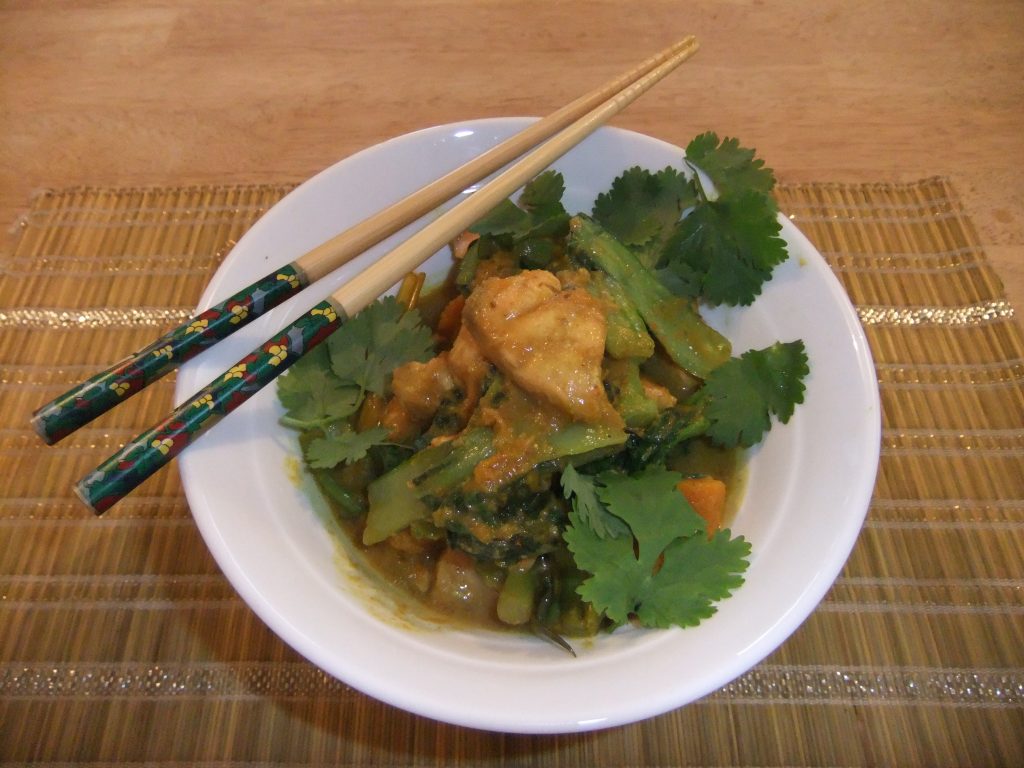
We love this warming, comforting curry when the weather is grey and cold and guests always seem to love it. My husband adapted it from a recipe by Nigella to have a thicker sauce, more greens, and less starchy carbs that lead to weight gain. If you don’t like any trace of hot spices, this dish is not for you – if you like only moderate heat use just 1 tbsp Amoy or Sharwood’s curry pastes instead of the genuine (and hotter) Thai brands from Asian shops. The more unusual ingredients are all available from good supermarkets, delis, or inexpensively from Asian shops. Leftovers are safe to eat the next day if stored in the bottom (coldest shelf) of the fridge and properly reheated.
For 2:
250g pumpkin or butternut squash, peeled and cut into large bite-sized cubes
165ml tin coconut milk
165 ml fish stock, water leftover after steaming veg, or just plain water
1-2 rounded tablespoons yellow (or red) Thai curry paste
3 tbsp Asian fish sauce
3 fresh lemongrass stalks, each cut into 3 and bashed with a pestle or bruised with the back of a knife
3 lime leaves (frozen or dried), cut into narrow strips if you can be bothered
1 level teaspoon ground turmeric
Handful of fresh coriander, rinsed and roughly chopped (stalks and all is fine)
300g salmon darnes, ideally wild or organic, skinned and cut into bite-size cubes of about 2-2.5cm
A handful of shelled king prawn tails (optional)
350g (2 very large handfuls) of one of the following:
pak choi cut into 2” lengths
streamed-but-still-crisp broccoli florets or green beans
Juice of ½ -1 lime, to taste
Brown basmati rice to serve (see below for cooking instructions)
1. Pour the 165 ml tin of coconut milk, 165 ml of fish stock or water, and 1-2 tbsp of the curry paste into a heavy-bottomed saucepan. Whisk well with a fork to amalgamate, and add the fish sauce, lemongrass, lime leaves, and turmeric. Stir and bring to a boil, then add the butternut squash/pumpkin pieces. Cook on a fast simmer until the pumpkin is tender but not mushy, about 15 minutes, although different sorts of pumpkins can vary enormously in the amount of time they take to cook; some squash can take as little as 5 minutes.
2. To the robustly simmering pan, add the pak choi if using, tamping down with a spoon. Cover and cook until slightly wilted. Then add the salmon and, if using, the prawns. If you are using pre-steamed broccoli or green beans instead of pak choi, add these now. When the salmon is cooked and the pak choi (if using) is wilted, squeeze in the juice of ½ the lime, adding the juice of the remaining half if you feel it needs it.
Serve with:
1/2 mug of brown basmati rice (for 2 people), boiled in a covered saucepan with 1 mug of boiling water and ½ level teaspoon ground turmeric. Do not stir rice when it is cooking. When it’s done you should see that the rice has swelled up, absorbed all the water, and has little steam holes visible in its surface. It should stay warm in a covered saucepan for 10-15 minutes after cooking and fluff up nicely.
Variations:
Make this with 150g raw shelled prawns (frozen is fine, provided the prawns are separated from each other) and 150g salmon instead of all salmon.
Dietary note: Coconut milk is a rich source of medium chain triglycerides which are a great source of energy for those battling fatigue or illness. Medium chain triglycerides are used to make energy directly, rather than being stored as fat. For this reason, coconut milk is a useful inclusion in any healthy diet. It is also a rich source of lauric and caprylic acids, which help clear pathogenic bacteria and yeast overgrowth from the body. Pak choi and broccoli are dark green leafy vegetables and so are rich in folic acid. Irish diets are low in folic acid which is needed for the repair and maintenance of your digestive system and for developing and maintaining brain health. Salmon is rich in omega 3 fatty acids which are anti-inflammatory and also important for the health of the digestive system, skin, brain, and more. The galangal, chili, turmeric, and other spices in curry pastes also have powerful anti-inflammatory, anti-ageing actions.
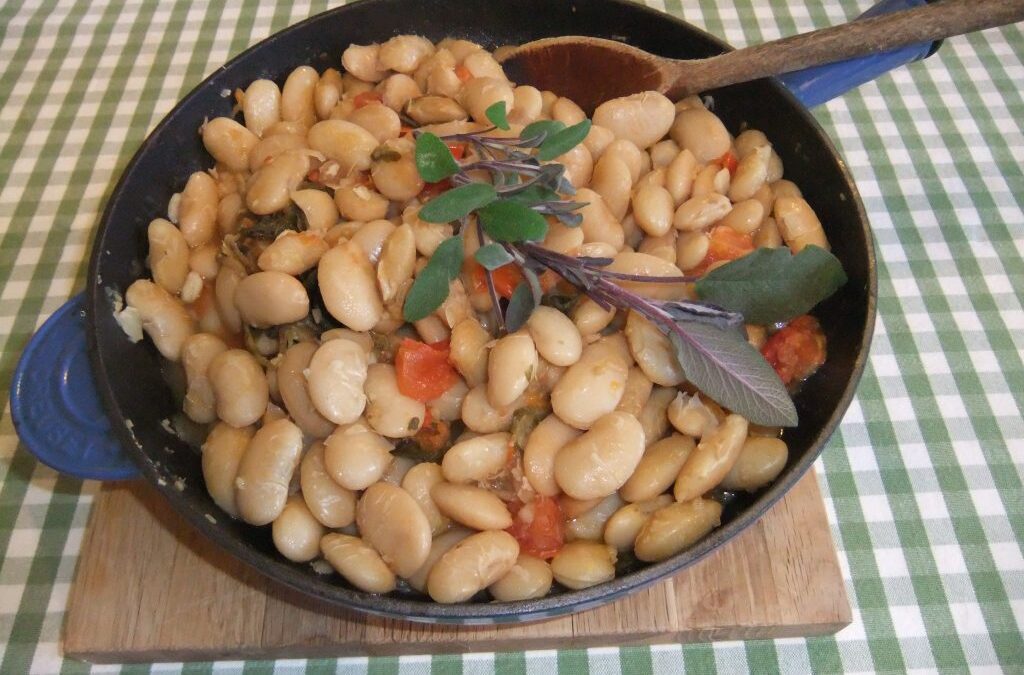
I love this beany salad which I have adapted from a recipe by Tamasin Day-Lewis. We eat it lukewarm or at room temperature as the fancy takes us. It’s also lovely made with butter beans. The tomatoes are optional, some people prefer the dish without. Boiling the beans with herbs and vegetables give the most amazing flavour to the finished dish. But if you can’t be bothered, its still worth making – just omit the onion, celery, rosemary and extra sprig of sage.
As a main meal you could serve this with a large leafy salad (or lightly steamed broccoli florets drizzled with lemon juice and olive oil) and maybe some quinoa (nice with basil pesto and a crushed clove of garlic stirred in while its still hot).
Feeds 4 as an accompaniment, 2 as a main course:
225g dried cannelini beans, soaked in filtered water overnight (or soak in boiling water for 1 hour)
Optinonal: 1 sprig rosemary (about the length of your hand), destalked, chopped fine
2-3 large sprigs sage (around the length of your hand also)
1 medium onion, peeled and cut in half
2 celery stalks
3 large garlic cloves
5 tbsp virgin olive oil
3 fresh or tinned tomatoes, chopped (if you are a perfectionist you can skin them and remove the seeds too – I never bother)
Freshly ground black pepper
A pinch of Himalayan salt or Atlantic sea salt, not “table salt”
1. Cook the beans in plenty of water with a sprig each of rosemary and sage, the onion, celery and 1 clove of garlic until just about tender. Reserving the cooking water, drain the beans and discard everything else.
2. Into a large heavy bottomed saucepan or frying pan on a gentle heat put your 1-2 remaining sprigs of sage, the 2 cloves of garlic and bash them about with a wooden spoon for a minute so they get a bit squashed.
3. Add 2 tablespoons of the olive oil, cover with a lid (or a large plate) and cook a couple of minutes until the garlic has started to sizzle.
4. Add tomatoes, beans and a further 2 tablespoons of olive oil. Turn everything in the oil, then pour over enough of the bean stock to cover the base of the pan. Cook until most (but not all) of the liquid has evaporated.
Why this is good for you: Extra virgin olive oil, especially raw, is a great source of vitamin E which is great for moisturising your whole body, controlling allergies and is anti-inflammatory. Beans are a great high protein alternative to meat, fish, eggs or dairy products. They contain magnesium which has a calming effect, as well as helping keep the skin clear by enhancing liver function. Herbs like sage and rosemary are antioxidant, anti-ageing and naturally anti-inflammatory. They also encourage growth of friendly gut micro-organisms.
Table salt is an industrial product which contains added aluminium (dessicant) to stop it absorbing moisture. This is toxic. Himalayan salt is the cleanest salt and contains trace minerals. Its “clean” because it came from ancient seas where plastics and other man made contaminants were not present.
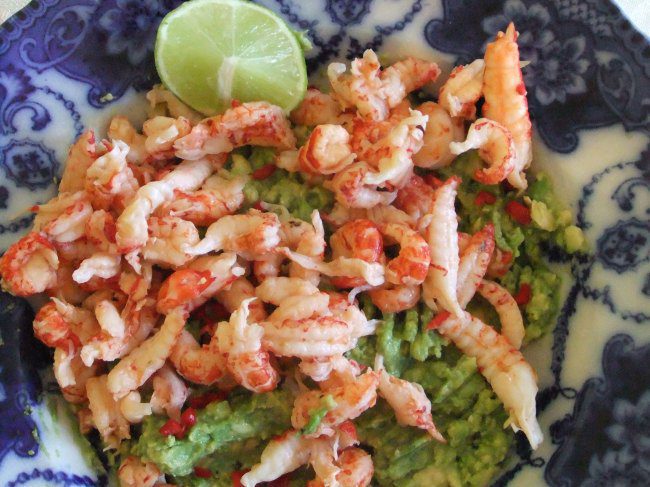
A few weeks ago I found little packets of cooked crayfish (without any nasty additives) in my local Lidl so I put together this luxurious salad. It’s incredibly simple to make and is greatly piled on top of a mixed leafy salad tossed in a virgin oil dressing. You can also use cooked prawns for this salad. The avocado makes the dish really filling. We had this as part of a buffet dinner recently, alongside tabbouleh, oven-baked chicken, green salad, and my special roasted red peppers which were one of my first posts on this blog. The platter was scraped clean.
To serve 2 comfortably:
1 ripe avocado
125g pack of cooked crayfish (or cooked peeled prawns)
Juice of half a lime (about 2 DSP juice) – or lemon juice if you don’t have lime
½ red chili, deseeded and chopped
Freshly ground black pepper
1. Mash the avocado with lime juice and a few good grinds of black pepper.
2. Pile the cooked crayfish pieces or prawns on top and scatter them over the chopped chili.
Why this is good for you: Avocado is a great source of vitamin E and monounsaturated oils, both of which help delay ageing and reduce your tendency to allergy. Adding monounsaturated oils such as avocado and virgin olive oil to people’s diets helps them lose weight too. The healthy oils also make you feel fuller for longer, sustaining more stable energy throughout the day.
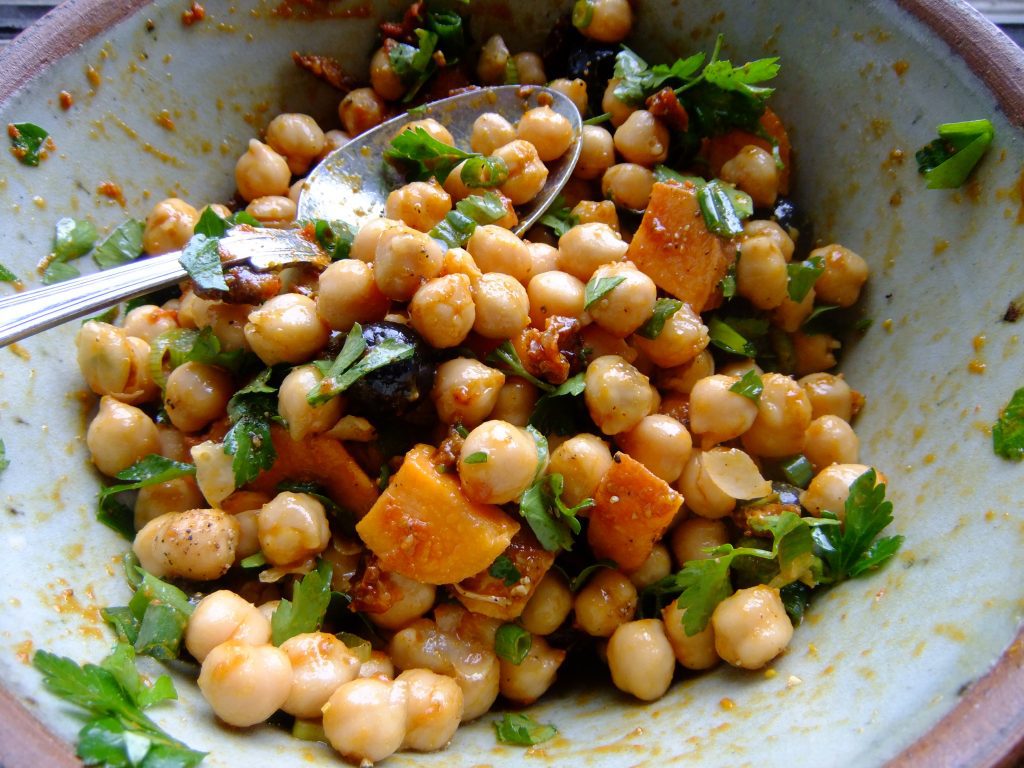
This is the simplest thing in the world to make and is greatly piled on top of a mixed, dressed, leafy salad. If you are in a hurry, serve with a handful of rockets, another cherry tomato, and a drizzle of virgin oil-based dressing. We often make up a big bowl of this at a weekend and take the leftovers to work. If you are an extra hungry person, you could add extra carbs in the form of a baked sweet potato, gluten-free wholemeal bread, or (if you eat gluten) brown pitta or 100% rye bread.
To serve 3-4:
2 cans or (even better) mugs of home-cooked chickpeas, drained
2 DSP extra virgin olive oil
1 rounded DSP sundried tomato pesto
1 DSP lemon juice
1-2 cloves garlic, crushed
2 tbsp chopped fresh mint, oregano, or parsley or 1 DSP chopped rosemary leaves
Half a red onion, finely chopped (optional)
Freshly ground black pepper
A pinch of Himalayan or Atlantic sea salt
In a bowl, mix the oil, pesto, lemon juice, garlic, herbs, salt, and a good grind of black pepper together.
Add chickpeas (and onion if using) and mix well. If you have time, let it sit for half an hour or so to let the flavours amalgamate.
Dietary note: Fresh herbs and raw virgin olive oil are fantastic sources of antioxidants to keep us healthy. Fresh herbs are powerfully anti-inflammatory, anti-ageing, and help soothe an inflamed digestive system. Home-cooked is best when it comes to pulses but there’s still a lot to recommend tinned chickpeas. Pulses are rich in soluble fibre that feeds good gut bacteria for digestive wellness, hormone balance, and good skin. They also contain magnesium, one of Nature’s most soothing minerals, which we need to eat every day. Pulses like chickpeas are also a source of high-quality protein.
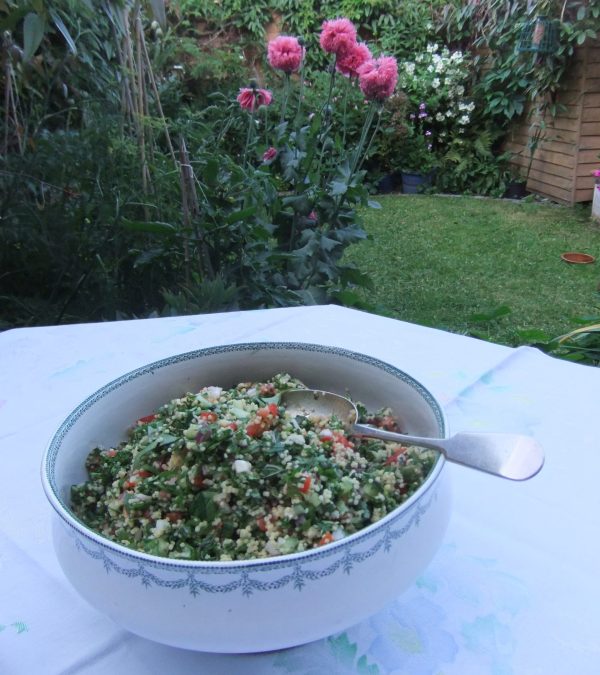
This is my even more delicious gluten-free version of the classic Middle Eastern salad which is normally based on bulgar wheat. This is great with grilled or roast meat or fish, or a chickpea/bean salad. You can make it in advance for a barbecue or buffet. Don’t skimp on the fresh parsley or lemon juice.
For 2 people, with leftovers:
½ mug/1 cup millet grains (not flakes), available in wholefood stores
3 tbsp finely sliced red onion (or spring onion, if you can’t get red)
4 tomatoes, finely chopped
½ cucumber, skin and all, chopped into about ½cm cubes
6 rounded tbsp parsley (flat-leaf is nice), finely chopped
3 tbs finely chopped fresh mint or 3 dsp dried mint
Juice of 2-3 lemons (or more, to taste)
4 tbs extra virgin olive oil
Sea salt or Himalayan salt and black pepper to taste
Boil the kettle. Add the millet to a saucepan with double its quantity (2 cups) of boiling water, cover with a lid, and simmer without stirring until all the water is absorbed and the grains are fluffy. Rough up with a fork and allow to cool.
When the millet is no more than lukewarm, put it and the rest of the ingredients in a large bowl and mix gently to combine, taking care not to mash the millet. If you have time, let it stand for at least half an hour to let the flavors amalgamate.
Why this is good for you: I use millet here because it is naturally gluten-free, tastes great, and is packed with the relaxing nutrient magnesium. Wheat contains high levels of phytates that impede mineral absorption in the gut. People who eat wheat at several meals a day often end up short of essential minerals such as zinc and iron even if they eat them in the diet. Also (and this is a shocker from recent research) gluten in wheat damages your gut for several hours after exposure – you don’t have to be gluten-sensitive for this to happen! Parsley is rich in iron and aids detoxification, good news if you care about your skin or your energy levels. Lemon juice aids the stomach in the digestive process while mint is anti-spasmodic, helping relieve gas or cramps in the gut. Extra virgin olive oil is rich in vitamin E and research shows that including it in your daily diet increases your healthy lifespan. Tomatoes are a fantastic source of lycopene and act as a natural UV filter, helping reduce skin burning and ageing.