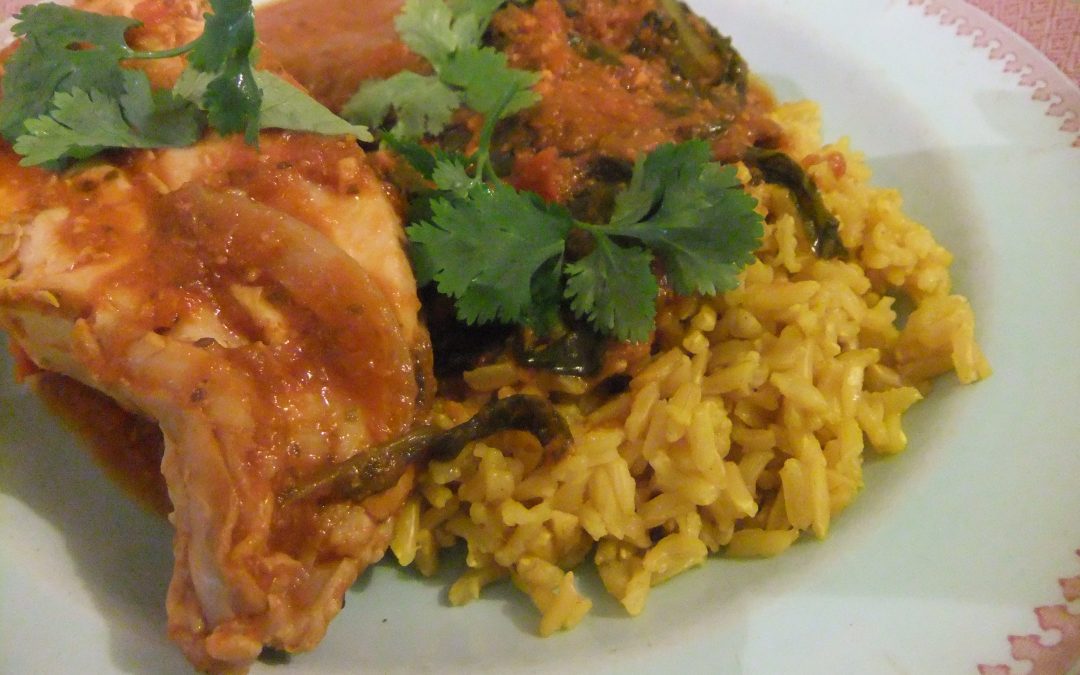
Tonight, we ate these gorgeous chicken pieces. Instead of the roast Mediterranean veg in the recipe, we piled them onto a bed of baby spinach leaves alongside green beans dressed with lemon juice, black pepper, and a little Himalayan salt. If you don’t want to lose any weight, you could add some potatoes. This way of roasting chicken pieces is a real crowd-pleaser.
The paste keeps for a couple of weeks in an airtight jar in the fridge. The chicken is even better if you let it sit in the paste for a while or overnight in the fridge. It’s still great if you slather it on just before cooking. Using a miniature food processor gives a really creamy texture to the paste and saves lots of effort.
For 2
2 whole chicken legs, small breasts on the bone, or fillets, ideally organic.
2 whole red or yellow peppers, washed but not cut open
2 large fat courgettes
A few small/medium sized sweet potatoes or normal potatoes in their jackets (optional – omit if this is your evening meal and you want to lose weight or if you are following a ketogenic eating plan)
2 red onions (optional)
Garlic-spice paste:
12 large cloves garlic, peeled
3 tbsp extra virgin olive oil
1 lemon, juiced
1 level tsp ground cinnamon
¾ teasp ground allspice
¼ teasp freshly ground black pepper
A good pinch of cayenne pepper
1. Preheat the oven to 200C/400F/gm 6
2. Blitz all the spice paste ingredients together in a small food processor. Otherwise crush the garlic and mix well with the other ingredients – the sauce will not cling so well but is still fine.
3. Slather enough of the paste on the chicken to coat well and place in a large roasting dish (you will have a fair bit left over to drizzle over baked sweet potatoes, to use another time to grill some white fish, or to serve as a spicy accompaniment )
4. Prepare whatever vegetables you are using: Wash the peppers (do not cut anything out as, cooked whole, the pepper will fill up with delicious sweet juices while cooking); wash the courgettes and cut into 7cm lengths;
Scrub the potatoes if using. Peel and halve the red onions if using and brush with a little olive oil
Spread out the veg in a single layer with the chicken in the roasting dish.
5. Bake for 50 mins in the oven or until the chicken juices run clear when the meat is pierced with the point of a knife. Chicken fillets may cook faster if they are small so check these after 30 mins (remove from the oven if done while the rest of the veg finish cooking).
Cook’s Tip for Kids Eating:
Many children dislike seeing seeds so try halving the peppers, removing the seeds and in each pepper place a tomato half and a teaspoon of olive oil before putting in the oven. This helps the pepper avoid drying out.
Dietary note: Garlic and spices in your diet are a fantastic health booster – for liver and skin health, immunity and delaying the effects of ageing. If you cannot source organic chicken then its best to avoid fattiest part of the bird (legs, thighs, skin) and eat only the breast. Battery chickens are routinely dusted with pesticides which congregate in the fatty tissues of the bird.
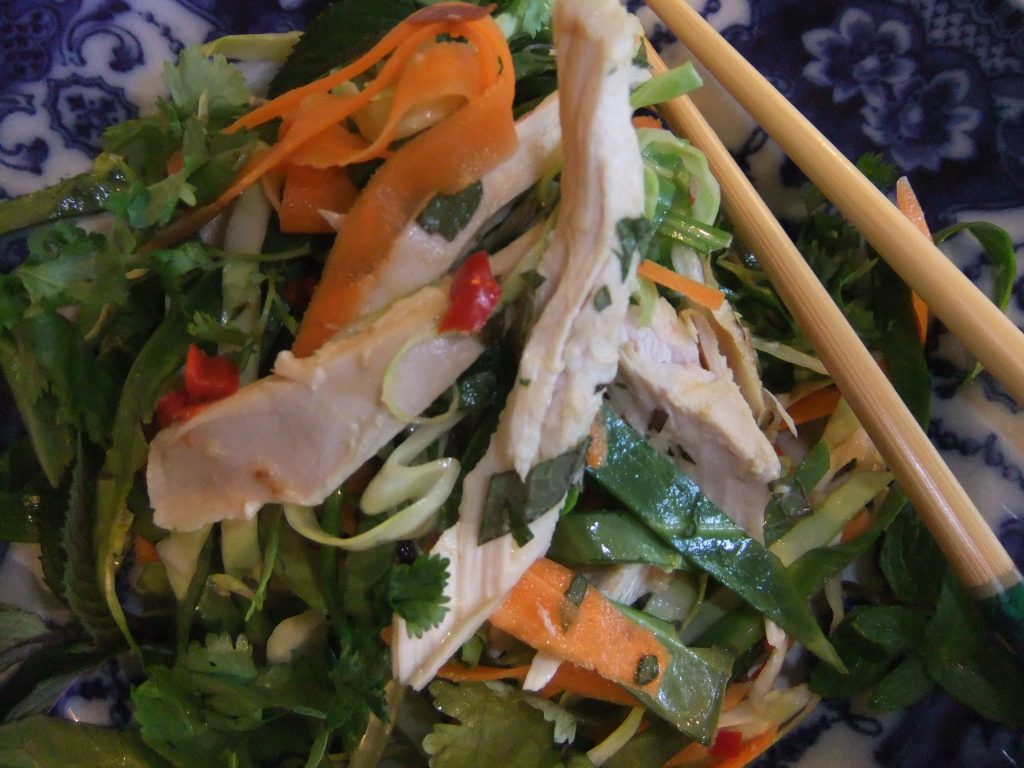
We made this on Wednesday night using leftovers from the pot roast chicken we cooked on Monday. We doubled up the quantities so as to have effortlessly packed lunches the following day. Spouse was ravenous so I cooked an extra 60g of brown rice noodles (which I dressed with a little tamari sauce and a teaspoon of cold-pressed sesame oil) for him as a side. This recipe is suitable for a ketogenic diet if you omit syrup, coconut sugar, or xylitol. If you have a problem with raw onions, try soaking them in the dressing for 20 minutes before adding the other ingredients, this takes the heat out of them.
For 2:
160g cooked chicken (organic if possible), shredded or sliced
4 cups raw, shredded cabbage red, white or green
1 medium carrot, cut into strips with a potato peeler or julienned (in thin matchsticks)
3 spring onions, including green part, cut into long thin strips OR 1/2 a medium/large red onion, halved, then sliced thinly
2 tbsp coarsely chopped or torn mint leaves
Mint and coriander sprigs to garnish
Dressing
1 tbsp fresh lime juice
1 tbsp oriental fish sauce
1 tsp white wine vinegar or rice vinegar if you have it
1 crushed clove garlic
1 DSP coconut sugar, agave or maple syrup, or xylitol (optional) (omit for ketogenic diet)
1 tbsp cold-pressed (virgin) sesame/peanut/sunflower/macadamia/rapeseed oil (if you cannot get any of these as the cold-pressed oil, do not use any oil at all)
1 red chili, de-seeded and finely chopped (optional)
1. For the dressing: put the lime juice, fish sauce, vinegar, garlic & coconut sugar, syrup or xylitol, oil, and chilies in a bowl and whisk so the sugar/xylitol dissolves. Leave for 30 minutes for the flavours to develop.
2. Mix in the salad ingredients and divide between 2 plates or bowls.
3. Garnish with mint and coriander sprigs.
If this is your evening meal and you’re not wanting to lose weight, serve with brown rice or 100% buckwheat or brown rice noodles sprinkled with a little Tamari sauce (from Asian shops). Omit noodles for a ketogenic diet.
Dietary note: Tamari is a delicious, naturally gluten-free soya sauce, and buckwheat and brown rice are naturally gluten-free too. Cabbage contains folic acid and cabagin which are both very healing for the digestive system, especially if you have gastritis or ulcers. Surprisingly, chilies can have a pain-relieving effect on ulcers and are used in ayurvedic medicine as an ulcer treatment. The virgin, cold-pressed nut and seed oils mentioned in the recipe, eaten raw, are a rich source of omega 6 essential fats. Essential fats are needed for clear skin, digestive wellness, and energy production. Trans fats, generated during standard (non-cold) processing of oils and also during cooking, are harmful. They damage the body and block essential fat utilization. Herbs and spices are high in antioxidants for many health benefits. The reason some people do not tolerate raw onions is they relax the esophageal sphincter. This is the valve that stops food from coming back up towards your gullet. If you have acid reflux, it means that this valve could do with being strengthened by specific dietary measures.
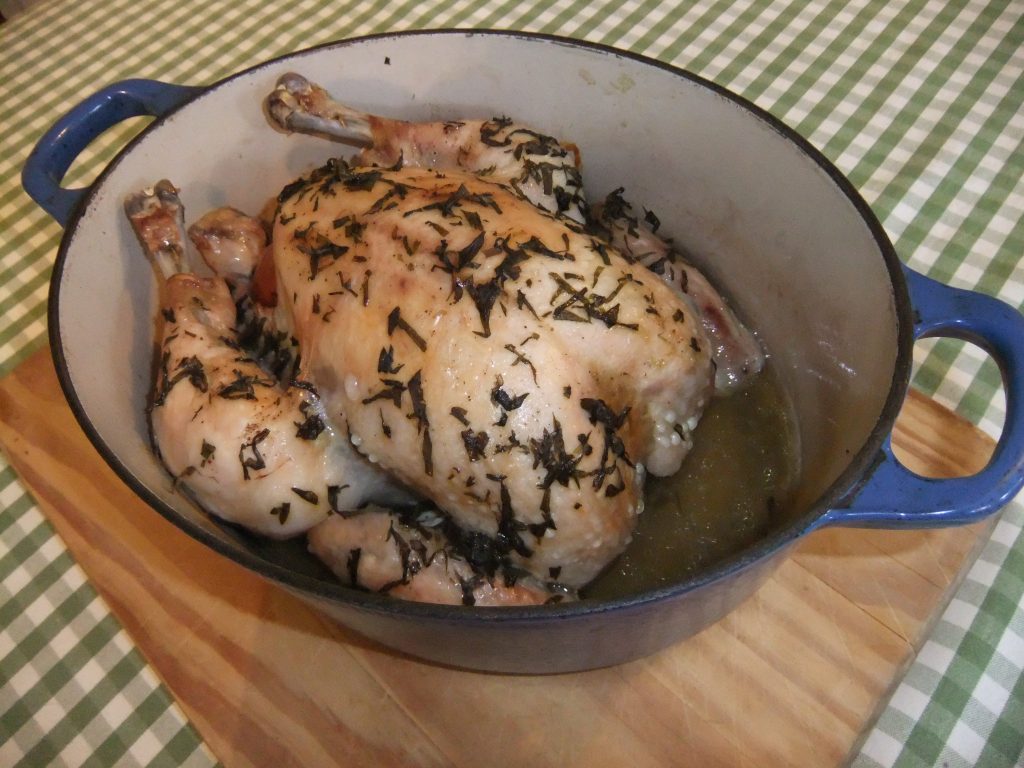
I found this recipe in a magazine once. No idea who it’s by but it’s lovely and is our favourite method of roasting a chicken. On Monday evening we cooked this and ate it lukewarm with a mixed salad in the garden. Normally we eat it with lots of steamed green or runner beans, or cabbage and maybe a small baked sweet potato or some steamed mashed carrots. If you are on a ketogenic eating plan, omit the root vegetables. I keep all the bones in a dish in the fridge for up to 4 days (or in the freezer) to make stock.
For 4, or 2 with lots leftover:
1 organic chicken
2-4 garlic cloves
Olive oil
A pinch of Himalayan or Atlantic Sea Salt
Freshly ground black pepper
2 tbsp roughly chopped fresh tarragon OR 1 dsp dried tarragon or 1 heaped dsp finely chopped fresh rosemary OR 1 large handful of washed thyme sprigs
1 lemon, halved
A heavy-bottomed ovenproof casserole (or pyrex) dish with a lid
1. Preheat the oven to 200C. Discard any giblets inside the chicken.
2. Peel and cut the garlic cloves in half lengthways. Use a sharp-pointed knife to make 8 deep slits in the fleshiest parts of the chicken – thighs, breasts – and push the garlic halves well down into these. If you can’t face slitting and pushing garlic into the slits, just throw unpeeled garlic around the bird to eat hot when the whole thing is cooked.
3. Put 1 lemon half inside the bird, smear the upper part of the chicken with olive oil, and put into an ovenproof casserole dish with a lid. Add the second lemon half to the pot. Season with the salt and pepper and sprinkle with the tarragon or rosemary, or scatter the thyme over and around the bird. The reason I don’t destalk and chop the thyme is that it’s a pain and the leaves fall off during cooking anyway so why bother? If you are a real garlic fan, as I am, you can scatter any spare unpeeled cloves of garlic into the casserole dish now – they will be delicious squeezed hot from their skins to go with the cooked chicken.
4. Cover with a lid, cook 30-40 mins, then reduce heat to 150C and cook for a further hour.
5. Test by sticking a knife into the thigh. If the juices run clear the bird is cooked.
6. Allow the bird to rest on a warm plate for 20 minutes or so after taking it out of the oven. This makes the meat easier to cut, and moister than if you carve straight away. Cook your vegetables or prep your salad while the meat is resting. If this is your evening meal and you are on a ketogenic eating plan or want to lose weight, omit the root vegetables (carrots, potatoes etc.).
7. If you serve this hot, spoon over the herby, lemony juices.
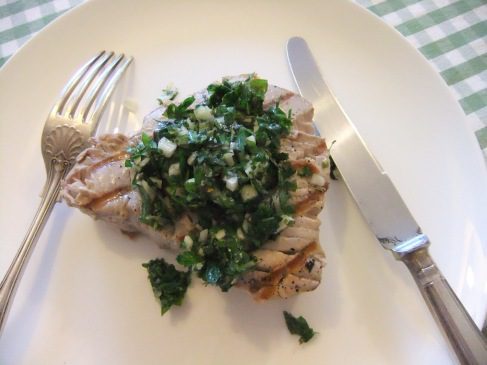
This is inspired by a very simple treatment of a steak that I once ate in sunny Amalfi. It was so fresh and zingy I loved it and tried to recreate the taste when I got home. We also use the gorgeous herb-and-garlic topping for a venison steak or a piece of lean sirloin, simply done on a barely-oiled pan. The herbs you use in addition to the parsley depend on what’s convenient for you to buy or pick from your garden.
For 2:
2 tuna steaks, about 120g each (about the size of your palm)
1 small handful of parsley (flat-leaf is nice if you can get it)
A sprig (about 8-10cm long) of rosemary, 3-4 sprigs of thyme, or a handful of oregano sprigs (or all 3 if you are lucky enough to grow your own herbs and have a plentiful supply)
2-3 cloves garlic
Extra virgin olive oil
Freshly ground black pepper
A pinch of Himalayan or Atlantic Sea Salt
To serve: a large mixed salad, with dressing, or 350g steamed French or runner beans
First of all, wash and dry your herbs and destalk them. you will want, in total about 3 tablespoons of chopped herbs. Then chop as finely as you can manage. The finer the herbs, the less chewy the topping will be. Peel and chop the garlic cloves as finely as you can manage. Add the chopped herbs and garlic to a bowl, season with a few good grinds of black pepper, a pinch of salt, and enough extra virgin olive oil to wet the whole thing so it sticks together a bit. Mix and set aside.
Prepare your salad or put your beans on to steam before cooking the tuna steaks.
Heat a heavy-bottomed frying pan or griddle pan. Oil it lightly using some macadamia or olive oil, just enough to get a non-stick film on the pan but not enough to see an oil slick.
On medium heat, cook the steaks for around 4-5 minutes on each side (it depends on the thickness of the steak). It’s ok to leave fresh tuna a little pink in the middle and it’s moister and more delicious that way.
Once the steaks are done, slide onto warm plates and pile the garlic-herb mix on top of each one.
Serve with the salad or steamed French or runner beans.
Dietary note: Fresh (not tinned) tuna is a great source of omega 3 oils. Garlic and herbs contain potent antioxidants which also enhance many functions in the body, from dampening down inflammation and allergies to boosting liver function. Regularly eating fresh herbs, garlic and oily fish has positive effects on mood, skin health, and digestive wellness. The raw extra virgin olive oil used here is a source of vitamin E which is also anti-inflammatory and anti-ageing. People adding olive oil, raw nuts, and raw seeds to their diet lose weight, according to scientific research.