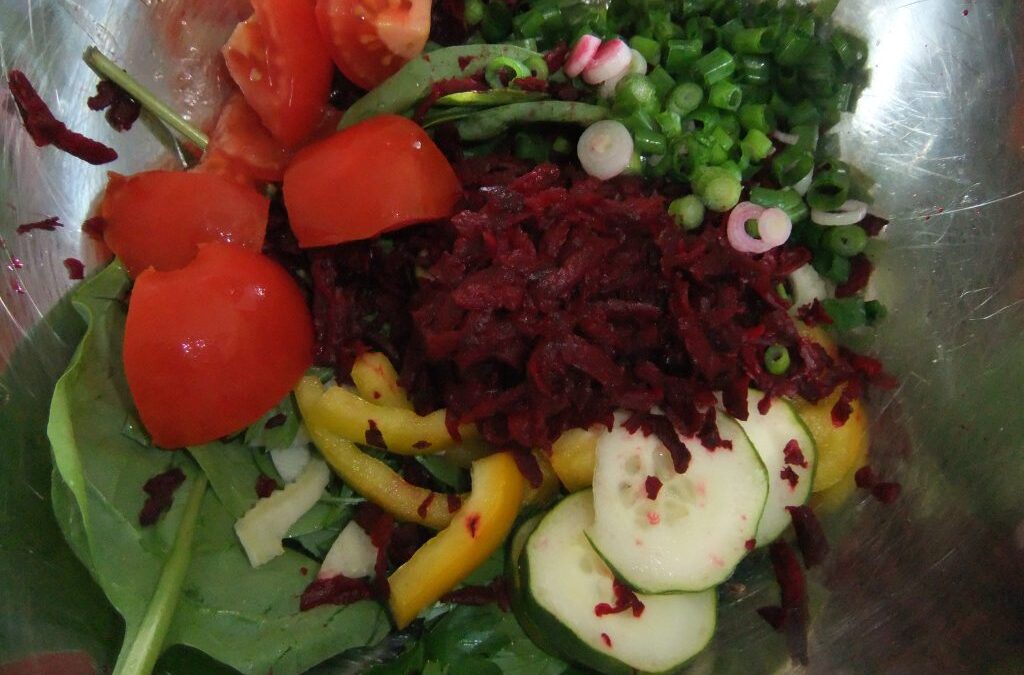
This is a salad we eat most days for lunch with some protein like chicken, smoked fish, a bean/pulse salad or a couple of eggs. The main thing about a salad is it needs to be almost completely raw, take up at least 50% of your plate and have lots of different colours to give you a range of nutrients. You’ll see some blanched frozen peas in the picture here, because I love them. (Thaw frozen petit pois in sieve under hot tap, put in bowl, cover generously with boiling water, leave 1 min, strain, run under cool tap and add to salads). If you’re packing this lunch to eat later, simply throw in handful frozen peas – will keep everything cool and take a couple hours to melt.
If you’re in a hurry you don’t have to have all the ingredients – mix and match.
For 1: Leaves (choose one or 2, more if you want):
A generous 2-hand handful torn up: choose from rocket, chicory, lettuce, endive, radicchio, organic baby spinach, nasturtium leaves, watercress, pea shoots etc. Colours (choose 3 or 4, more if you want):
1 large tomato or handful cherry tomatoes , cut in bite size pieces
2 spring onions or 1/4 red onion, sliced thinly
1/2 red/yellow pepper, sliced
Cup of sliced cucumber, courgette, fennel or celery or a bit of everything
Grilled artichokes (drain off the low-grade oil before adding)
1 tbs olives Healthy Fats:
Optional: 1/4-1/2 soft avocado, cubed (healthy fats aid weight management)
1-3 dsp extra virgin dressing https://www.annacollins.ie/mediterranean-salad-dressing/ OR https://www.annacollins.ie/asian-dressing/ Starch (not more than 1/4 of your meal though):
beetroot (cooked and sliced or raw and grated), small carrot, peeled and grated, thinly sliced raw butternut squash, some leftover cooked baby boiled potatoes, sweet potatoes or roasted squash Gut-bacteria modifying boost:
1 clove raw garlic, crushed Optional carbs (no more than 1/4 of the meal):
Grated carrots
Grated or chopped beetroot
Cold cooked potatoes (NOT for SC diet)
1. Throw everything in a big bowl, add 1-3 dsp extra virgin oil-based dressing and toss til coated.
2. Eat with a palm sized portion meat, fish, couple of eggs or a cup of cooked beans/pulses.
Why this is good for you: Fresh raw vegetables, especially when organic, are packed with vitamin C and biofoavonoids. These strengthen skin and connective tissue, speed healing and help prevent digestive disorders. You need vitamin C from raw foods, folate from dark green leafy veg (eg spinach, chard, broccoli), and bioflavonoids to help maintain digestive wellness. Greens are also rich in magnesium, which helps you relax your mind and body and fight infections.
Getting into the habit of eating a salad every lunchtime is one of the best things you can do for your health. Veggies in your daily diet also give you a beautiful golden skin tone after 6-8 weeks, according to a study I quoted in one of my e-newsletters last year. Spices and herbs in my special Mediterranean dressing lower numbers of “bad” bacteria in your gut and support growth of healthy bacteria that impact on everything – even weight management and mood.
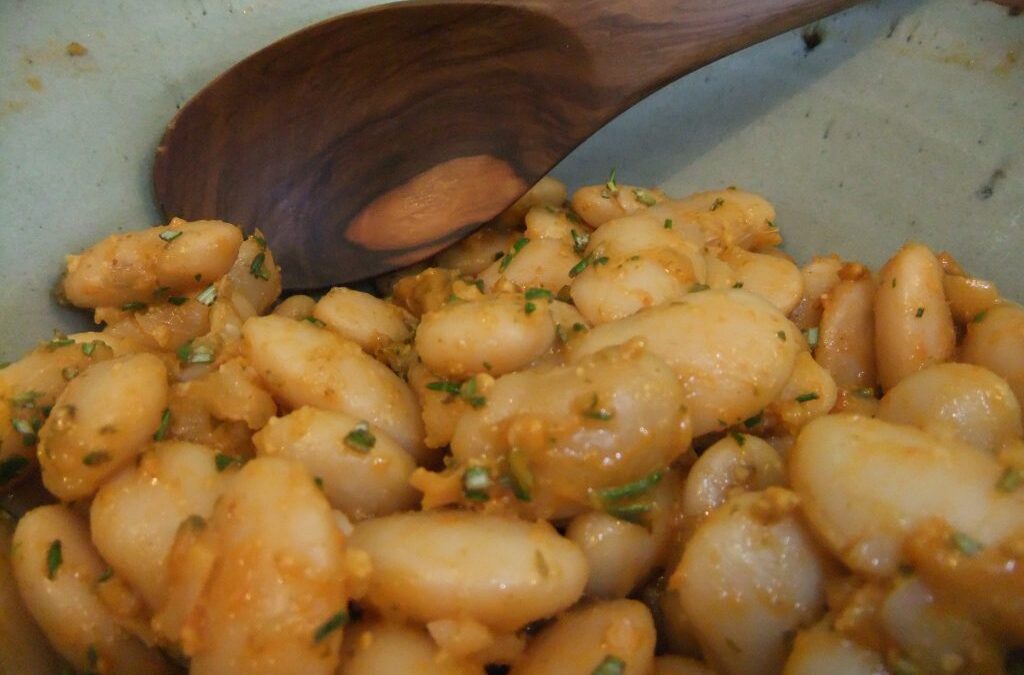
This is something delicious I make when I’m in a hurry and need some good quality protein. It works well with a simple mixed salad on the side to make a balanced meal. You could also substitute it for potatoes alongside meat or white fish. I usually make lots so we can use the leftovers for packed lunches.
Serves 4 (or 2 with leftovers)
1 heaped dsp sun-dried tomato pesto
One of the following fresh herbs if you have them, chopped:
Rosemary leaves: 1 tsp/oregano 1 tbs/parsley 1 tbs
2 dsp lemon juice
2 tins or mugs of cooked butter beans, drained
1 clove garlic, crushed (optional)
Black pepper
Mix the lemon juice, pesto, garlic, and herbs together in a bowl.
Add butterbeans, a few good grinds of black pepper, and mix well. Taste and if you feel like it, add more lemon juice, pesto, or pepper.
Eat with a large mixed salad such as my “basic mixed salad”.
Why this recipe is good for you: Beans and pulses are rich in soluble fibre, a type of fibre that feeds friendly bacteria in your gut. Friendly bacteria are important for your immune system, helping regulate it and prevent allergies such as eczema and inflammatory diseases such as colitis. These good bacteria also help your body clear toxins. Toxins we are commonly exposed to include used-up hormones (eg estrogens, testosterone), old medications, and chemicals (eg toxic nitrites from processed meat, petrochemicals from toiletries, and petrol fumes). So if you want to have good detoxification, clear skin, and tune up your digestion, fostering your good gut bacteria is one of the keys. Rosemary, oregano, lemon juice, and garlic are also great helpers for the liver, also promoting fast efficient clearance of toxins.
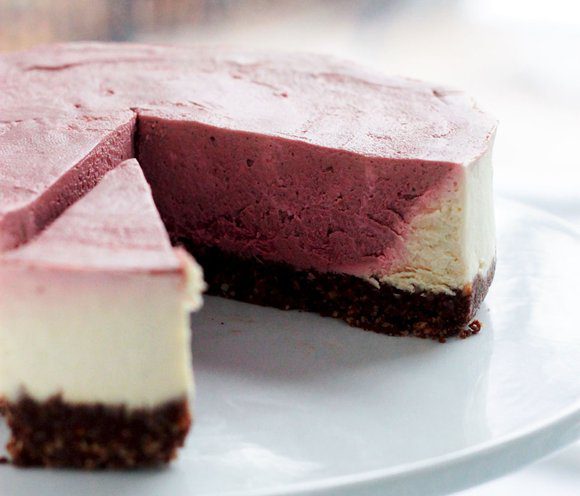
We ate this for dessert last night, and I indulged again after a full breakfast this morning so am sitting here feeling a bit stuffed! This delicious mostly cake is very decadent and has a lot of good-for-you stuff. Technically its not all raw as cashew nuts are steamed after harvesting to make them edible. You can make this up to 5 days ahead if you like. The recipe is adapted from one by Laura Wright but I have reduced the syrups and given you alternatives for those hard-to-find ingredients. I also use cooked beetroot instead of raw, which simply doesnt break up well unless you have a super high speed food processor. Sometimes I make individual servings in mousse rings and store in a box in the freezer. I find that this cake quantity makes at least 10 so sometimes I make half the quantity for a smaller gathering.
It’s really important to use the mousse ingredients at room temperature not straight from the fridge – otherwise it solidifies instantly into an un-pourable mound with a grainy texture. I found out this by experience!!
For 1 x 22cm cake (to serve 10-12): Remember to check out “larder & shopping” section in this blog for suppliers
Base:
310g raw almonds
30g raw cacao powder
¼ level tsp Himalayan or Atlantic Sea Salt
40g dried sour cherries (or use dried cranberries if you can’t get cherries)
8 medjool dates, pitted
1 tsp vanilla extract
1 rounded tbsp extra virgin coconut oil
Mousse:
325g raw cashews, soaked overnight in filtered water, at room temperature
330ml almond milk, at room temperature
155ml/140g extra virgin coconut oil, gently warmed to a liquid
60ml/4 level tbs/85g raw honey, raw agave nectar or maple syrup, at room temperature (tip: use a hot spoon to measure honey, if using)
Juice of 1 lemon, at room temperature
2 tsp vanilla extract
¼ level tsp Himalayan or Atlantic Sea Salt
115g frozen, pitted cherries (or raspberries if you prefer), thawed, at room temperature – or use pitted fresh cherries if in season
1 small cooked beetroot, chopped, at room temperature (shop bought will do)
1 x 22cm spring-form cake tin
A little extra coconut oil for greasing the tin
A food processor
Cling film (if making ahead and storing in the freezer)
1. To make the base, place the almonds in a food processor and pulse until chopped and resembling breadcrumbs. Add the cacao powder, salt, dried sour cherries, dates, vanilla and rounded tbsp coconut oil and blitz until the dried fruit is evenly distributed throughout the mix. When the mixture holds together when pinched, it’s ready to use. Grease the sides of your tin with a little extra coconut oil or rapeseed oil. Evenly press the base mix into the bottom of the prepared tin and set aside.
2. To make the mousse, remember that all the ingredients need to be at least at room temperature or else the mix thickens too quickly and becomes grainy and unpourable. Drain the cashews and combine them in the food processor with the almond milk, coconut oil, honey/maple syrup or agave, lemon juice and salt. Blend until smooth.
3. Pour all but 500ml (about half) of the mixture into the prepared tin. Add the pitted cherries and chopped beetroot to the remaining 500ml of the mixture. Blend until smooth and pour all but 250ml of this mixture quickly into the centre of the cake. Lightly drizzle the remaining mousse mixture around the top of the cake creating a decorative marbled effect.
4. To set the mousse cake: cover the tin with a plate and place in the coldest (bottom) shelf of the fridge for 6 hours or overnight. Alternatively, stretch cling film over the top of the tin and slide gently into the freezer for 6 hours or overnight. The cake will keep quite happily for a couple of weeks in the freezer. Remove from the freezer to thaw at room temperature for 1-2 hours before serving. When its soft right the way through (test with a needle), place in the fridge until you want to serve.
Dietary note: Virgin coconut oil is a great source of medium chain triglycerides, a special type of fat that goes straight into energy production in your body instead of being used to make fat. For this reason, it is a healthier fat than butter. Coconut oil also contains capryllic acid, which has anti-fungal properties – good news for anyone with bowel issues or cystitis linked to candida. Cherries, red berries and beetroots are high in proanthocyanadins which strengthen connective tissue and the lining of your digestive system, reducing the tendency to diverticulitis, hernias and saggy skin. Raw almonds (and cold-pressed or “extra virgin” oils) contain vitamin E. This vitamin naturally lubricates and moisturises your skin, reduces the production of wrinkles, and also helps dampen down allergic reactions. Healthy skin does not need body moisturisers. “Raw” cashew nuts are, bizarrely, not raw at all – the nuts have to be steamed in order to be extracted from their hard shell. Cashews are a sweetish and healthier substitute for cream cheese, sugar and other not-so-great ingredients that tend to be used in desserts. Desserts like this one should be used as occasional treats and not eaten at every meal. They are still rich in natural sugars and if you eat them all the time, provide more calories than you need. A normal daily intake of raw nuts and seeds would not exceed a tablespoon or two.
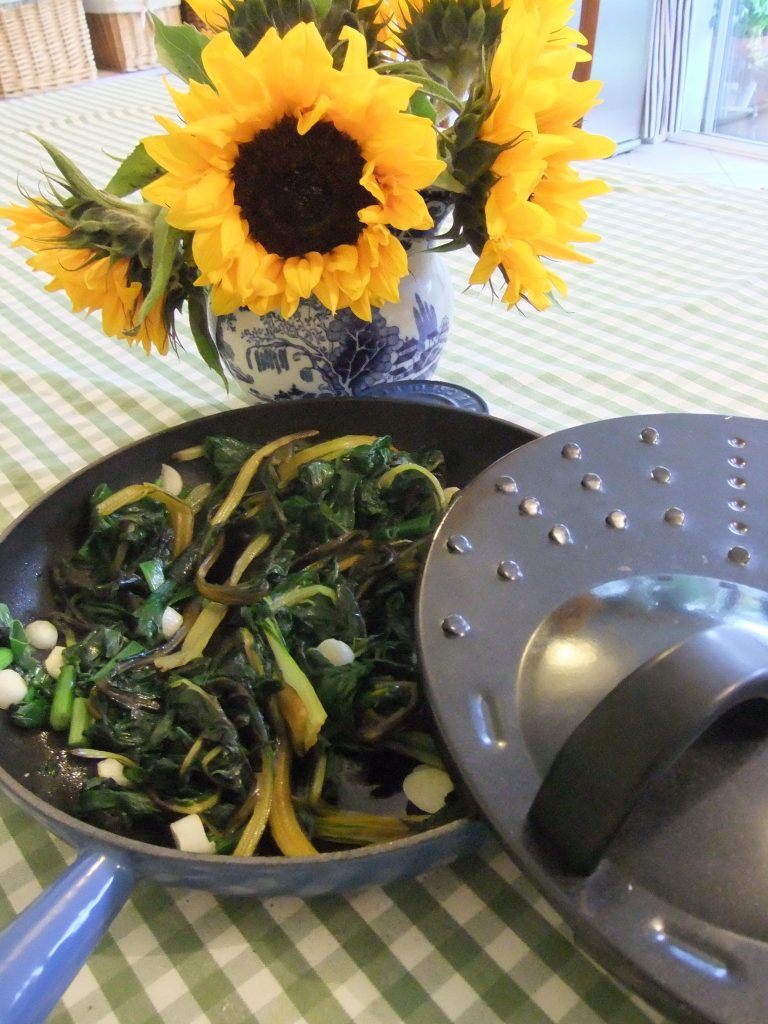
We were once in a rustic trattoria in Puglia where there was no menu. The owner just came out of the kitchen and told you what they were going to feed you. One of the courses was local greens (cima di rape) braised with olive oil and garlic and liberally sprinkled with Parmesan. It was incredibly good. Since that holiday we often cook greens by braising them with olive oil and garlic, rather then steaming. Serve as a side to a piece of meat or fish, or maybe an omelette or a simple piece of smoked mackerel or trout.
1 x 500g bag chard or organic* spinach leaves
3 cloves garlic, roughly chopped into quarters
3 spring onions (optional) cut into 2cm lengths
Extra virgin olive oil
Freshly ground black pepper
Optional (avoid for dairy-free diet): 1 tbs freshly grated Parmesan cheese
1. Put a frying pan (ideally a heavy-bottomed one) on a medium heat, add the garlic and white parts of the spring onion and 1 tbs olive oil. Cover with a lid or plate and cook until softened and slightly translucent.
2. Meanwhile wash the chard/spinach, shake the excess moisture off the leafy greens (don’t dry them completely or they will burn). If the leaves are large, cut into approximately 5cm lengths (across the thick stalks) and add to the pan along with the green parts of the spring onions. Cover and cook gently until wilted. If you use baby spinach or chard this will only take a couple of minutes. If you use larger leaves it can take 10-15 minutes.
3. Eat hot or lukewarm – they will keep warm, off the heat, in the covered pan for quite a while.
Why this is good for you: First of all why do I stress “organic” spinach leaves? Because spinach is in the top 3 most agri-chamical-contaminated produce. Agri-chemicals like herbicides disrupt both our gut bacteria and our hormonal systems. Our hormonal systems need to work well for energy, motivation, mood, proper thyroid function, freedom from hormone-related diseases and much more. Chard and spinach, because they are dark green leafy veg, are very high in magnesium and folic acid. If you have digestive disorders, acne, psoriasis, or eczema, or if you are stressed, you could need more of these nutrients. Folic acid and magnesium are essential for liver function and mental health. Most Irish people are deficient in magnesium because don’t eat enough magnesium foods and we eat and drink things that deplete it from your body – coffee, sugar, refined foods, for example. Stress also depletes your nutrients. Celtic people also often have altered folic acid metabolism. This genetic issue may predispose us to alcoholism and depression.
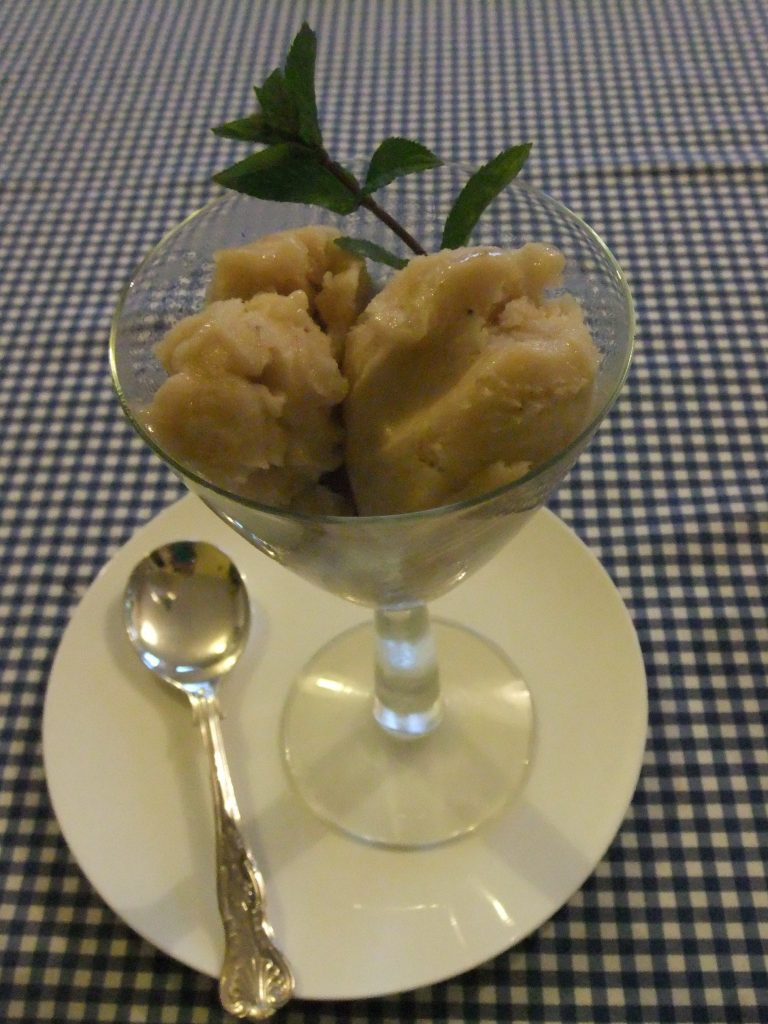
Last night we ate scoops of this creamy, delicious banana ice piled in chilled cocktail glasses. Its incredibly simple to make but totally delicious. The recipe is adapted from one in Agnes Marshalls Book of Ices which came out in 1885. This is very sweet even when made with lemons. Children love it.
Serves 6 (allowing 2 scoops per person)
6 ripe bananas (with spots)
100g xylitol/erythritol
300ml water
The juice of 2 oranges or lemons
A blender/food processor, and (if you have it) an ice cream maker
1. If using an ice cream maker, turn it on to start chilling straight away. This takes at least 10 minutes.
2. Place all the ingredients in a food processor or blender and puree well.
3. Now either freeze the mixture or churn in an ice cream maker until solidified (this takes around half an hour). Eat immediately or store in the freezer. If you don’t use an ice cream maker, then removing the mix from the freezer after an hour and beating it with a whisk before replacing in the freezer will make it creamier. Its not vital, though.
4. To serve, remove from the freezer for half an hour to soften. If you have a metal ice cream scoop, dip it in a jug of hot water between scoops to achieve perfectly-shaped scoops (I was in a hurry, forgot to boil the kettle, and didn’t bother, which is why the photo above looks a bit too rustic…).
Why this is good for you: Bananas are a rich source of fructo oligo saccharides (FOS for short), which help feed beneficial bacteria in your gut. Xylitol is a healthier alternative to standard sugar as appears not to deplete nutrients and has a much lesser impact on blood sugar levels. Even diabetics can eat xylitol. Fresh lemon juice is high in health-boosting antioxidants and is supportive of liver function – good news if you want to balance hormones, enhance energy or have perfect skin. If you want to avoid upsetting blood sugar levels (bananas are a high sugar fruit), eat this ice as a dessert after a protein meal or eat some protein/healthy fats alongside. A dollop of Coyo or Abbot Kinney’s dairy-free yoghurt (from health stores) would be a good thing to top this. Or sprinkle 1 tbsp of gently toated almond flakes on top before eating.