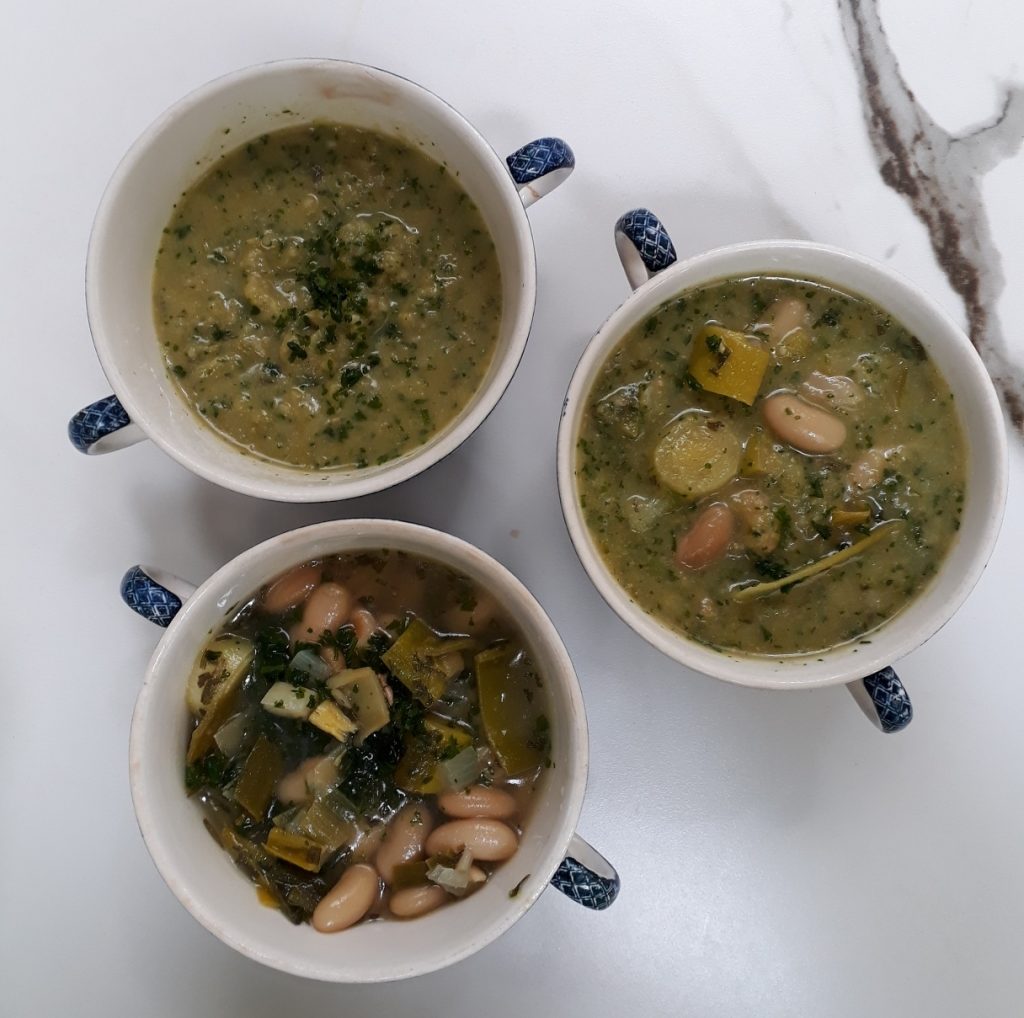
I created this as a keep-you-fuller-for-longer version of classic leek soup. I swapped the potatoes for white beans because potatoes are mostly just sugars whereas beans are full of nutrients and protein. This is a fantastic winter warmer and a meal in itself. If you feel like it, eat it with some wholemeal bread such as gluten-free or (if you can eat gluten) 100% rye sourdough or other wholemeal 100% sourdough bread.. Enjoy.
For 3:
600g leeks, including all the green part
800ml chicken stock (or use 1 Kallo chicken stock cube and water)
1 large clove garlic, peeled and sliced
About 425g of cooked, drained no-added sugar white beans
(eg. white haricots, canellini or butter beans) – use a tin if you can’t soak and cook your own beans.
Black pepper
1 tbs extra virgin olive oil and extra for drizzling
2 tbs fresh or frozen chopped parsley if you have it
1. Wash and slice the leeks and place in a large saucepan with the garlic and 1 dtbs olive oil and 1 tbs of clean water or stock.
2. Sweat, covered, until leeks are wilted and soft.
3. Add the stock, beans and simmer for a few minutes to warm through.
4. You can eat this soup 3 ways: a) As it is, lots of things floating in broth b) blend half of it with the parsley and mix back in with unblended soup c) blend the whole thing for a totally smooth end product.
5. If you have blended the soup, add water if too thick, reaheat and serve with lots of freshly ground black pepper and a generous drizzle of extra virgin olive oil.
Variations:
Adding a squeeze of lemon juice when serving helps digestion by raising stomach acidity (often low in those over 50 or who suffer from bloating after eating).
Add a heaped teaspoon of dried tarragon when the soup is cooked. It has a lovely buttery flavour and as a herb helps reduce unhelpful bacteria in your gut.
Why this is good for you: Leeks, garlic beans are both a rich source of soluble fibre which encourages friendly bacteria (“probiotics”) to flourish in your gut. Probiotics help balance both male and female hormones, keep skin clear and healthy and promote a healthy, resilient digestive system. They are also critical for a strong immune system that sees off infection AND doesn’t overreact (as seen in autoimmune and inflammatory conditions like hypothyroidism, arthritis, eczema and asthma).
Soluble fibre also binds (sticks to) toxins such mercury, cadmium, lead and arsenic in your gut. If you have mercury fillings, eat tuna, non-organic rice or smoke, you can accumulate mercury, arsenic and cadmium in your body. All toxins need to be quickly eliminated from the body in the stools. Soluble fibre absorbs water, helping to bulk up stools in your colon, thus reducing the risk of constipation. Constipation allows reabsorption of toxins from your bowel which can lead to a variety of health effects such as poor skin, anxiety, headaches, hair loss, hormonal imbalance and weight gain. The protein in the beans and the extra virgin olive oil both help you feel fuller for longer after eating this hearty soup.
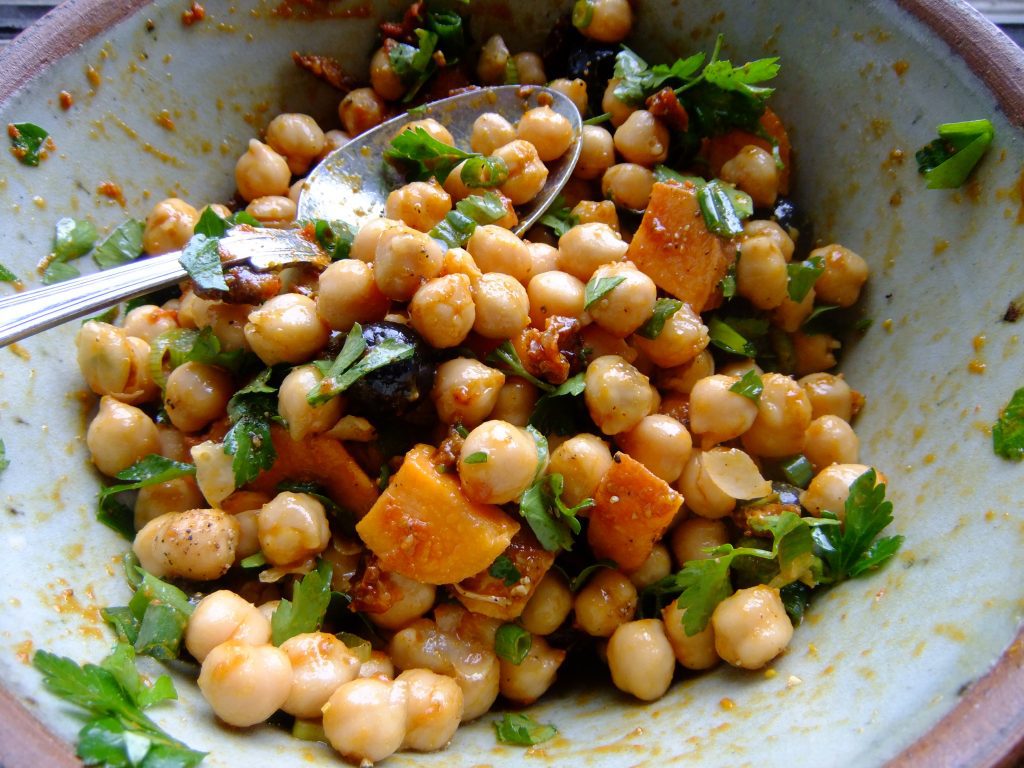
Had to rush home last Saturday at lunchtime and there was not a lot in the house. We cobbled this together and it was gorgeous! We thought it had quite a lot of umami – the sort of meaty, satisfying deliciousness chefs and food writers go on about.
If you have a problem with raw onions, try cutting up the onions before you do anything else. Soak them in the lemon juice for 10 minutes – it “cooks” the onions and takes the heat right out. I don’t know how it works, but it does.
For 4
1 dsp of sundried tomato paste, dairy free red pesto or paste from my Indian spiced butternut squash recipe on this blog (ingredients below)
2 tins (about 850g) rinsed, drained, cooked chickpeas
2 tbs lemon juice
3-4 spring onions, finely sliced (or ¼ of a large red onion, thinly sliced or chopped)
Small bunch parsley, chopped (tip: rinse, dry and chop parsley and keep in the freezer for instant use)
1 heaped tbs black olives – pitted or unpitted, whatever you prefer
3 sundried tomatoes, soaked in boiling water for 5-10 mins, drained and chopped (Or use semi sundried, which don’t need to be soaked at all)
Black pepper
2-3 tbs extra virgin olive oil
A handful of leftover bite size pieces of baked or steamed sweet potato, squash, potato, pumpkin, quinoa or millet you might have hanging around the fridge
The Indian spiced butternut squash rub from the recipe on this blog is made by mixing:
1 level tsp turmeric
1 rounded tsp ground cumin
Rounded tsp ground coriander
Half level tsp Himalayan salt or sea salt
2 tbs (140g tin) tomato puree
1 tbs virgin olive oil
In a large bowl mix up the paste or sundried tomato pesto with the lemon juice, olive oil, chopped parsley and a few good grinds of black pepper.
Add the rest of the ingredients and mix to coat. Serve at room temperature.
Serve with a large green salad or as a side dish to roast meat/white fish with a green vegetable.
Variation:
Use a small bunch of roughly chopped coriander instead of parsley, or 1 teaspoonful of chopped fresh rosemary leaves.
Why this is good for you: Herbs and spices are fantastic for your health. They help clear your skin and slow the ageing process. They are also anti-inflammatory, good news for calming your digestive system. Chickpeas and onions are a great source of soluble fibre which provides nourishment for the friendly bacteria in your gut. If you are new to eating beans and pulses, start with small amounts and build up. Friendly bacteria are important for all aspects of wellness, from weight management, to good skin, healthy digestion and strong immunity to prevent infections and colds. Chickpeas are rich in protein (at around 8%) so they can take the place of meat or fish at a meal. If 25% of every meal is protein, you will stay fuller longer and be less prey to cravings. Chickpeas contain magnesium too, which aids relaxation.
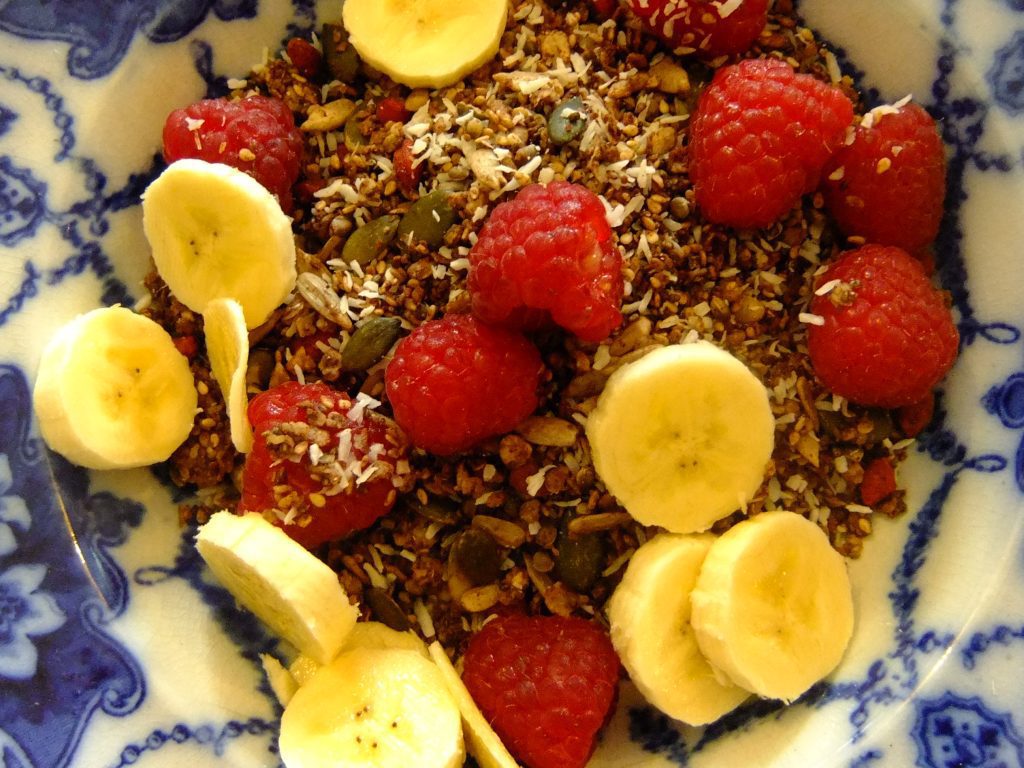
This granola is adapted from one I found in Patrick Holfords “Food Glorious Food” cookbook, which I love. Because this granola contains lots of good fats it’s really filling so a little goes a long way. For sweetness, stevia/erythritol is preferable to xylitol but any is acceptable. This keeps for a month in an airtight glass jar in a cool dark cupboard. Serve the granola with natural yoghurt, kefir, organic milk or some no-added sugar dairy-free milk (such as additive-free coconut/almond) and some berries or a chopped pear/apple. Yum!
Use this as a breakfast or a (smaller) dessert.
Serves 4-6
1 heaped tbs virgin coconut oil (1 tablespoon = 2 dessertspoons)
150g gluten-free oatflakes, organic if possible (if you can eat gluten, then standard organic porridge/jumbo oatflakes are perfect)
3 level tbs tahini, ideally a raw brand such as Carly’s
3 heaped tbs pumpkin seeds
3 heaped tbs sunflower seeds
3 heaped sesame seeds
3 heaped tbs chopped raw walnuts
3 heaped dessicated coconut
3 heaped tbs goji berries
1 heaped tsp ground cinnamon
1 heaped tsp ground ginger
To sweeten: 2 tbs xylitol, Dr Coys Stevia Erylite (or 30 drops pure liquid 100% stevia) or monk fruit extract from health stores/online
2 dsp cacao/cocoa powder
Optional (if you have issues digesting fats or if you are a post-menopausal woman):
2 heaped dsp GMO-free lecithin granules health stores (sunflower lecithin is better than soy).
To serve:
Milk of your choice and fruit (choose from mixed berries, apple or pear, organic if possible)
Optional 1-2 dsp cold milled flax seeds
Optional protein boost: High-grade pea protein e.g. Nuzest 1-2 dsp
Gently melt coconut oil in a large wide-bottomed saucepan.
Add xylitol or stevia, stir for a second, then add tahini. Stir to mix.
Remove from heat, add oatflakes, mix well, then add everything else, making sure not to heat.
Taste and if you want, add more stevia/xylitol/Dr Coys Stevia Erylite.
To serve:
Ideally soak overnight in half water half milk of your choice (makes everything easier to digest, more filling, and the goji berries plump and soft)
Top with (if recommended by nutritionist) 1-2 dsp cold-milled flax seeds and mixed berries or a chopped apple or pear (organic if possible)
Why this is good for you Most granola is mainly grain and sugar/honey and doesn’t contain the raw healthy fats or protein needed for a balanced breakfast that keeps blood sugar stable. This granola has generous protein from nuts and seeds, and also lots of essential fats omega 3 and 6, all of which keep you fuller longer and feed your brain. Virgin coconut oil contains medium chain triglycerides – these are really good for energy production and brain health. Spices like cocoa, ginger and cinnamon are antioxidant and can delay the ageing process AND modify your gut bacteria for better weight management and health. Spices also support your immune system. Lecithin is rich in phosphadityl choline and so great for your brain. Lecithin also breaks down (emulsifies) fats into tiny droplets, helping you digest them. The granules have a lovely, creamy taste. Concerned about eating soya products? Lecithin is free from soya protein. The best lecithin is from sunflower seeds.
For storing this granola, it’s best to use an airtight glass or metal container in the fridge. Polyethylene (PET) or plastic containers with recycling numbers 1,2 and 4 are also safe for food storage. That way, your food won’t be absorbing toxic BPA (bisphenol A). Avoid any polycarbonate containers or those with recycling number 7 – these leech BPA into your food. Avoiding BPA is good news if you want to avoid being overweight or having hormonal imbalances like diabetes, serious breast/prostate disease or energy issues.
Something really simple for all you food-lovers this week. Amazingly, this good-for-you buttery spread looks and tastes great. Spread it on bread, toast, crackers. I love to eat toast smothered with this spread alongside baked beans for breakfast from time to time. It’s not a good idea to cook or bake with this spread as the delicate flax oil (like all polyunsaturated nut and seed oils) generates (nasty) trans fats when cooked. Pure coconut oil would be fine to cook with, though, as it can’t produce trans fats.
The spread keeps in the fridge for at least a month. Adding a little natural salt changes this from something that tastes “worthy” to something delicious.
3 parts extra virgin coconut oil (warm it slightly by placing near a radiator or sitting the jar in hot water so it’s easier to get out of the jar)
1 part virgin cold-pressed flax (linseed) oil
A pinch of Atlantic Sea Salt or Himalayan Salt (from health shops and delis)
Or (if you can get it) a pinch of onion salt which gives a fantastic flavour.
Sourcing and Storage:
Buy the oils from health stores and make sure the flax oil has been kept refrigerated in the shop. Biona, FMD and Viridian are three high-quality brands of flax oil. Flax oil must be kept refrigerated in order to maintain its health benefits. See “larder & shopping” for stockists
Blitz the ingredients together in a small food processor or spice grinder. If you don’t have a gadget and want to do this by hand, make sure the coconut oil is a little softened by placing the jar in hot water for a while before whisking the coconut oil along with the flax oil (never heat flax oil).
Pour into a small ceramic or glass (not plastic) bowl. It will be a bit runny but will firm up in the fridge.
Variation:
If you prefer your spread softer, then use slightly more flaxseed oil in the mix. Bear in mind that it will firm up in the fridge.
Why this is great for you: Virgin coconut oil is a rich source of medium chain triglycerides (MCTs). MCTs are used by your body as an almost instant source of energy but are not stored as fat. Good news if you want to boost energy AND lose weight. Coconut oil is also anti-fungal so helps keep overgrowth of yeast in your gut in check. Virgin flax oil contains omega 3 oils which are also good for you, helping keep your blood thin and your immune system healthy. Virgin cold-pressed oils, provided you keep them in the fridge in an airtight container, are great for you and free from toxic -trans fats. Trans fats are found in all heated or refined polyunsaturated oils. Refined oils are any NON cold-pressed nut/seed/vegetable oil or one that has been heated by you to a high temperature by frying. Coconut oil is not polyunsaturated and so cant generate trans fats. Olive oil is monounsaturated so can be damaged by heat but not as much as the nut/seed oils. All well-known margarine brands are made from refined vegetable oils which contain harmful trans fats. Make sure not to put this or any other fat-rich foods in plastic containers. This is because plastic contains bisphenol-A (BPA). BPA is used to lend flexibility to plastic and it is a hormone-disrupter. BPS leeches out of the plastic into the fats in contact with it. Scientific studies link BPA to hormonal imbalance, hormonal cancers, osteoporosis, weight gain, diabetes and more. If you can buy polyethylene “PET” containers instead of plastic, these are free from BPA.
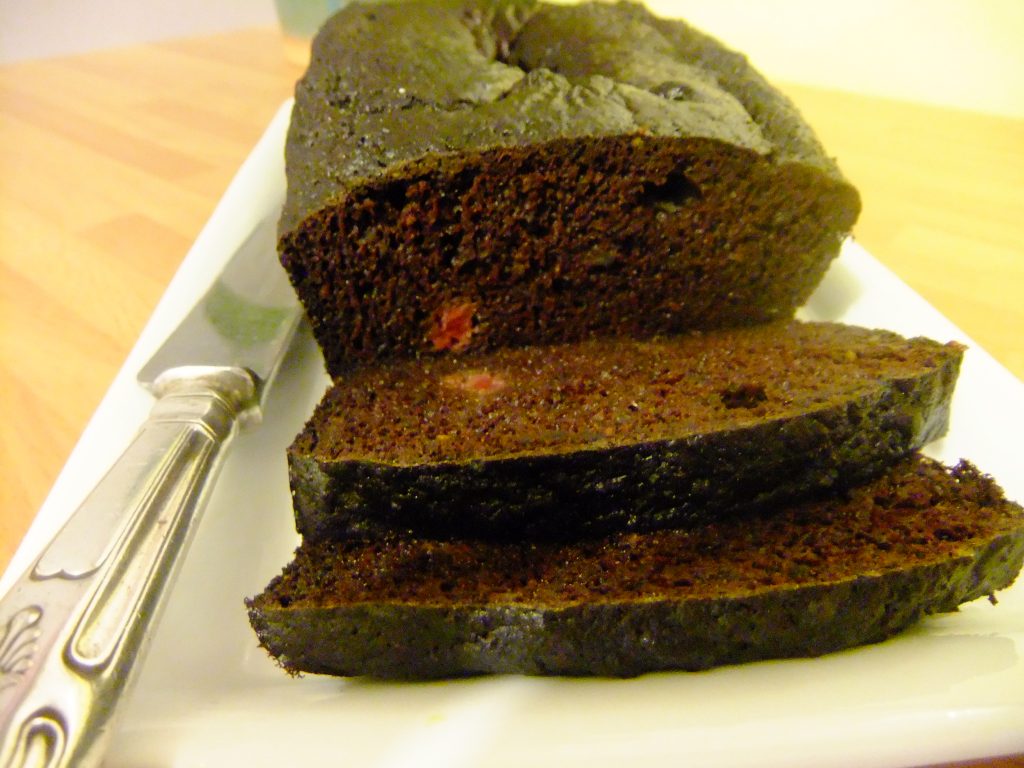
This is a chocolate cake that I’d call a crowd-pleaser. It’s really easy and even healthy enough to eat for breakfast. It disappeared within half an hour yesterday when I brought it in to clinic for the other practitioners. It’s really moist and rich though it contains no oil or butter. Unless you know, you could never tell it was made using beans. If you can, use organic ingredients, especially the eggs and the orange zest. I adapted this from the original recipe on atastylovestory.com. The cooled cake stays really moist for at least 2 days if you store it in an airtight container.
1 heaped plus 1 level tbs cocoa powder
1 heaped plus 1 level tbs brown or white rice flour, organic if possible
1 rounded tsp aluminium-free baking powder*
1 x 400g tin of black beans, rinsed and drained (or soak 180g beans overnight then boil till very soft, cool before using)
3 large eggs
150g erythritol or xylitol (use 100g if you like your cakes only slightly sweet)
1 espresso shot (25-30ml) strong dandelion coffee or coffee
½ tsp vanilla extract
Juice and zest from ½ a medium sized (organic if possible) orange
A pinch of Himalayan or Atlantic sea salt
50g fresh or thawed frozen raspberries or dark chocolate (70% cocoa) chopped into pieces about the size of raisins
1 small loaf tin
Silicon or greaseproof paper
A little oil for greasing the tin
1. Preheat oven to 180C (165C fan oven). Grease and line the base of the loaf tin with a rectangle of paper.
2. Sieve the rice flour, cocoa and baking soda together into a bowl.
3. Blend all the ingredients except the chocolate in a food processor or blender (put liquid ingredients in first, then add beans gradually to help everything go round) until the mixture is smooth. The mixture will seem really runny.
4. Pour batter into a greased, parchment-lined loaf tin. Spread raspberries or chocolate pieces across the surface pressing in with a teaspoon.
5. Bake for about 30-35 minutes. It’s done when the point of a knife or cooking needle comes out clean when you stick it into the middle of the cake. Set aside to cool completely before removing it from the tin.
Note: If you decide to make 2 loaves together this will increase the baking time to around 50 minutes.
*Aluminium in baking powder or bread soda is often listed as “flow agent” or “anti-caking agent”
Why this recipe is better for you The beans in this recipe contain soluble fibre which is a valuable food source for the friendly gut bacteria you need for healthy immunity. Healthy immunity means great defences against pathogens AND not having autoimmune/inflammatory conditions like psoriasis, eczema, hypothyroidism, Crohns or arthritis.
This cake is protein-rich and grain-free, which means it will keep you fuller for longer and not cause spikes in blood sugar (and energy) in the way that “normal” cakes do. It’s low GI, meaning it doesn’t load you up with sugar and deplete essential vitamins and minerals. This is important if you want a tip top immune system and to keep your stress levels low. Xylitol is a healthier alternative to sugar and can safely be used by people with diabetes.
Dandelion coffee is literally the dried, roasted roots of the dandelion plant. It helps support your liver and gallbladder function to help digestion and even your skin. Buy pre-ground dandelion coffee from www.intelligenttea.ie or from health stores dandelion coffee to grind at home. Do avoid “instant” dandelion coffee products they are packed with immune-sabotaging sugars like lactose or dextrose.
Aluminium is an additive in most baking powder and a lot of bread sodas – its used to prevent clumping. Unfortunately aluminium is a “heavy metal” which means it interferes with the body’s ability to utilise nutrients. This can result in a range of issues such as digestive difficulties or low mood.
Using an organic orange and organic eggs means you get less exposure to pesticides. Pesticides are concentrated on the skins or peels or fruit and also in fatty parts of animal produce (eg. egg yolks). Non-organic hens housed in cramped conditions are routinely dusted with pesticides as they are prone to ticks and mites. These chemicals are absorbed through the skin and by inhaling and a certain amount ends up in the eggs. Pesticides are drawn to the fat rich tissues of the body such as nerves and brain. This may be why (non-organic) farmers and agricultural workers have a higher rate of Parkinson’s and other neurological diseases compared to the normal population.