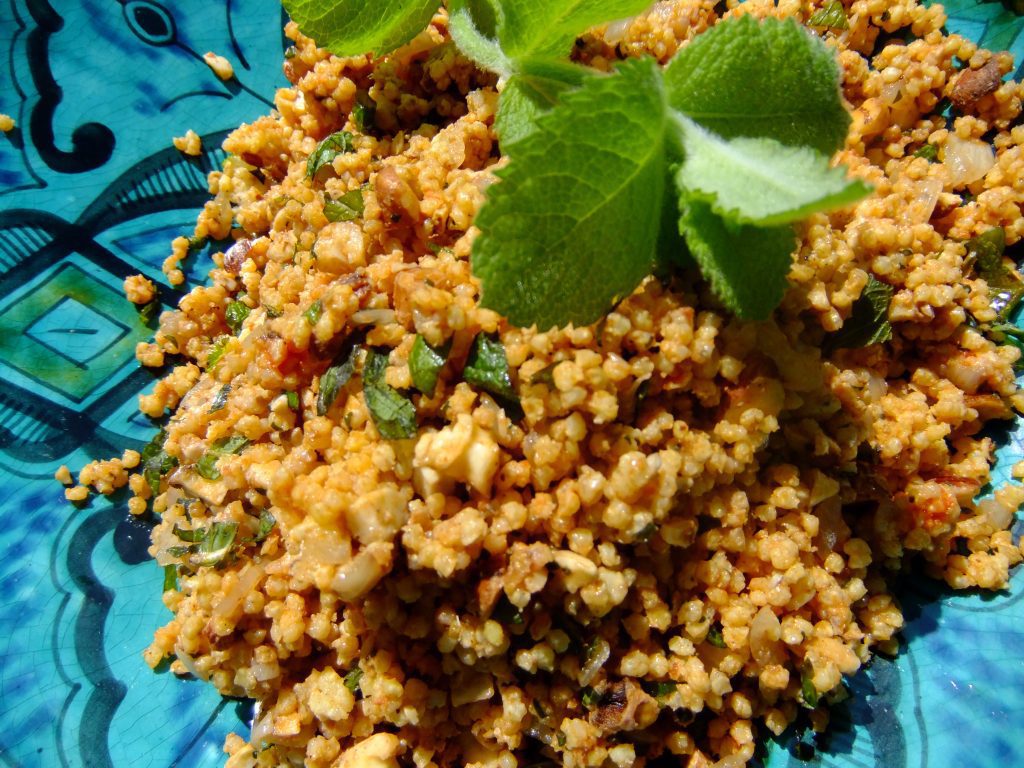
This is my gluten-free take on a delicious Middle Eastern bulgar wheat salad by Claudia Roden. Instead of wheat, I use millet (naturally gluten-free). Everyone takes seconds when I serve it at a buffet or barbeque. I love having it for leftovers too and it keeps for several days. Serve it with some protein such as roast chicken, a bean salad or some felafels, and a large green salad or some wilted spinach leaves dressed with lemon juice and extra virgin olive oil.
For 6:
330g/1½ mugs whole millet grains (from wholefood stores)
800ml/3 mugs boiling water, filtered if possible
1 large onion, red if possible
3 tbs extra virgin olive oil
110g tomato puree
Juice of 1 lemon
A bunch of fresh mint, or 1 tbs dried
1 rounded tsp ground cumin
1 rounded tsp ground coriander
1 level tsp ground allspice
110g raw walnuts and/or hazelnuts, coarsely chopped
1. Add boiling water and millet to a large saucepan, cover with a lid and simmer on a medium heat until the water has been absorbed completely. Fork it up a little to break up the grains.
2. While the millet is cooking, peel and chop the onion and add to a large bowl with the olive oil, tomato puree, lemon juice, cumin, coriander, allspice, nuts and mint.
3. When the millet is cooked, allow it cool down so its tepid or cold. Then add to the rest of the ingredients and mix gently with a fork, avoiding mashing the grains, which should remain distinct from each other.
4. If you have time, leave this sit for an hour, or even overnight, for the flavours to develop.
Why this is good for you: Herbs and spices are packed with beneficial antioxidants which prevent food from spoiling. A high intake of spices helps delay aging and is linked to lower incidence of skin conditions such as psoriasis and eczema. Cumin and coriander help soothe and repair the digestive system while mint is anti-spasmodic, helping prevent cramps, gas and spasms in the bowel.
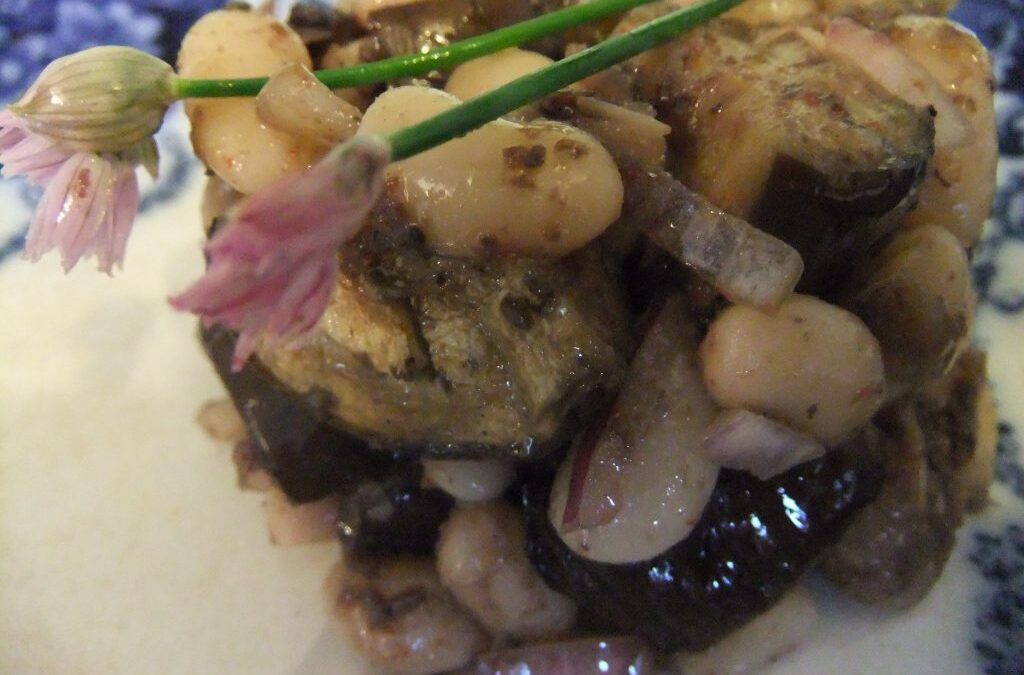
This is a lovely, earthy and filling summer main course, perfect with a large green salad and maybe something stodgey like a baked sweet potato or some squash wedges. Best eaten warm or at room temperature, rather than straight from the fridge.
For 2:
400g cooked, drained white haricot, cannellini or butter beans – rinsed and drained from a tin, or home-cooked (200g raw weight will give you 400g after overnight soaking and cooking)
1 medium aubergine, cut in 1cm slices and grilled till golden (about 5 minutes each side, I find)
1 dsp chopped red onion (use
1 dsp black olive tapenade from a jar
Large pinch cayenne pepper (optional)
1 tbsp chopped parsley, chives or basil (optional)
Extra virgin olive oil to drizzle
1. In a medium bowl mix the onion, tapenade, chopped herbs and cayenne with a small drizzle of olive oil.
2. Cut the aubergine into bite size pieces and add, with the white beans, to the tapenade mix.
3. Mix well and serve.
Tip: Buy parsley fresh, chop and store in a box or bag in the freezer. That way it’s instantly available all the time.
Why this is good for you: Olives and olive oil are rich in vitamin E which helps moisturise your skin from within and also aids weight management. Yes, adding extra virgin olive oil to your diet has been proven to aid weight loss! Red onion is rich in quercitin, which helps alleviate allergies. White beans are rich in protein at around 8%, and soluble fibre, all of this keeps you fuller longer. Soluble fibre also feeds beneficial bacteria which you need for your digestive wellness, mental health and perfect skin. White haricot beans are a fantastic source of molybdenum, which can help support liver function. Poor skin, low energy, or who has chemical sensitivities can be signs that your liver is under pressure, struggling to meet the detoxification demands of your everyday life and might need more nutrients. Fresh or frozen parsley helps your kidneys to flush out toxins. It’s also rich in iron.
This is SUCH an easy recipe and just the thing for a day like today, in the garden, after work…I’ve adapted it from Patrick Holford’s recipe in Food Glorious Food. I served this lemonade recently at a dinner and people just couldn’t get enough. If you or whoever is to drink the lemonade doesn’t like “bits”, strain the lemon juice before adding to the syrup. The lemon/xylitol syrup base will stay fresh in the fridge for 3-4 days.
For 4 servings:
Juice of 2 lemons
2 heaped tbs xylitol/erythritol or (for zero calorie or ketogenic diet) 20 drops of pure stevia or to taste
50ml clean water (filtered if possible)
750 ml mineral water, fizzy or still, whatever you prefer
A sprig of mint, lemon balm or a slice of lemon to decorate
Ice cubes, if liked
If you are using stevia instead, you don’t need to make xylitol syrup at all. Otherwise, place the xylitol and 50ml water in a small pan and warm till the xylitol is dissolved fully. This prevents the sweetener sitting uselessly at the bottom of the jug or glass.
While the xylitol/erythritol is dissolving, squeeze the lemons, discarding any pips.
Allow the xylitol/erythritol syrup to cool slightly before mixing with the lemon juice.
Put the lemon juicesyrup mix in a jug in the fridge until ready to use.
Top up with 750ml mineral water and enjoy, preferably in the sun…
Why this is good for you Natural, freshly squeezed lemon juice gives fantastic support to your liver to help cleanse toxins. Provided the lemon juice isn’t heated, its also high in vitamin C. So if you want clear, glowing skin or to boost immunity or stay younger longer, this is a pretty good “treat” drink. Lemon juice is very low in natural sugars and xylitol doesn’t raise blood sugar. And stevia drops which a natural calorie-free are even better. This means this lemonade is fine for anyone who has diabetes or other blood sugar regulation problems (like energy or mood peaks and dips through the day). It also won’t send your kids hyperactive like normal fruit juices or added-sugar drinks.
Lemon juice aids detoxification because it is (when raw) packed with antioxidants (ever stop a cut apple from browning or oxidising by smearing it with lemon juice?). It is also alkalising (once metabolised, it promotes alkaline pH in your body tissues – this is important if you want to be well. Most vegetables and fruits promote alkaline (healthful) pH balance in you!! Milk, cheese, meat, fish and most grains are acid-promoting in your body. You need lots of fruit and veg to balance them.
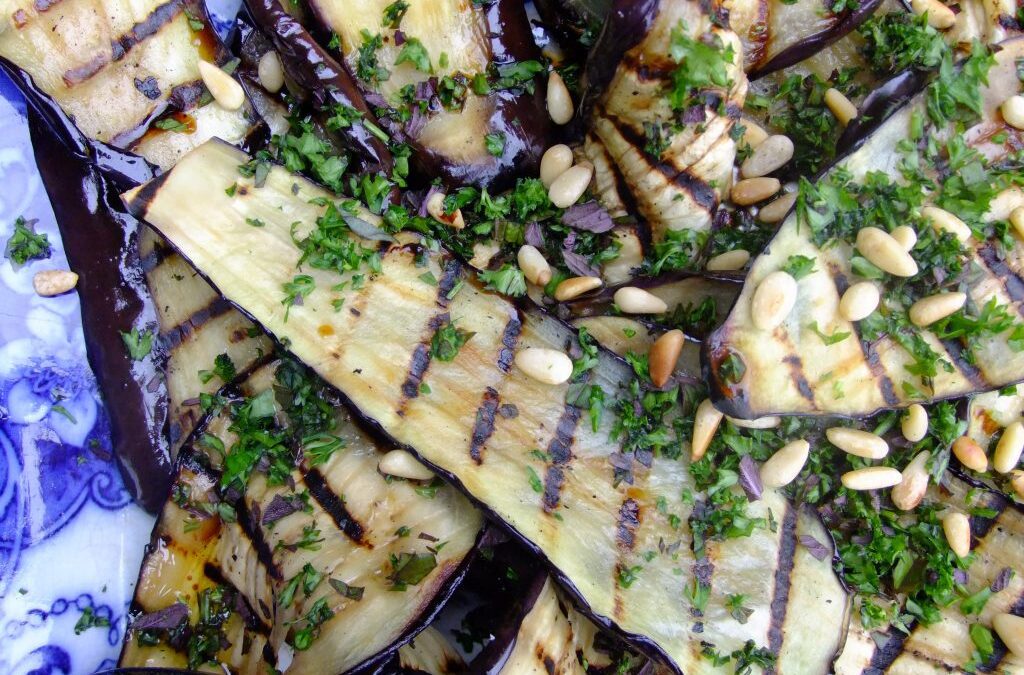
This is a superb but simple recipe I cut out of a magazine years ago. No idea who wrote it. I made a large plate of it recently for a family birthday and we grazed on it for the rest of the weekend. The aubergines cook quite quickly, especially with sliced and grilled or fried. Cook right through: aubergines don’t taste good if undercooked so make sure they are translucent, with no trace of white. If you can’t get pine nuts, you could use flaked almonds instead.
For 4-6 people as a starter, or grazing platter
2-3 medium, aubergines, about 700g
2 tbs sea salt (flakes or finely ground, it doesn’t matter)
About 125ml extra virgin olive oil
50g pine nuts
Small bunch fresh mint, half chopped, half in sprigs
Small bunch fresh flat leaf parsley, half chopped, half in sprigs
Few drops balsamic vinegar
Freshly ground black pepper
Cut the aubergines lengthways into 1cm slices. Score both sides of each with a fork. Sprinkle with salt. Drain on a rack for 10-20 minutes, then pat dry with kitchen paper. The salting of the aubergine draws out the bitter juices and makes the end product much sweeter.
Meanwhile, heat a ridged stove-top grill pan until very hot. Wipe with olive oil, using a wad of crumpled kitchen paper or heatproof brush. Paint each slice with oil. Arrange on hot pan, pressing down firmly. cook for 3-5 minutes on each side until grill-marked, tender and aromatic.
Heat a separate frying pan, add pine nuts and toast gently until golden. Set aside.
Scatter cooked aubergine with chopped mint, parsley, black pepper and balsamic vinegar. Loop slices on serving plates, add pine nuts and sprigs of mint and parsley and serve.Why this is good for you: Raw herbs like parsley and mint are a powerhouse of antioxidant, anti-ageing nutrients that help soothe your digestive system. Mint is anti-spasmodic and so can reduce wind. Parsley is rich in iron and is great for your kidneys too. Aubergines are rich in fibre, which is good news for the beneficial bacteria in your gut – they use the indigestible fibre in your food to make healing substances to repair and maintain the health of your small and large intestine. People who eat more vegetables have a lower incidence of ALL digestive disorders, including gallstones, colitis and gastritis. Like most vegetables, aubergines are also high in potassium which helps your body respond well to your natural thyroid hormone (T3). This results in more energy, thicker hair and better bowel regularity.
The good weather got me thinking of this really simple, delicious dish. A Greek classmate once showed me how to make it. She simply charred the peppers in a few minutes over an open gas flame but you can use a grill. This dish works well as a starter with some fresh bread, or as a side dish alongside some meat, grilled/baked white fish or a vegetable frittata. It’s also great for a summer buffet. Using goat or sheep feta gives a lovely crumbly texture and tangy taste and is easier to digest than imitation feta made from cow’s milk.
If you don’t have oregano, you could also use fresh mint or flat leaf parsley.
For 2 people:
2 large green peppers, whole, washed
1 dsp dried oregano or tbsp chopped fresh oregano leaves
1-2 tbs good quality extra virgin olive oil
20g goat/sheep feta cheese
1. Put the green peppers on a baking sheet under a hot and cook (turning frequently) until most of the skin is charred and the peppers are soft and slightly collapsed.
2. Remove from the heat, leave on the baking sheet, and cover with a large bowl or saucepan for 15 minutes or so. This softens the skins and makes them easier to peel.
3. On a plate (to catch the delicious juices) peel and discard the skins of the peppers. Slice into around 4 lengthways. Remove and discard the stalks and anything that’s not green.
4. Lay the peppers with their juices on a fresh plate.
5. Sprinkle over some freshly ground some black pepper and the oregano. Crumble the feta into little pieces and scatter over. Finally, drizzle over the olive oil.
Why this is good for you Oregano, especially eaten fresh, is a powerhouse of volatile antioxidant rich oils. These oils help keep your skin young and firm, soothe your digestive system, and even help eliminate infections and protect you against life-threatening diseases. Oregano helps combat the yeast overgrowth that contributes to cystitis and sinusitis. Oregano is really easy to grow in Ireland in a pot (in a flowerbed it takes over!). If you use it often, it keeps sprouting new, tender leaves all through the summer. Green peppers, like all green veg, are rich in magnesium needed for stress management, great skin and being “regular”. Feta made from goat/sheep milk is lower in allergenic proteins than cows milk. For that reason, some people who cant take cows milk products find they can tolerate moderate amounts of goat/sheep milk products. Goat’s milk is closest in chemical composition to human milk.