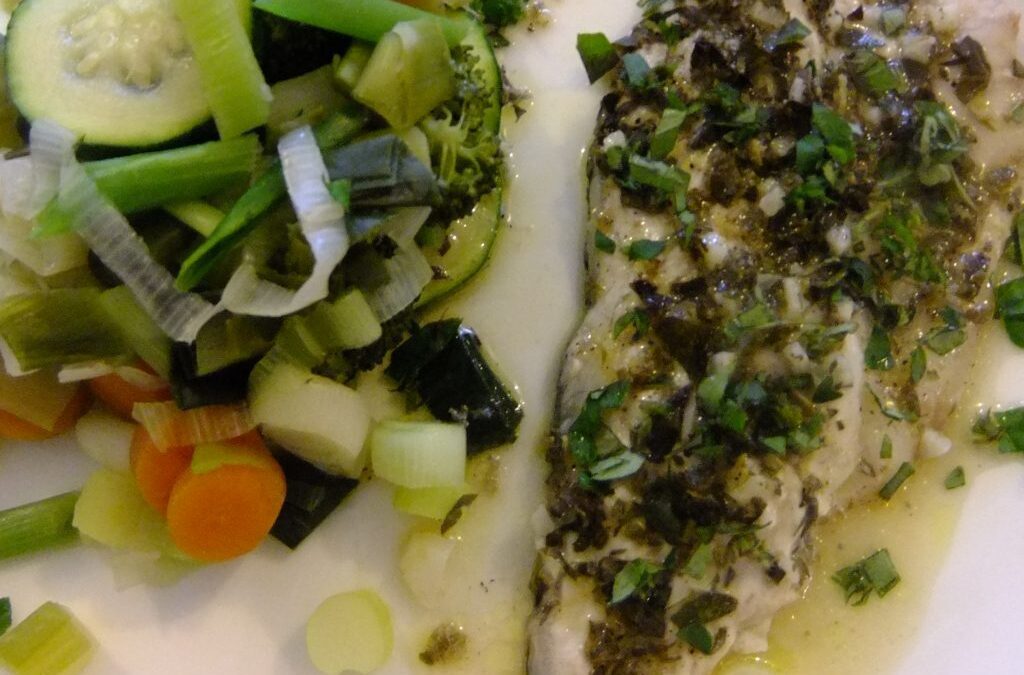
This dish is inspired by the flavours of Greece – fresh white fish, lemons, garlic and oregano. I saw a prepack product and thought “wouldn’t it be nice to make the fresh version”. It only takes a few minutes to get in the oven and is bursting with flavour and freshness. We enjoyed it with steamed leeks, courgettes and carrots sprinkled with some extra virgin olive oil.
For two:
Lemon, garlic, oregano for fish
2 x 160g sea bream or sea bass fillets
1/2 cup (about 100ml) white wine (or 4 tbs water and 1 dsp lemon juice)
1 tbs extra virgin olive oil or (if you want dairy) a knob of butter
Zest of 1 small lemon (organic or scrubbed with soapy water and rinsed)
1 clove garlic, crushed or finely sliced/chopped
Handful fresh oregano (about 5 x 12cm sprigs), stalks removed (if you don’t have fresh oregano you could use fresh tarragon or 1 tbs of chopped thyme leaves)
Freshly ground black pepper
1. Preheat the oven to 200C
2. Lay the 2 pieces of fish skin side down in a small roasting tin or ovenproof dish. 3. Pour over the wine (or water with lemon juice), the olive oil or butter and sprinkle on the lemon zest and garlic and a few good grinds of black pepper.
4. Chop the oregano. Reserve half for later and sprinkle half over the fish.
5. Cover the dish with tinfoil and seal the edges. Or use a close-fitting lid. The idea is that the fish steams in the liquid and stays succulent, rather than roasting and drying out. Bake for 8-10 minutes until the fish is cooked through.
6. Serve sprinkled with the remaining chopped oregano.
Serve with:
Any green vegetable. We like steamed leeks and broccoli. And optionally some carrots or carrot mash.
Why this is great for you: Oregano and garlic can help supercharge your health and vitality. They both act against overgrowths of disease-causing bacteria and yeasts in your gut. The bacteria that live in your gut outnumber the cells of your body 10 to one and they have a massive impact on mental and physical health. Not having enough good bacteria, or an overgrowth of bad is a major factor in skin conditions and digestive troubles. If you take antibiotics, eat food with glyphosate (herbicide) residues, or eat a high carbohydrate diet, your gut bacteria will not be all they should be. Garlic and oregano can help start to set things right. Garlic, oregano and lemons also contain anti-ageing, anti-inflammatory compounds that protect your brain and your joints and slow down the accumulation of wrinkles. Unprocessed white fish is a good source of high-quality protein. Protein is needed for helping us eliminate natural and man-made toxins. If you team the protein up with (more than half your plate) greens and multicoloured veg you have a winning formula for energy and vitality.
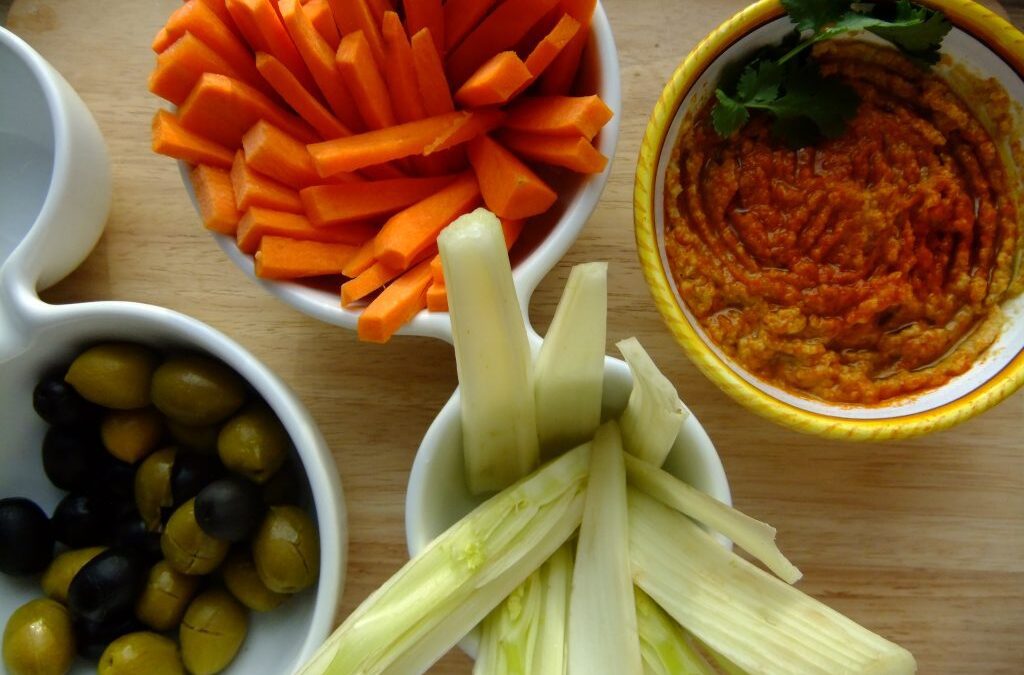
This is based on a Sophie Grigson recipe I loved, but lost. My husband says this version is the best of my attempts to recreate it. It’s dead simple. Enjoy with strips of red pepper, carrot, cucumber or celery and maybe a few olives. Dips with veg sticks before a main course are a great way of encouraging your kids to eat veggies too – take advantage of them being hungry!!
For a smoother dip use normal tahini made from roasted sesame seeds. For a coarser (and even more vitality boosting) dip use raw tahini (e.g. Carly’s) from health shops. Raw seeds retain their beneficial oils to do your body even more good. If you’re not going to use this dip within half an hour or so, store in a small screwtop glass jar or else a small glass/ceramic container with clingfilm over the top (but not in contact with the dip itself) to stop it drying out.
To make this dip into a sauce add a little more water to thin and drizzle over cooked white fish or felafels.
To serve 3-4 as a starter
2 cloves garlic
2 level tbs dark tahini
1 1/2 tbs lemon juice
1 dsp extra virgin olive oil
1 level tsp cumin
Pinch Himalayan or Atlantic sea salt
Pinch cayenne pepper
4 tbs water
Mini food processor method:
1. Crush the garlic and throw it and the rest of the ingredients into a mini food processor.
2. Blend for a couple of minutes, scraping down the sides of the processor a few times to get everything well mixed.
3. If you have time, allow to sit for half an hour for the flavours to amalgamate.
Traditional method:
1. Crush the garlic and place in a mixing bowl with everything except the water.
2. Mix well with a wooden spoon, then add half the water. The tahini will become quite stiff at this point, just keep mixing and it will start to relax and absorb the water.
3. Mix well, then add the rest of the water and work till smooth. This will be a more rustic mix than using the food processor. If you have time, allow to sit for half an hour for the flavours to amalgamate.
NB. If you are on a ketogenic eating plan, avoid eating more than 1/2 cup raw carrots in the day. Like all root veg, they are rich in sugar and too many will derail your programme.
Why this is good for you:
Garlic is a fantastic booster for your whole body. It kills yeast infections and overgrowths of pathogenic (“bad”) bacteria in your gut. This is good news if you want to sort out your digestion or achieve beautiful skin. Garlic’s sulphur compounds also support your liver to clear chemicals, used-up hormones and other toxins out of your body. Skin conditions are usually largely due to problems in the digestive system. Sort those out and you have dont more than 90% what you need to do. If you are not used to eating garlic, especially raw garlic, start with a little and gradually build up. Garlic is in my top 10 vitality boosting foods. Spices like cumin and cayenne pepper also have great benefits – anti inflammatory, anti-ageing and more. Have you had your spices today?
If you like both Thai food and Spanish gazpacho you will love this recipe by Domini Kemp. I think it’s fantastic. Have it as a filling snack, as a starter or with some chicken or fish and a little green salad for a main meal. If you don’t like cold soups, then this can be heated very gently until only just lukewarm.
For 4-6 servings
For the soup:
400ml tin full fat coconut milk (go for organic from health shops – free from chemical emulsifiers and BPA in tin linings)
1 large ripe avocado
2 large tomatoes, cut into rough chunks
2 large cloves garlic, peeled and crushed
Big knob ginger
1 large tbs (25g) non-gmo miso paste from a jar or vacuum pack (if you are gluten-free then brown rice miso is best, or hatcho miso)
Juice of 2 limes and 2 lemons
1 courgette, sliced
1 red chilli, de-seeded and sliced
Big bunch each coriander and basil
1 tbsp Thai fish sauce
Black pepper to taste
For garnish:
1 red onion, very finely chopped
Fresh coriander
Blitz everything except the garnish ingredients in a liquidiser or food processor to form a smooth soup.
Pour into bowls and sprinkle the finely chopped red onion and coriander on top.
Why this is great for you The raw miso in this soup is packed with beneficial bacteria so important for your skin, digestion and even your mood. Heating above 45C would destroy these good bacteria so the fact the soup is raw is brilliant. Beneficial bacteria help your body to clear used-up hormones such as testosterone and oestrogens, help repair your intestines and make digestive enzymes and even control your mood and how your skin looks. Coriander, lemon, lime and garlic actively help your liver and gut clear normal (and abnormal) toxins out of your body. In our chemical-laden modern world, this is good news. Coconut milk contains capryllic acid, which, like raw garlic, helps to kill off excessive pathogenic yeasts (eg candida albicans). Fresh coriander also binds to heavy metals (like mercury from dental fillings) and escorts them safely out of your body via your bowel.
This breakfast is delicious but even more importantly is packed with anti-inflammatory, immune-supporting goodness that keeps you full for hours. It’s fresh and zingy but really filling. If you like your smoothie thinner, add more liquid. If you prefer it thicker add less liquid and eat from the glass with a spoon like I do – yum!
It also has protein which your body needs in order to make antibodies to ward off infections. See below for more details of how this smoothie helps your immune system.
For 1 hungry adult:
1 scoop/2 rounded dsp of Sun Warrior Warrior Blend protein powder or other protein powder of your choice (e.g. pea protein, sprouted rice protein, or for for a dairy option, Solgar Whey to Go Vanilla) If you don’t have protein powder, make sure to use more avocado and seeds to keep you fuller longer
200ml unsweetened milk of your choice: almond, hemp, coconut milk, home-made kefir, milk
1 small/medium pear, washed
2.5cm of peeled sliced fresh ginger (slice it across the grain to avoid long fibres in your brekkie!)
1 level tsp ground turmeric (or half a thumb of peeled fresh turmeric, sliced)
Rounded tbs ground seeds e.g. linseed or a blend (e.g. pumpkin, sesame, sunflower and linseed). If you don’t have seeds you could use nuts, either ground or soaked overnight
Optional: 1/4 ripe avocado (use more if you don’t have protein powder)
Optional: a teaspoon of lecithin granules (helps you digest fats and feeds your brain)
Optional (for extra sweetness): pure stevia drops, erythritol or xylitol to taste, or a little honey
1. Remove stalk from the pear, cut up the rest (seeds and all) and throw in the liquidiser.
2. Add the liquid and then other ingredients. Blitz for a minute until smooth. Enjoy.
Why this smoothie is good for you: Turmeric, ginger and avocados contain the natural anti-inflammatories curcumin, gingerol and vitamin E. So if you want to get rid of annoying skin conditions or boost your digestive wellness these are fantastic things to add to your everyday eating.
Flax seeds and pears contain soluble fibre which feeds the beneficial bacteria that support your resistance to infections both viral and bacvterial. Ginger is anti-viral too. Ginger and turmeric selectively encourage growth of good bugs in your gut.
Because this breakfast is rich in protein, beneficial oils and low in sugars (from fruit) it helps regulate blood sugar to keep your energy, concentration and mood even throughout the morning. Like all meals, this shouldn’t be gulped down – you need to “chew” all your food to mix it with saliva and digest it properly. Avocados are rich in monounsaturated fatty acids and vitamin E, great for moisturising skin and body from within. Yoghurt and kefir provide friendly bacteria important for a healthy digestion, clear skin and stable mood. Fermenting makes the milk easily digested, removing the casein (dairy protein) that triggers food sensitivities in so many people. Lecithin granules help emulsify (digest) fats and are a great source of phospatidyl choline. Pho. choline is only found in egg yolks, lecithin and organ meats and are essential for memory.
I have to admit I was dubious about making this cake because it contains no grains. I couldn’t believe it could be as nice as the wheaty carrot cake I used to make before I learned I was coeliac. But this one is lovely and moist and not as fiddly to make. The icing is phenomenal whether you go for the dairy-free or the dairy-laden option. I’ve adapted the recipe slightly from the one on “Wheat Belly” by cardiologist William Davis. He writes about why humans are totally unsuited to eating gluten and how you can enhance your health by cutting grains. The original recipe uses double the sweetener for the cake, but I found that a bit sickly. If you (or your kids) have a massive sweet tooth though, feel free to double it…
For 10 generous servings:
Cake:
125g coconut flour
90g xylitol or erythritol
2 tbs grated orange zest*
1 rounded tbs ground flaxseeds
2 rounded tsp ground cinnamon
1 rounded tsp ground allspice
1 rounded tsp grated/ground nutmeg
1 rounded tsp gluten-free baking powder (this is usually free of toxic additives)
Pinch Himalayan salt/Atlantic sea salt
4 large eggs, organic if possible
105g coconut oil, gently melted
200ml natural soya yoghurt, natural yoghurt or kefir
100ml full fat coconut milk (tinned is fine)
2 tsp pure vanilla extract (not “essence” unless you are happy to eat gluten)
160g (2 cups) finely grated carrots
110g pecans, chopped (or use walnuts)
23-25cm circular or square springform baking tin
Electric cake mixer or whisk
Icing (vegan or standard cheese base):
1 tbs lemon juice or home made kefir
1 tbs xylitol/erythritol (or more, to taste, if you want it sweeter)
200g plain Coyo (dairy-free yoghurt) for dairy-free/paleo diets OR ricotta cheese if you want to eat dairy
Alternative kefir cheese icing (kefir is tolerated by most dairy-sensitive people):
200g kefir cheese (made by straining kefir through muslin/nut milk bag to remove the watery “whey”)
2 tbs xylitol
Optional: zest of a lemon
*If you don’t use organic oranges, there will be pesticide residues on the peel. So put your oranges into a litre of water, add 2 tbs vinegar and leave for at least 20 minutes before scrubbing well (to remove the chemicals). This trick also works for cleaning vegetables (leafy greens can just be soaked and washed off after).
1. Preheat oven to 170C (155C fan) and grease the baking tin with coconut oil.
2. To make the cake: combine the coconut flour, erythritol, xylitol, orange zest, ground flaxseed, cinnamon, allspice, nutmeg, baking powder and salt in a large bowl and mix by hand.
3. Beat together the eggs, gently melted (just hand hot) coconut oil, yoghurt or kefir, coconut milk and vanilla in a medium bowl. Pour the egg mixture into the coconut flour mixture. Using an electric mixer, beat until thoroughly mixed. Stir in the carrots and pecans by hand. Pour the mixture into the baking tin.
4. Bake for around 1 hour checking after 45 mins. When a toothpick/skewer inserted into the cake comes out clean it’s done. You want the cake to remain moist. Much better slightly undercooked than over, I promise!
5. To make the icing: combine the Coyo or ricotta with the lemon juice and xylitol in a bowl and beat until smooth. If you’re making the kefir cheese based icing omit the lemon juice and optionally add the zest of a lemon.
6. Spread the icing over the top of the cooled cake.
Why this cake is better for you: As you probably know any food that’s cooked above 100c generates toxic by-products (though less so if you don’t use sugar or polyunsaturated oils). That’s why a raw or just gently cooked diet (nothing above 100c) helps keep you younger longer, lowers inflammation and generally helps your body. That said, who doesn’t occasionally want something like a cake? This one is ideal as it’s grain free and protein rich. This means it doesn’t cause the fluctuations in blood sugar that fuel inflammation and can trigger skin issues, fatigue or dips in brain function. Coconut, unlike most oils, is still good for you even when it’s been heated. Roll on full-fat coconut milk! The low fat stuff is filled with emulsifiers and lacks the good stuff. Xylitol is what’s called a sugar alcohol and is 1.6 times as sweet as sugar but with half the calories. It’s not absorbed by your body so it doesn’t affect blood sugar levels. It’s generally deemed to be safe. If you have a very sensitive bowel, go cautiously with xylitol because it can be hard for some people to deal with in large quantities. Guideline: just a slice, and not the whole cake in one sitting! If you use Coyo yoghurt (or kefir) in the icing, you will also be getting a boost of friendly bacteria in this delicious cake to boost vitality and wellbeing.