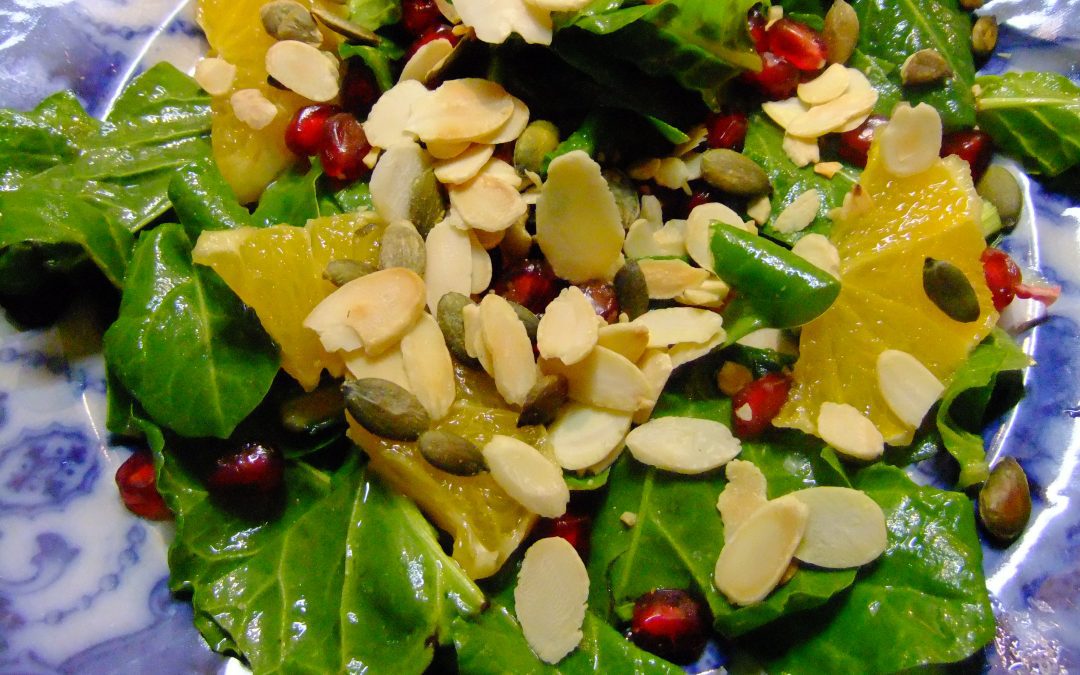
I stole this salad from a newspaper and adapted it to include some protein (flaked almonds) so you’re not just getting a huge blood sugar spike from all the fruit. This makes a lovely starter before a winter stew of some sort. Or else make a big platter of it for a buffet meal. The colours are stunning. Pomegranates are still in season in January (they start in November in Asian shops and good greengrocers). If you can’t get pomegranates then either increase the orange to a whole one or substitute a tablespoon of goji berries soaked overnight in clean water.
2 large handfuls baby spinach, washed and dried
1 tbs pumpkin seeds (for SC diet initial 12 weeks use almonds instead)
1 tbs flaked almonds
1/2 a small orange
A fresh pomegranate (you will use 1/4 to half of the seeds)
Dressing:
3 tbs virgin hazelnut or walnut oil (or use extra v. olive oil at a push)
Juice of 1 small orange
Freshly ground black pepper
Pinch of Himalayan/Atlantic Sea Salt
1. On a very low heat in a heavy bottomed pan, gently dry the pumpkin seeds and flaked almonds, until they seem dry and the pumpkin seeds are slightly swelled. It is better to eat nuts and seeds raw but this light toasting does make them super delicious. Remove from the heat as soon as they are slightly dried and crispy.
2. While this is happening, whack your whole pomegranate all over with a wooden spoon or a pestle for a few minutes. This loosens the seeds. Then cut it in half and pick out the ruby-coloured seeds.
3. Cut your orange in half across its equator, cut off the skin and pith with a sharp knife. Cut the remaining piece in half, then slice as thickly or as thinly as you feel like.
4. Mix your dressing in a screw top jar and shake to amalgamate.
5. Now put half the pomegranate seeds, the orange, spinach, and at least a tablespoon of dressing in a large bowl and toss until coated and glistening.
6. Divide between two plates, adding more pomegranate seeds if you think there’s not enough for your liking. Sprinkle over the almonds and pumpkin seeds. Enjoy…
Why this is good for you: Spinach, like all dark green leafy veg, is rich in folic acid. Folic acid is important for your liver, helping keep your skin clear and healthy. Its also important for your mental health, helping reduce stress levels. Pomegranates are high in antioxidants and the raw, virgin cold-pressed oils are a good source of omega 6 oils and vitamin E for beautiful skin. Don’t forget to keep your virgin nut/seed oils in a cool dark place in an airtight bottle, so the delicate beneficial oils don’t get damaged. Pumpkin seeds are a rich source of methionine (and zinc) which helps clear heavy metals and other toxins from the body. Almonds are high in calcium and magnesium for good stress management and clear skin.
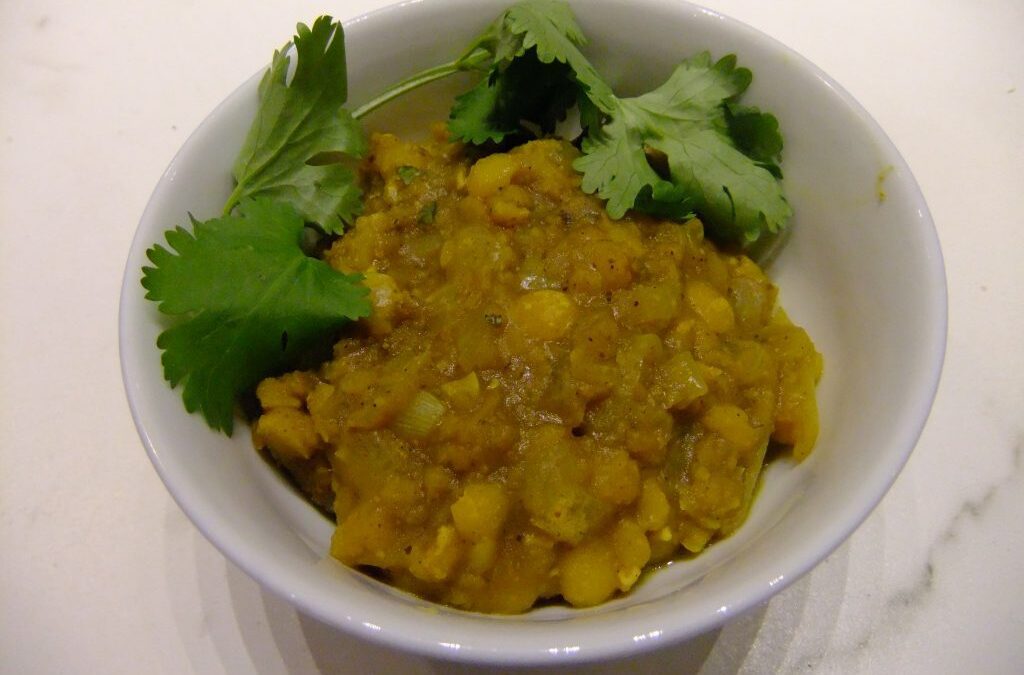
This is a lovely, warming dhal, the earthiness balanced by the lemon juice (my other yellow split pea dhal recipe uses tomato and apple to lift it). Make a double portion and freeze half for another dinner. I’m eating more of this sort of meal in the run-up to the great Christmas splurge in a couple of weeks.
Make a double quantity and store leftovers in the freezer for another time.
For 2:
100g (about half a large mug) dried yellow split peas
1.5 cm fresh ginger, grated on the fine side of your grater
1 onion, peeled and chopped
1 dsp coconut oil
1 level tsp cumin, ground
½ tsp turmeric
1 clove garlic, crushed or chopped
2 bay leaves
1 level tsp mixed spice
Juice of ½ lemon
Freshly ground black pepper
1. Cook the split peas in 3 times their volume of water along with the ginger, until tender (do not allow to dry out completely). This takes around 15 minutes.
2. Meanwhile, sweat the onion in a covered pan with the oil and 1 dessertspoon of water, when the onions are translucent, add all the spices, bay leaves and garlic and stir for a minute.
3. Add the split pea mixture (you may need to drain off some water) and cook until the split peas are beginning to crumble.
4. Add lemon juice and black pepper to taste
Serve with:
4 large handfuls of steamed vegetables eg. sliced kale, green beans, Brussels sprouts, wilted spinach and, if you like, some starchy carbs like roasted squash wedges, celeriac or turnip. If you are NOT on the SC diet, some brown rice is another option.
Why this is good for you Garlic and spices are profoundly anti-inflammatory. This is partly because they help reduce numbers of disease-causing bacteria in your intestine while also promoting growth of helpful species. But spices also contain polyphenolic substances. These stimulate your body to increase antioxidant activity to keep you in peak condition and delay the ageing process. Split peas, garlic and onions contain soluble fibre which feeds beneficial bacteria. The peas are also rich in magnesium needed for great stress management, good sleep and beautiful skin (amongst other things).
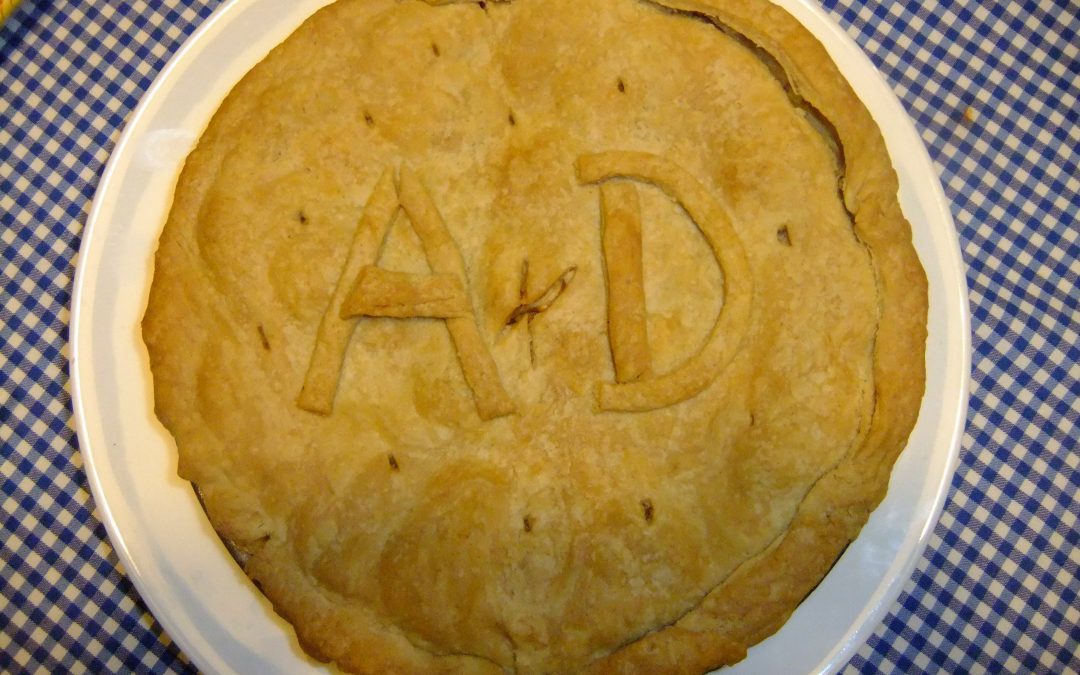
This pastry with its rich butteryness will give you an “I can’t believe it’s not normal pastry” moment. This pastry works brilliantly for an apple tart, a steak and kidney pie or your Christmas mince pies. The original recipe ( by Elizabeth Barbone on seriouseats.com) used sorghum flour which gives the best texture. I’m using this to make mince pies this year and instead of a pastry lid will sprinkle on my (Gluten-free) Crumble topping for mince pies (also on this blog).
Makes 1 large 28cm tart (with pastry base and lid) or two tart bases or steak and kidney pie tops (for a pie to serve 4). The pie in the picture has myself and my husband’s initials on it (in case you were wondering).
75g millet flour
75g sorghum flour (if you can’t get this use brown rice flour)
55g oat flour (I make this by blitzing gluten-free oats in my coffee grinder or mini food processor)
1 rounded teaspoon xanthan gum
225g butter, cut into small pieces
2 tablespoons xylitol (only if you want a sweet crust – personally I don’t like sweet pastry)
3 to 8 tablespoons water
A little flour for rolling out: white rice flour or tapioca flour work well, or use a commercial gluten-free flour blend.
Food processor method:
In the bowl of a food processor, combine dry ingredients. Pulse to combine. Add butter. Pulse to combine. No large pieces of butter should remain. This takes about ten short pulses. Transfer mixture to large mixing bowl. Add 3 tablespoons water and stir, using a wooden spoon. If mixture is dry, add more water, one tablespoon at a time.
By hand method:
Whisk together dry ingredients in large bowl. Add butter. Using either your hands or a pastry cutter, cut butter into flour mixture until no large pieces of butter remain. Add 3 tablespoons water and stir, using a wooden spoon. If mixture is dry, add more water, one tablespoon at a time.
To make a tart or pie base or lid:
Divide dough in half and wrap with plastic wrap. Chill for one hour. Remove crust from the refrigerator and allow to come to almost room temperature. Cut two pieces of parchment 12 by 18-inches. Lightly flour one piece of parchment, silicon or greaseproof paper with white rice flour. Center the dough on the paper. Generously flour the top of the dough. Roll dough into a large circle, about 11-inches. Invert the pie plate over the dough. Slide your hand between the counter and the parchment paper. Place your other hand on the bottom of the pie pan. In one quick motion, flip the dough and pan over. Press dough into the pan. Carefully pull the paper off the dough. If any of the dough rips apart, press it back together. Trim edges, crimp if desired. For a double crust pie, repeat process. Quickly flip rolled out dough onto the top of filled pie or roll dough around the rolling pin and transfer it to the top of the pie. Bake pie at the time and temperature the pie recipe directs.
Unlike normal delicious pastry, this uses all wholegrains so is packed with minerals and vitamins. If you want lots of energy and vitality, keep grains and other starchy carbs (eg potatoes) to no more than 25% of your lunch and dinner. Half your plate will be non-starchy veg if you want lots of energy, clear skin and a slim shape. Because of the huge amount of butter, this pastry is intended as a treat, not a daily staple.
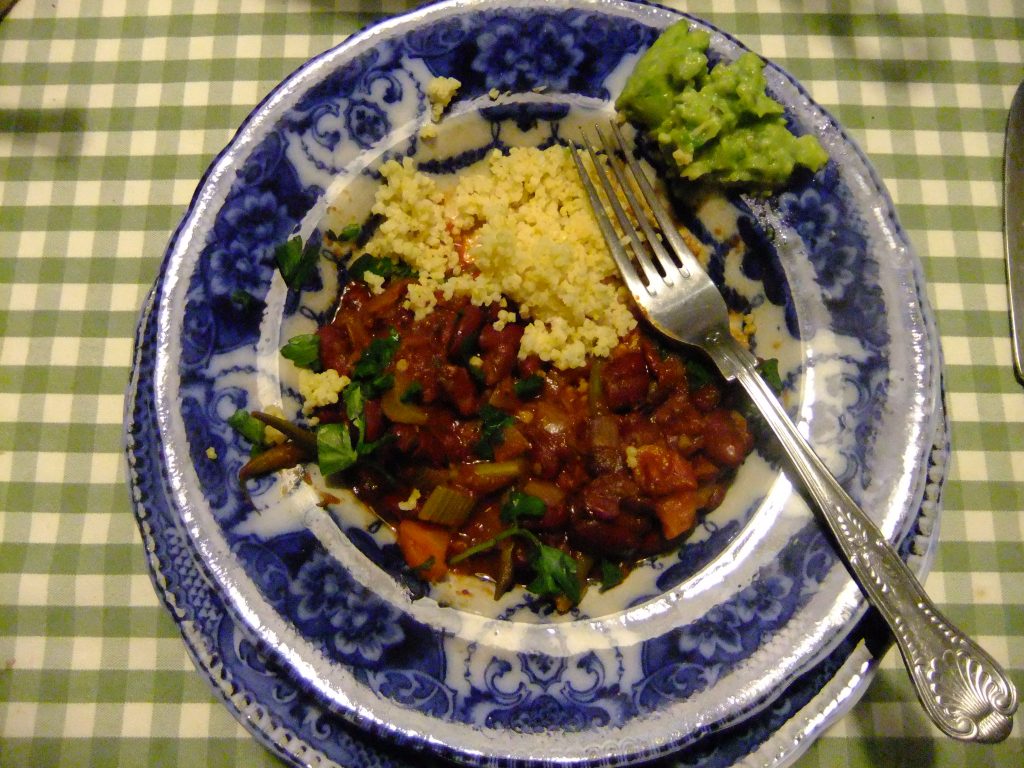
I love to eat this when the weather gets cold and we want comfort food in the evening. This was a family favourite cooked by my mother for many years. Kids seem to like it though you might need to omit hot chilli and cayenne and use paprika instead. Make a large batch and store leftovers in the freezer for future ready-meals.
If you don’t like kidney beans then borlotti, cannellini or butterbeans will work just as well.
For 4:
225g (1 large mug) dried red kidney beans (or 2 tins sugar free kidney beans, drained and rinsed)
1250ml water for boiling (if using dried beans)
1-2 dsp extra virgin olive oil
225g/1 very large onion, finely or roughly chopped
2 large cloves garlic, crushed
450g mixed veg, chopped (eg. red/green peppers, carrot, celery, turnip, runner beans, green beans, courgettes)
Heaped tsp dried basil
Rounded tsp ground cumin
½ tsp cayenne pepper
½ tsp chilli powder (optional – avoid if you don’t like hot spices)
400-500g passata (sieved tomatoes) OR a 400g can tomatoes, liquidized/mashed
2 tbsp tomato puree
3 tbsp red wine (optional)
Stock (liquid reserved from cooking the beans) or water
Juice of ½ lemon (optional)
Freshly ground black pepper and Himalayan or Atlantic sea salt
1. If using dried beans: Soak the beans overnight in filtered water, drain and rinse well. Bring to the boil in fresh water and boil fast for at least 10 mins so any protease-inhibitors are destroyed (you can give yourself an awful cramp and tummy upset if you don’t do this when cooking beans). Then cover the pot and simmer for a further 35-40 mins or until the beans are soft – cooking time varies. If you find the water tends to boil over, it helps to add a teaspoon of olive oil. When the beans are soft, drain and reserve the stock for use later.
2. Put the onion and garlic in a large heavy bottomed saucepan with 1 tbs olive oil and 1 tbs of water, cover with a lid and sweat for a few minutes until translucent. Then add the chopped vegetables, beans (if using tinned, do not add till later), basil and spices. Stir well, then cover and sweat (on low heat) 5 mins
3. Next add tomatoes/passata, tomato puree, red wine and 1/4 pint of the stock/water.
4. Bring the mixture to the boil, cover and simmer for 20 mins until the veg are softened.
5. Add the lemon juice and seasonings, tinned beans (rinse well first)or cooked beans. Increase the stock level if you like your casseroles fairly liquid then cook for a further 10-15 mins until the vegetables are tender.
Serve with:
A green salad or steamed broccoli.
Some cooked quinoa, millet or brown rice is nice with this (but avoid all of those if you are on the SC diet!). The quinoa in particular, with its 11% protein, will keep you fuller longer. If you are on the SC diet, just put a few more carrots and turnip or celeriac in the casserole for extra carbs.
My one minute guacamole: mash a ripe avocado or two with a pinch of Himalayan or Atlantic sea salt. Add fresh lime juice to taste (one lime is usually enough for two small avocados) and if you like, a pinch of chilli or a chopped red chilli.
Why this is good for you: Taking a break from meat and having vegetable protein instead provides food for your good gut bacteria. Maybe that is part of the reason why a semi-vegetarian diet helps people live longer. Herbs and spices all have medicinal qualities as they encourage antioxidant activity in our body – good news for reducing inflammation, helping your skin and your intestines. They also help suppress disease-causing bacteria in your gut while encouraging the growth of helpful species.
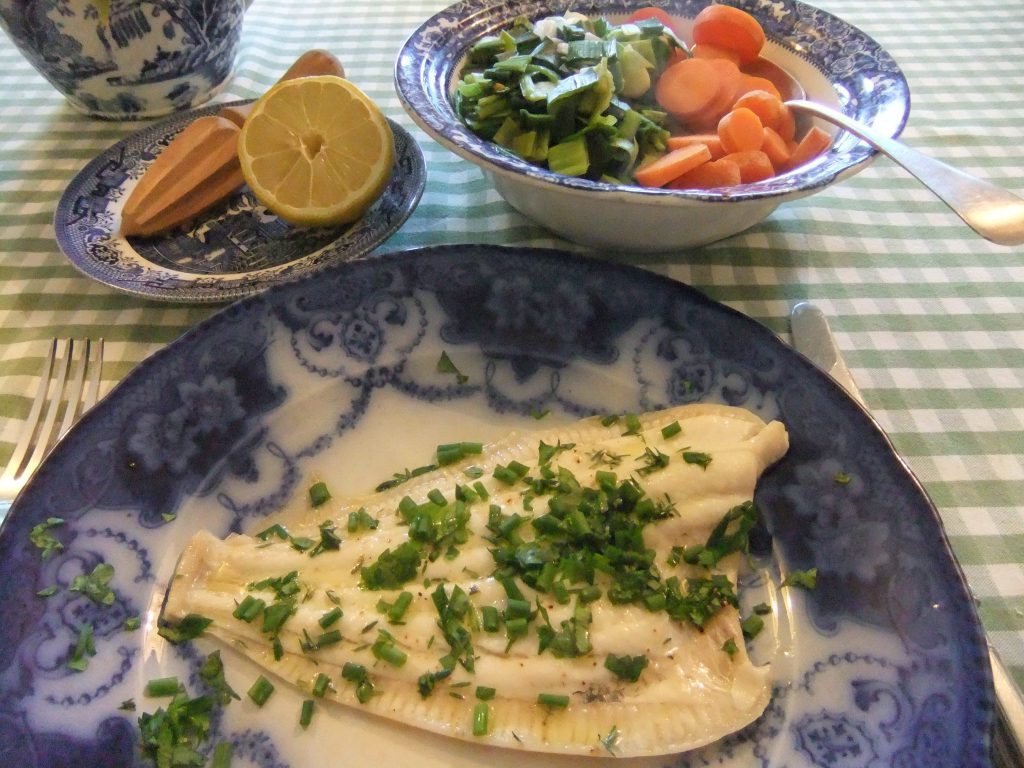
This is another really quick dinner for when you don’t have a lot of time or inclination to cook. I never really liked flat fish much before seeing how Nigel Slater cooked it in his book, “Real Fast food”. Use plaice, sole or lemon sole, which will take a bit longer as it’s more robust. The same treatment is also lovely for fancy flat fish such as turbot or halibut, you will just need to cook the whole fish for longer, possibly in the oven.
The herbs aren’t crucial but they give massive health benefits (anti-inflammatory, gut-bacteria balancing, angi-ageing – the list is endless).
For 2:
2 sole or plaice fillets, about 160g each
Extra virgin olive oil – couple of teaspoons
About 1 dsp fresh thyme leaves
Optional: 3 heaped dsp chopped fresh/frozen parsley or scissor-snipped chives, or a mix of both.
A fresh lemon half, to squeeze over
Freshly ground black pepper
To serve: 6 cups steamed veg e.g. broccoli or runner/green beans OR 4 cups of greens and 2 cups steamed carrots or (not suitable for SC Diet) steamed slices of sweet potato. The orange veg give you more nutrients than in white potatoes.
1. Put your veggies in the steamer and keep warm when cooked.
2. Heat your grill to medium.
3. Brush a baking sheet or the shiny side of a large piece of tinfoil with a little olive oil and place on your grill rack, laying the fish, skin side down, on top.
4. Smear or brush the fish with the olive oil and sprinkle over the thyme leaves and a few good grinds of black pepper.
5. Grill till tender and opaque, about 5 mins. It’s done when the point of a knife goes through the fish like a hot knife through butter. The baking sheet/tinfoil helps cook the underside of the fish so you won’t need to turn it at all.
6. Manhandle the fish onto warmed plates using a fish-slice or spatula, and scatter over the parsley and/or chives.
7. Serve with the veg and a drizzle of extra virgin olive oil and hand around the lemon to squeeze over.
Variation:
You could use a small knob of butter, melted gently and brushed on, instead of the olive oil, if you want to, provided you don’t need a 100% dairy-free diet.
Why this is good for you: White fish is a source of high quality protein that’s low in saturated fats. Herbs, especially fresh thyme, are a rich source of antioxidants that help lower inflammation in the skin (eg eczema), arteries (heart disease), and digestive system (eg. colitis, gastritis). Extra virgin olive oil, especially when eaten raw, is a great way to bump up your intake of vitamin E. Vitamin E moisturizes your skin from within. This vitamin also helps keep the blood thin, assisting circulation to the brain, hands and feet. Vitamin E has also been shown to play a part in dampening down an over-active immune system (e.g. allergies, auto-immune diseases).