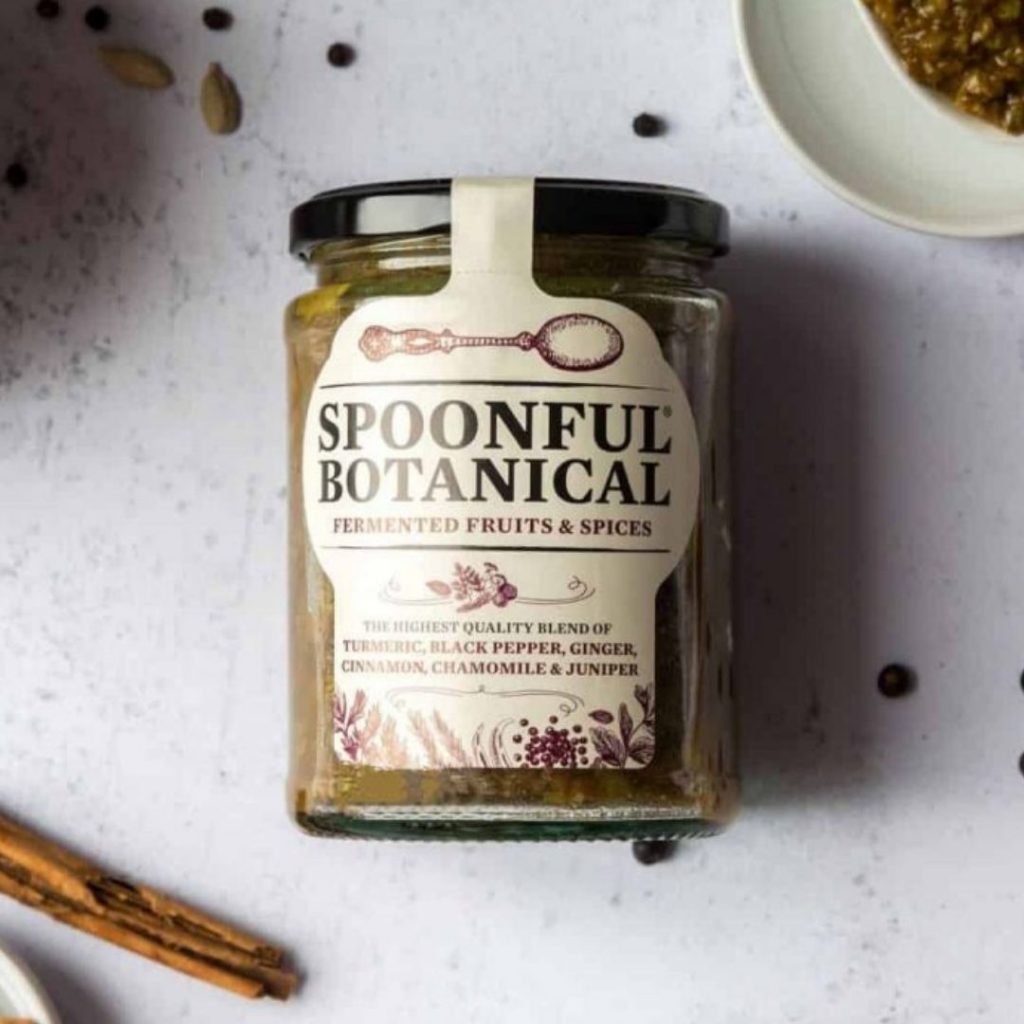
This is one of my favourite tasty things to recommend to clients because it’s quick and easy. And makes a difference. Because of my background in looking at the science of herbs, spices, and their health effects I was excited to see the ingredients.
Every herb and spice contains components that make your gut an unfriendly place for bad bugs. And a friendly place for the good guys! This has enormous repercussions on your overall digestive health and inflammation levels all over your body. Plus the fermentation process amplifies the effects of the ingredients. It’s sweetened with delicious plump sultanas which feed the beneficial gut bug akkermansia mucinophilia. This clever little bacterium is critically important for restoring or maintaining gut health. For information on stockists go to www.spoonfulbotanical.com.
Need help? Book your FREE quarter-hour call.
Phone + 353 87 981666 or email anna@annacollins.ie NOW.
Autoimmunity includes conditions as diverse as psoriasis, Crohns, ulcerative colitis, hypothyroidism and vasculitis.
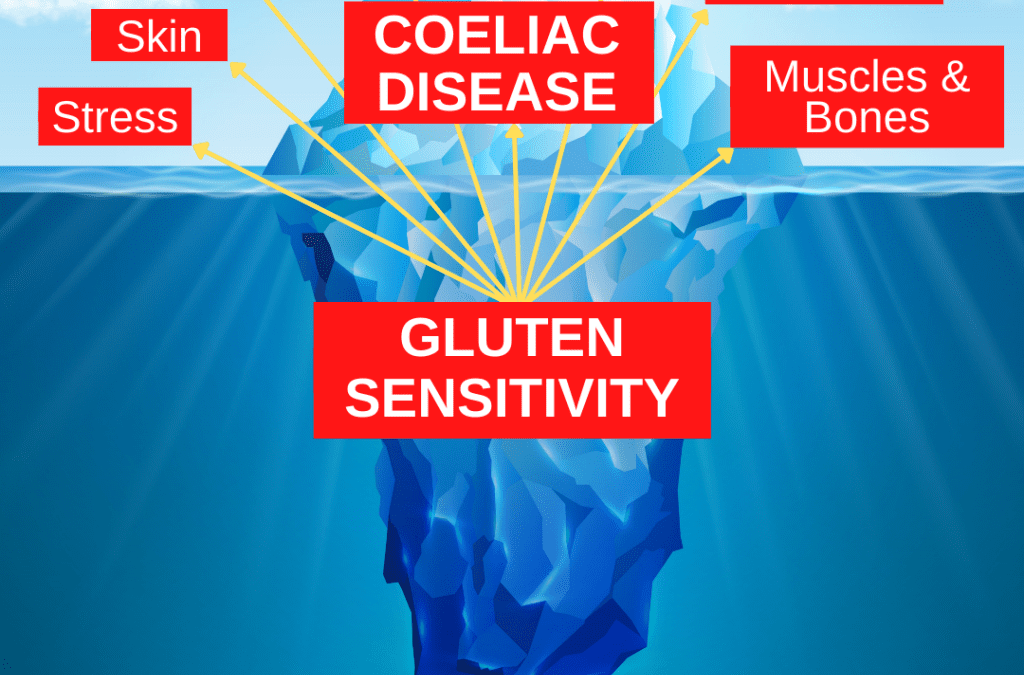
Know the best way to keep your autoimmune condition going? Or to set up an autoimmune condition? Eat gluten. Often. Yes, even in non-coeliacs and people who are NOT sensitive to gluten at all, regular consumption of gluten is a risk factor. Numerous peer-reviewed studies published in prestigious scientific journals confirm this finding. And yet it is little known.
Part of the reason gluten can trigger autoimmunity is that it damages YOUR gut. You must have a damaged gut in order to have an autoimmune condition.
And yet this isn’t common knowledge. Why? In my opinion, there are three reasons:
On average it takes the latest, proven scientific findings 25 years to percolate into medical practice
Medical schools teach only half-day nutrition during a student’s 6 years of study.
Medical schools do not include modules on how to critically assess scientific research.
Rakhimova, Esslinger et al. In vitro differentiation of human monocytes into dendritic cells by a peptic-tryptic digest of gliadin is independent of genetic predisposition and the presence of celiac disease. J Clin Immunol 2009 Jan;29(1):29-37.
Sensitive to gluten or not, this common protein damages you. This groundbreaking 2015 study was done on normal healthy people as well as people with gluten sensitivity.
EVERYBODY, not just the gluten-sensitive folk, experienced damage to their gut lining. If your gut lining is damaged it opens the door to all chronic health conditions.
Hollon et al. Effect of gliadin on permeability of intestinal biopsy explants from celiac disease patients and patients with non-celiac gluten sensitivity. Nutrients 2015, 7, 1565-1576.
You just might be coeliac. For every patient with digestive symptoms, there are 8 patients with coeliac disease and NO gastrointestinal symptoms according to research published in the Journal of Gastroenterology. Coeliac disease dramatically increases your risk of autoimmune hepatitis, hypothyroidism, psoriasis, Sjogren’s, arthritis, and other autoimmune disorders. As well as a constellation of inexplicable ailments.
The number one symptom of coeliac disease is fatigue, with cognitive issues coming a close second. That was certainly the case in my situation. In order for your standard GP blood tests to show anything, you have to have reached the end stage of coeliac disease, where there is severe destruction in your small intestine. But if your immune system is struggling, you may still get a negative blood test even if the damage is severe. Biopsy only shows coeliac disease when it is end-stage. There ARE better ways to get answers. If you want to have a conversation, get in touch.
Fasano and Catassi. Current approaches to diagnosis and treatment of celiac disease: an evolving spectrum. Gastroenterology. 2001 Feb;120(3):636-51.