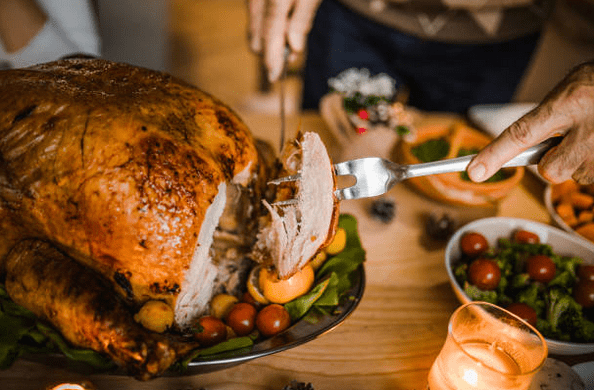
I ate something similar to this on my first Christmas away from home, which happened to be Italy (as au pair to a hoard of screaming children!). They really knew how to do amazing things with chestnuts but my favorite was the turkey stuffing. We use this every year for our turkey and love it. You can use leftover uncooked spare stuffing to make a fantastic quick roast fish (baked mackerel with chestnut stuffing). Buy vacuum-packed cooked chestnuts from delis or (better-value) dried chestnuts from health stores such as Asia Market, Drury St, Dublin 2 or Down to Earth in South Great George’s St, Dublin 2. Enjoy…
Makes 600ml stuffing (enough to stuff the body cavity and neck of a 1.8kg bird) with about 1 cup of leftovers which you can use to make my delicious stuffed mackerel fillets for another dinner…
250g cooked peeled chestnuts
or
130g dried peeled chestnuts , soaked overnight, then boiled till tender, drained
1 heaped dsp fresh thyme leaves (or a 1 level tsp dried, but fresh is much nicer)
1 rounded dsp chopped sage
2 heaped dsp chopped parsley
A few good grinds of black pepper
1/4 level tsp Himalayan or Atlantic sea salt
60g onion, finely chopped so it cooks properly (1/2 a medium onion)
1 level dsp light olive oil, virgin macadamia oil or clarified butter (these 3 options are all good for people on a dairy-free diet), or regular butter if you eat dairy.
Process or mash thoroughly the chestnuts until they resemble coarse breadcrumbs, tip into a bowl with the chopped onion, herbs and seasoning.
If using butter, melt it gently. Add your butter or oil to the bowl and mix well. This stuffing can be stored for a couple of days in the fridge before using.Variation:
If you prefer, use half chestnuts and half brown gluten-free (or granary if you eat gluten) breadcrumbs. For each cup of processed chestnuts use 1 cub of breadcrumbs. Why this is better for you: Chestnuts are lower glycaemic index (lower sugar) than bread so are a much healthier alternative. They also contain potassium, which helps your body neutralise the effects of eating too much meat at Christmas. Fresh herbs are antioxidant, anti-inflammatory and anti-ageing – good news especially at Christmas when all that extra sugary, bready food and alcohol can take its toll.
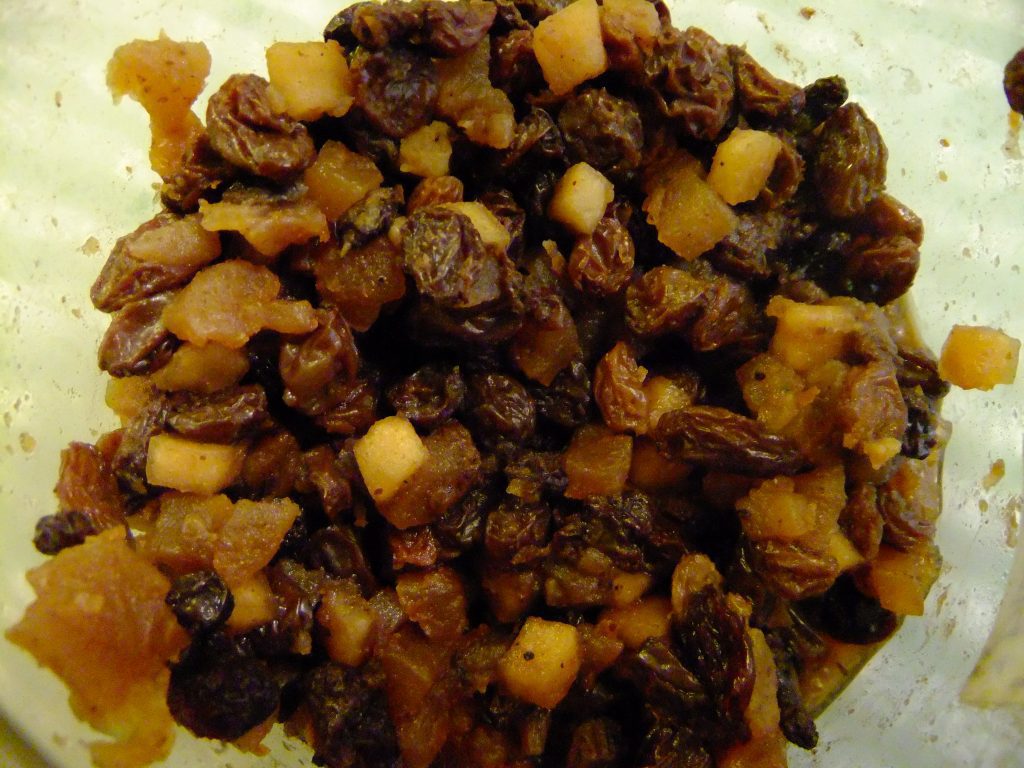
Don’t know about you but I’m really looking forward to Christmas and have started my baking already. This recipe is the nicest mincemeat and doesn’t boil over during baking. It’s adapted from Rose Cousin’s “Cooking Without” recipe book for people avoiding gluten or dairy. But I’ve been making it for years because I love it. Store this mincemeat in a sterile glass jar. If you intend to store for more than a couple of weeks, allow the mincemeat to cool a little before adding a tablespoon of brandy/whiskey. Mix well just before bottling. You can sterilise jars by boiling the lids in water and heating the jars themselves to around 80C in the oven for 15 minutes.
Organic where possible:
450g peeled cored eating (not cooking) apples – Cox’s are fantastic for flavour
225g unsulphured sultanas
225g unsulphured raisins
110g dried mixed peel (if you avoid citrus, or want to 100% avoid the refined sugar in the peel, use currants or chopped unsulphured apricots instead.
Rind and juice of 1 orange, organic is possible (if avoiding citrus, use apple juice instead)
¼ teaspoon allspice
Level tsp Ceylon cinnamon
1/2 level tsp nutmeg
A little cloudy apple juice
1. Mix together all the ingredients in a large cooking pot with lid
2. Simmer very gently ½ hour
Pastry recipes:
This one’s dairy free, gluten-free https://www.annacollins.ie/gorgeous-gluten-free-mince-pies/
This gluten-free one is made with butter https://www.annacollins.ie/fantastic-buttery-gluten-free-pastry-for-pies-tarts-and-mince-pies/. If you are sensitive to dairy products then you can use clarified butter for the pastry. Make this by very gently heating the butter, skim off the foam on the top and chill in a tall drinking glass or jug, then allow to solidify. You will use only the solid part to make your pastry. Discard the white iquid part underneath – that’s where the problematic milk proteins (which provoke the reaction) are found.
When baking your mince pies
Bake 20-25 mins at 200C (185C fan) until golden
You can use an egg wash to stick the pastry tops on the pies.
Put a baking tray over the next rack in the oven so the pies cook evenly through.
Why this is (somewhat) better for you: While I’d love to say this is a health-giving recipe I can’t really because its very high in natural sugars. Although it doesn’t contain refined sugar it IS very high in natural sugars from the dried fruit. BUT this mincemeat is free of low grade oils (like vegetable suet or sunflower oil) and refined sugar – both of which fire up inflammation in you. If you choose organic dried fruit you avoid sulphur dioxide (preservative) that wreaks havoc on so many peoples digestion around Christmas time. This preservative is converted by pathogenic bacteria in your bowel into irritating sulphites, which can cause gas, bloating and general unwellness in your gut. Non-organic grapes (raisins etc) are also very heavily contaminated with herbicides such a glyphosate that cause your gut to leak toxins and undigested food into your bloodstream.(increased intestinal permeability and systemic inflammation). This process predisposes to and perpetuates inflammatory conditions from autoimmunity to mood issues and many more besides. Choosing food free of undesirable contaminants is a great step towards better health. Here’s to a happy and a healthy Christmas. I will certainly be eating some (gluten-free) mince pies…
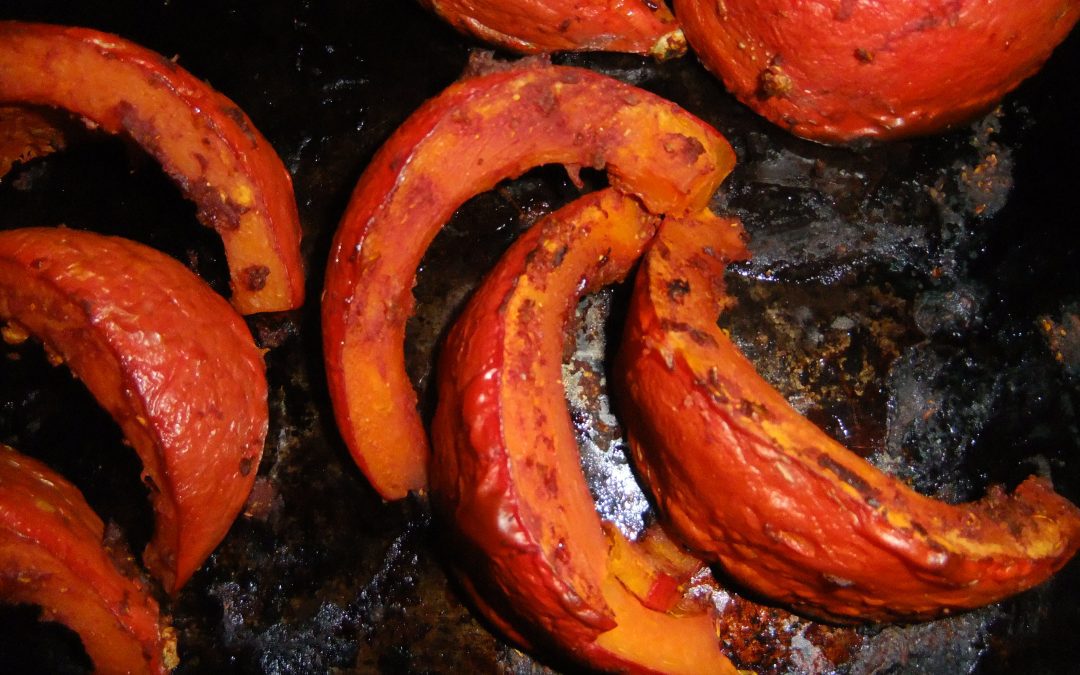
This is another lovely recipe from Food, Glorious Food by Patrick Holford. If you are using pumpkin for this recipe, use a small one, rather than the large watery-fleshed ones used for carving Halloween lanterns. We loved these and other people seem to love them too. Great hot, warm or at room temperature as an accompaniment to lots of green vegetables and some form of protein (e.g. beans, pulses, meat, fish).
For a more Mediterranean flavour use oregano/Herbes de Provence and ground sweet paprika instead of cumin, coriander and turmeric.
For 4
950g pumpkin or a large butternut squash, washed but unpeeled
Level tsp turmeric
Rounded tsp ground cumin
Rounded tsp ground coriander
Half level tsp Himalayan salt or sea salt
2 tbs (140g tin) tomato puree
1 tbsp olive oil
Preheat oven to 200C (180C fan).
Cut the squash or pumpkin in half length-ways and scrape out the seeds and pulp with a spoon. For the squash, cut each half into 4, length-ways, so you have 8 long pieces. If using pumpkin, aim to cut into lengthways wedges about 3cm thick.
Mix the turmeric, cumin, coriander, salt, tomato puree and oil together in a bowl, then rub the paste all over the squash or pumpkin until evenly coated.
Place the squash in a roasting dish and cook for 45-60 minutes or until the flesh is soft when pierced or squashed.
Serving ideas:
Use as an accompaniment to my chickpea and cauliflower curry for a filling meal.
Substitute for baked potatoes as an accompaniment for meat, fish or a salad
Cut the leftovers into bite sized chunks and mix with salad and beans, fish, meat or eggs for a healthy lunch or lunchbox
Why this is good for you: All orange vegetables are rich in beta carotene, which helps give your skin an attractive golden glow. Most peoples bodies convert beta carotene to vitamin A, needed to protect against infections and for good vision and healthy skin. Herbs and spices are powerful antioxidants, which fight inflammatory conditions like eczema, Crohn’s, colitis and rheumatoid arthritis. Squash or pumpkin is a healthier alternative to potatoes as it contains more nutrients, more fibre and less (natural) sugar.
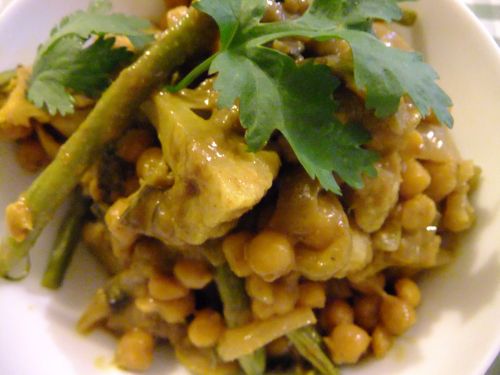
This recipe comes from Food Glorious Food, by Patrick Holford and Fiona McDonald Joyce. I did adapt the quantities slightly, increasing the chickpeas, giving more protein to keep you fuller for longer. We also used curry powder instead of the curry paste recommended and it was still lovely. It isn’t hot. The curry is really a meal in itself without needing accompaniments though we did roast some pumpkin wedges. We coated them in tomato puree and spices according to Patrick and Fiona’s recipe for Indian Spiced butternut squash, also from the same book. Don’t be tempted to leave out the coconut oil – extra (healthy) oils are very important for keeping you fuller longer when you eat animal-free meals.
For 3 big eaters, with a little left for lunch next day: Remember to go to my “larder & shopping” section for unusual ingredients.
2 tbsp extra virgin coconut oil
2 heaped tbs Thai curry paste or Sharwoods Madras curry powder (or any curry powder – make sure to check labels for gluten if relevant)
2 large onions, sliced
2/3 large cauliflower, broken into bite size florets
2 x 400g tins chickpeas or 220g dried chickpeas, soaked overnight, then boiled till tender to yield 440g when cooked and drained (about 2 mugs)
400ml can full fat coconut milk
100ml hot vegetable stock (use 1/4 teaspoon Marigold bouillon or 1/2 a Kallo vegetable stock cube to make this up)
1 tbs tamari sauce
250g fine green beans (or you could use runner beans, cut into 2″ lengths)
Optional: Handful of coriander, torn or roughly chopped
Put the oil, curry powder and onions in a large heavy-bottomed saucepan or Le Creuset type pot on a medium heat, mix around, cover with a lid or plate and sweat until softened and translucent – this usually takes around 10 minutes. Add the cauliflower and chickpeas to the pan and stir to coat them in the other ingredients.
Pour in the coconut milk, stock and tamari, and stir. Bring to the boil, then cover and simmer over a gentle heat until the cauliflower is nearly done. I found this took about 15 minutes.
Stir in the green beans, cover and cook for another 5 minutes or so until they’re tender. Scatter with the coriander leaves (if using) before serving.
To serve: You can eat this curry on its own, or serve with brown rice or with the gorgeous Indian spiced butternut squash recipe I will be posting shortly.
Why this recipe is good for you: Thousands of clinical studies show that a wide range of spices have profoundly anti-inflammatory properties, helping soothe joints, digestive system and delay ageing. Sometimes people complain that Indian takeaways upset them, thinking it is the spices. It is more likely to be the heavy use of low quality refined oils that promote inflammation and play havoc with their stomachs!! The chickpeas in this recipe are a good source of protein and also of soluble fibre, that feeds beneficial bacteria in the gut to help your health. Chickpeas, like all beans and pulses, need to be soaked and boiled thoroughl (or tinned!) to make them digestible. Virgin coconut oil and full fat coconut milk contain important medium chain triglyceride fats that feed your brain. MCTs also used by the body directly to make energy, rather than being stored as fat – good news if you want to be slim and trim. People with ME/chronic fatigue syndrome particularly benefit from coconut oil in their diets. Cauliflower is a sulphurophane vegetable, helping your liver detoxify used-up hormones and other waste products. Substituting beans/pulses for meat/cheese in some of your meals every week is a good way of helping your kidney function and supporting joint and bone health. Fresh coriander binds to heavy metals such as mercury and aluminium in the gut, helping their safe elimination. “Silver” fillings give off toxic mercury while “normal” tea is high in aluminium, a known neurotoxin. Helping your body eliminate these is good news.
This sauce makes a brilliant base in which to cook or heat vegetables, white fish, tofu, pre-cooked lamb, or cooked chickpeas. It also freezes well for future fast dinners. I have also posted my “Aromatic ginger, tomato & coconut chicken” recipe where I use this lovely sauce to cook chicken fillet and spinach.
For enough sauce for 2 people Remember to check out my “larder & shopping” section for unusual ingredients
25g creamed coconut cut up roughly OR ½ cup of thick full-fat tinned coconut milk
3-4cm approx of fresh ginger root (enough to give 1 rounded dsp ginger when finely grated)
500g (500ml) bottle of passata (sieved tomatoes – from all supermarkets)
2 green chillies or ¼ teaspoon chilli powder (optional)
1 large handful fresh coriander if you have it
2 large garlic cloves
Version 1 (made with food processor or liquidiser)
1. Peel the garlic, de-seed the chillies (or if you like more heat leave them in), chop the ginger and coriander roughly and throw the lot into a small food processor. A food processor is preferable to jug liquidiser as if gets the ingredients ground up more quickly.
2. Add enough of the passata to get everything going and blitz until smooth.
3. Pour into a saucepan, add the rest of the passata and the creamed coconut or coconut milk and simmer for five minutes until the creamed coconut is melted and the sauce has slightly darkened. The sauce is now ready for use. Or cool and store in the fridge for a day or two until needed, or in the freezer.
Version 2 (without kitchen gadgets)
1. De-seed and chop the chillies, crush or finely chop the garlic, chop up the creamed coconut and the coriander roughly, finely grate the ginger.
2. Put all of this, with the passata, into a saucepan
3. Simmer for 5 minutes until the coconut is melted and the sauce has darkened a little. The sauce is now ready for use. Or cool and store in the fridge for a day or two until needed, or in the freezer.
Add green vegetables of your choice and cubes of raw chicken or fish, or cooked lamb or beef and simmer till everything is cooked. Here are some ideas to get you started:
Chicken pieces and baby spinach (see recipe)
Stir the following into the sauce and bubble, covered, until the veg are cooked but still crunchy, and the meat is heated through:
150 cooked, cubed lamb, 1 x 454g tin or mug of cooked, drained chickpeas, and 4 cups broccoli florets
1 1/2 x 450g tins or mugs of cooked, drained chickpeas plus 4 cups green beans cut into 4cm lengths
4 cups broccoli florets or 5cm lengths of runner beans and 300g bite-size cubes of firm white fish such as monkfish, lemon sole or coley
If you are not wanting to lose weight, and are not following a ketogenic or paleo diet, you could also enjoy some brown rice on the side.
Why this recipe is good for you: Processed tomatoes with no additives are a rich source of lycopene, an antioxidant that protects your skin from the damaging effects UV rays – like an edible sunblock! Your body absorbs lycopene better from pureed tomatoes than from whole tomatoes. Ginger, tomatoes, turmeric and chillies all have anti-inflammatory properties that are helpful for a healthy digestive system and good, clear skin. Non organic rice can be heavily contaminated with arsenic but fresh coriander bind to this and other toxic metals in your intestines, helping them be eliminated from your body. Spices like ginger and garlic help boost liver function, also to eliminate both natural and man-made toxins. Yet more reasons why herbs and spices are fantastic for you. Using passata packaged in glass jars or bottles means less exposure to toxic bisphenol A (BPA) , which is present in the plastic linings of cartons and tins. Scientific studies link BPA to hormonal imbalances such as low libido, endometriosis, fibroids, and hormone breast and prostate cancer) as well as osteoporosis. Limiting your exposure is good news.