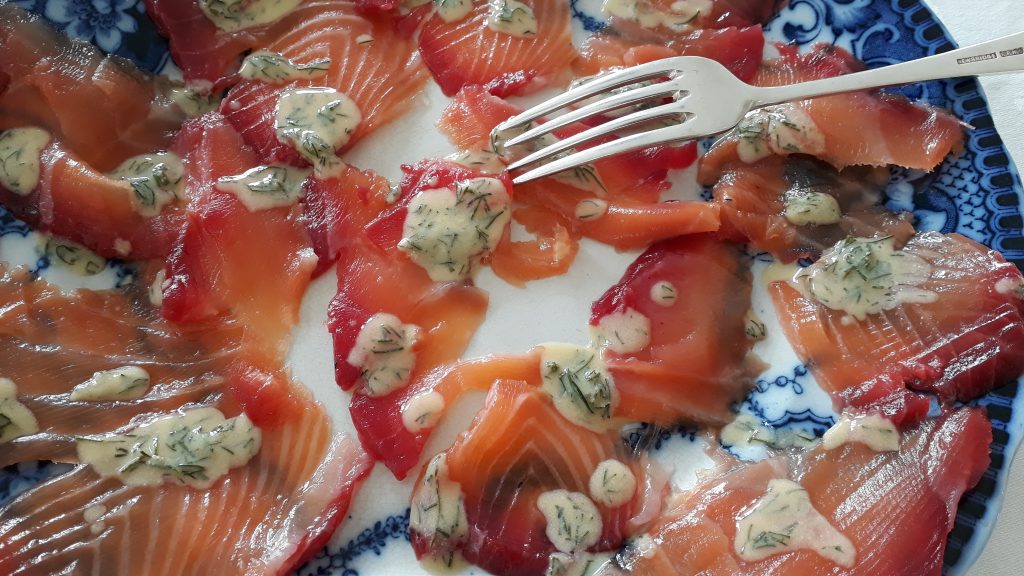
Christmas gravdlax or gravadlax (dill cured salmon)
This is a recipe I love. We eat it Christmas day with a simple salad of watercress and lambs lettuce. Instead of doing what the recipe says (wrapping everything in foil while it cures) I use a glass box with plastic lid to keep everything compressed during 5-8 days or curing. Much less fiddly. Lime zest/beetroot are optional but give an amazing taste and a lovely deep pink colour. Before you start, freeze the salmon for at least 24 hours to help kill any parasites. The salt, pepper and dill in the cure and the mustard in the sauce also help kill any unwanted visitors to your tummy!
For the cure:
1 large side of salmon, organic if possible, cut into 2 roughly equal shape pieces
Zest of 1-2 organic limes
1 large bunch fresh dill
115g sea salt/Himalayan salt – flakes or fine it doesn’t matter
50g coconut sugar (use brown sugar if you don’t have coconut)
75g xylitol or erythritol (from health shops)
15g freshly ground black pepper (coarse is OK)
Optional beetroot – 1 raw, grated (cooked might work too)
Tinfoil
For the sauce (to serve with the fish on the day):
1 tbs chopped fresh dill
1 tbs English mustard powder (if you don’t need gluten-free you can use ready-made English mustard from a jar)
1 tsp coconut sugar, erythritol, xylitol or brown sugar
1 tbs virgin (cold pressed unrefined) sunflower/peanut/rape/sesame oil
2 tbs kefir*, creme fraiche (for dairy-free use unsweetened additive-free soya yoghurt)
1 tbs white wine vinegar or apple cider vinegar
*home made fully-fermented kefir is usually tolerated by people with dairy sensitivity
1. For the cure (5-8 days before you want to eat the fish)
Roughly chop the dill and mix thoroughly in a bowl with the zest, salt, sugar, xylitol/sugar, lime zest, optional beetroot and pepper. Lay out a sheet of foil about four times the width of a salmon fillet. Spread a quarter of the pickling mix over a fillet-size area on one side of the foil with a good 15cm/6in margin for folding over.
2. Place one piece of fish, skin side down, on top of the pickle mixture and cover with slightly more than half of what is left. Place the second fillet on top, skin side up, to make a sandwich. Scatter the remaining pickle mixture over the skin. Wrap up the parcel tightly, tucking the ends and edges in underneath the fish.
3. Put the package on the tray and place a similar size tray, or a plank of wood on the top. Weight it down, with a brick or two or anything else handy (the contents of the fridge?). Turn the package daily for at least five days, and no more than eight. Do not discard the pickling liquid that oozes from the package unless it threatens to spill over the side of the tray.
4. At least one hour before you wish to serve the fish, combine all the ingredients for the dressing in a jar and shake well together. Leave to stand and shake again to emulsify before serving.
5. To serve, unwrap the gravalax and wipe off any excess pickling liquid. I like to scrape off the bits of dill and beetroot and give everything a quick wipe but you don’t have to. Slice fairly (but not too) thinly then serve with the sauce and a green side salad (I love watercress and lamb’s lettuce with this). Unused gravalax can be re-wrapped in clean foil or airtight glass box and kept in the fridge for up to five days.