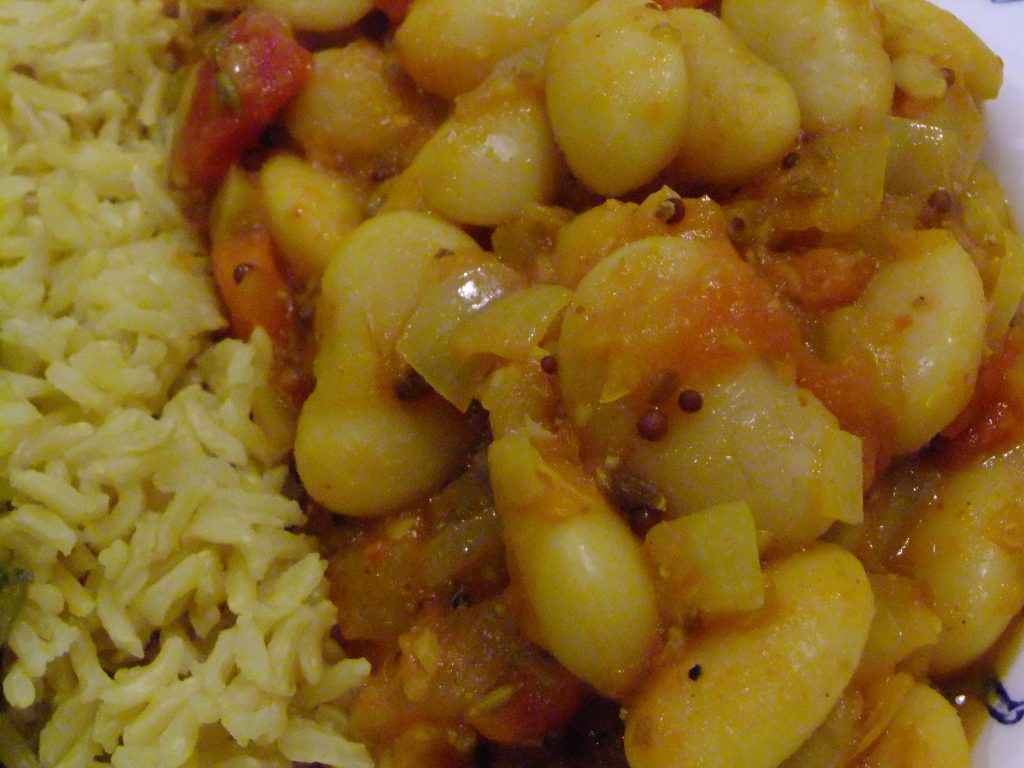
I just discovered this recipe (and adapted it a little to be healthier) by Rose Elliot and its lovely. Just the thing for a cold winters evening. Comfort food at its best. I made extra for leftovers next day or to stick in the freezer.
For 2-3 people
1 mug (200g) dried butter beans or 2 x 400g tins (with no added sugar)
2 tbs virgin coconut oil or ghee
1 large onion, chopped
400g fresh tomatoes, chopped (or half a 400g tin chopped tomatoes)
1 rounded tsp black mustard seeds (if you don’t have any, use 1/2 tsp mustard powder)
1 heaped tsp cumin seeds
2 garlic cloves, crushed or finely chopped
1 tbs raw ginger, grated (peel the ginger first if its not organic)
1/2-1 tsp chilli powder, or to taste
1 heaped tsp ground coriander
1 level tsp turmeric
1/4 tsp asofoetida (a sulphur-rich Indian spice from Asian shops but gluten-sensitive people DO check the ingredient label)
A little water
Fresh coriander, chopped, if you have it
1. Soak the dried beans in lots of clean filtered water overnight. Boil hard for 15 minutes and continue to cook until soft. Drain but keep the liquid and set aside. If using tinned beans, drain and rinse in clean water and set aside.
2. Heat the oil in a heavy bottomed saucepan, add 1 tbs water and sweat the onion (with the lid on) over a medium heat for 10 minutes or until translucent and softened.
3. Add the spices and stir around for a minute or two.
4. Add the tomatoes and garlic and about 50ml of water too. Add the cooked butter beans, stir well and cook the lot together for at least 5 minutes, until the beans are hot. You should have something that is not dry so if it looks like there is not enough liquid to stop everything from sticking, add a little more.
5. Sprinkle with chopped coriander just prior to serving.
Serve with:
Something raw: e.g. a green baby leaf salad, an Indian style salad of chopped tomato, red onion and coriander, or the spinach curry on this blog.
and
Cauliflower rice or (not for SC Diet)
Or
(Not for SC Diet) quinoa/brown basmati rice cooked with a little turmeric
Why this is good for you: Almost all herbs and spices have huge health benefits. From mustard reducing the pain and irritation of eczema, to chillies healing stomach ulcers by strengthening the stomach lining (and killing pain), to ginger and turmeric as anti-inflammatories that support liver function. Herbs and spices have strong antioxidant properties even at small doses and thousands of scientific research papers keep the evidence stacking up. Butter beans are a lovely source of protein to keep you fuller for longer and reduce your reliance on meat. They take up flavours really well. Just be sure to soak the beans overnight in filtered water before boiling hard for at least 15 minutes, and continuing to cook till tender. Beans contain protease inhibitors – substances that prevent digestion (!). Proper soaking and cooking disables these protease inhibitors, making the nutrients in the beans more available to your body. Nutrients include magnesium, vital for skin, sleep and good mental health. Beans also contain soluble fibre. This feeds good bacteria in your gut responsible for detoxifying hormones and much much more.
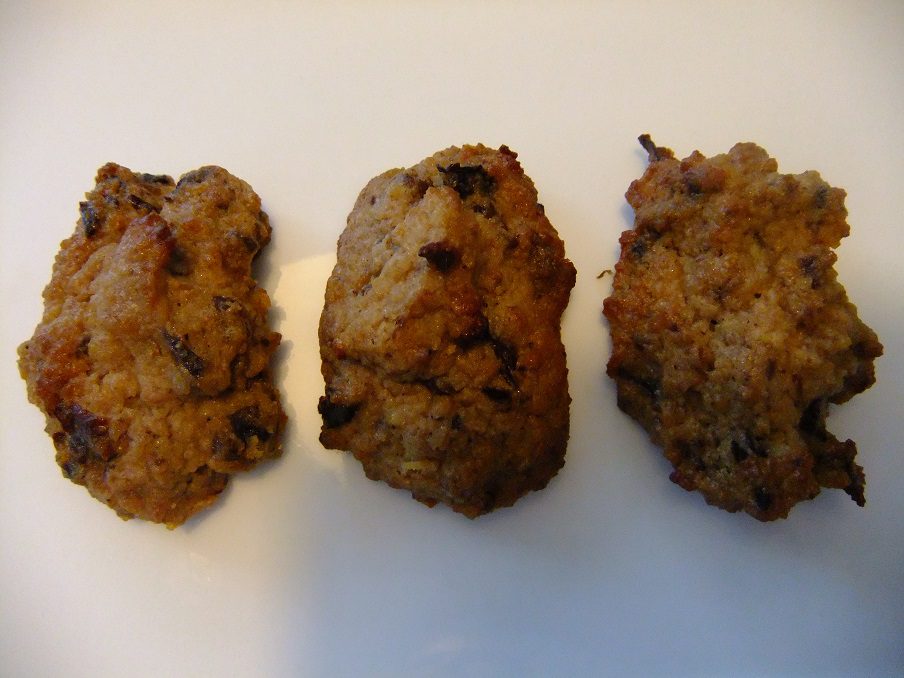
I love to make these around Christmas-time. They are deliciously moist, flattish but light and are a crowd-pleaser. Prune-haters also usually like these cakes, provided you keep it a secret that they contain prunes! They will keep in an airtight jar in a cool place for about 10 days. I love spices so I generally also add some extra. I add a generous pinch of ground cloves and ground ginger but you don’t have to.
1. Put prunes and water in a small pan and simmer till water is absorbed
2. Combine with the almonds and mixed spice
3. Grate the pear into the almond mixture and stir
4. Fold in the egg white to make a thick paste
5. Place 16 dessertspoonfuls of mix on a greased baking tray
6. Bake 170C (or 155C fan) for 20 mins or until lightly browned
Why these are better for you First of all these cakes have some high quality protein from the almonds and egg white. This means that the sugars from the pears and prunes only gradually hits your bloodstream (protein slows down absorption of sugars in your gut). This is good news if you like to keep your energy, mood and blood sugar levels fairly even. Sulphur dioxide is a preservative that can have unpleasant effects on your digestive system. Mixed spice, like all spices, contains antioxidants that help reduce inflammation and slow the ageing process. Cooking damages foods, so these are not as healthy as eating raw food (e.g. my raw green tea macaroons on this blog). But sometimes you just want cake anyway…
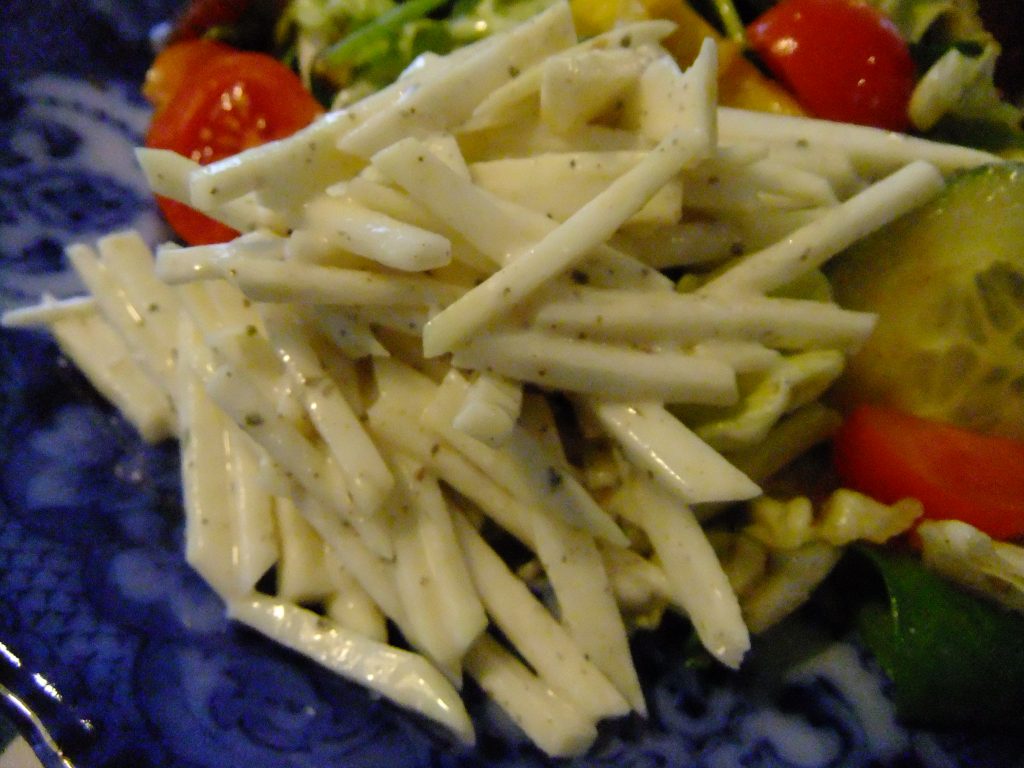
Try this as a side instead of potatoes with some grilled fish and green veg. We had it last weekend with gorgeous meaty (nitrite-free) sausages and steamed broccoli drizzled with extra virgin olive oil. The sausages came from Coolaknowle Organic Meats https://organicmeat.ie/ at the Green door Market in Dublin on Fridays and Saturdays. All their meats are fantastic quality and none contain nitrites. They also do a really good gluten-free sausage that’s high meat content and of course, also nitrite-free. I LOVE the Green Door Market – so many fantastic food producers under one roof. Saturday is THE best day https://www.thegreendoor.ie/
For 4 servings:
One small celeriac
2 tbs thick homemade kefir, natural yoghurt (if you are on the SC diet, the kefir or natural yoghurt need to be home-made) or creme fraiche
Juice of half a lemon
2 dsp Dijon mustard
Plenty of freshly ground black pepper
A pinch of Himalayan/Atlantic sea salt
1. Peel the celeriac (you’ll need to cut off anything knobbly).
2. Coarsely grate or cut into thin batons (about 2mm thick) or julienne strips (you could also use a spiraliser and use the “noodle” attachment).
2. Combine with all the other ingredients and mix well.
Serving idea:
Drape with smoked salmon and serve with a mixed salad.
Why this is better for you
Celeriac is lower in carbohydrates (sugars) than potatoes so it’s a much healthier choice for anyone who cares about their waistline, their digestive health or their ability to look younger for longer. Mustard helps reduce inflammation. An interesting recent study showed a marked improvement in eczema when mustard was added to the diet of mice with the inflammatory skin condition. And of course celeriac is free of disaccharides, the sugars that anyone with active Crohn’s or ulcerative colitis cannot digest.
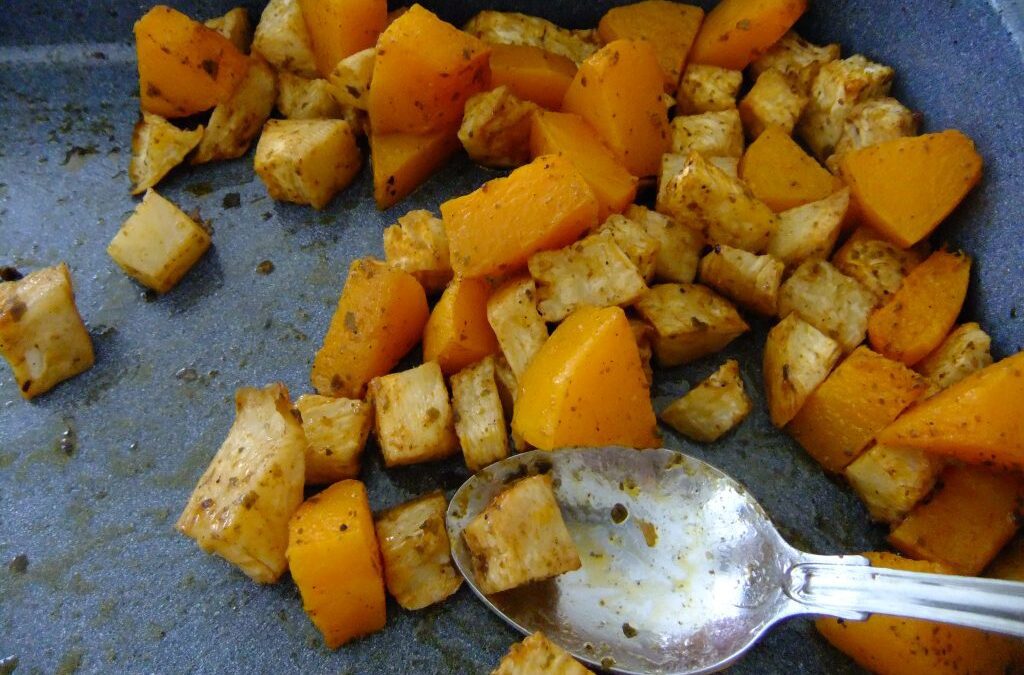
These aren’t fried at all but taste just as delicious. This simple side is good with green veg and some grilled/roasted fish, or roasted meats but it would also be nice with a vegetarian bean stew. You can use pumpkin instead of the squash if you like. I like to add leftovers of this dish to my lunchtime salad the next day.
The recipe is in Raman Prasad’s “Recipes for the Specific Carbohydrate Diet“. As know from my last blog, this diet can be a real lifesaver for people with serious intestinal inflammation (Crohn’s or Colitis). The diet often gets them into a much better state so they can work on the root causes of their condition and move towards staying symptom-free.
For 4-6 servings
1 butternut squash (or small pumpkin)
1 large celeriac
3 tbs (45ml) extra virgin olive oil
Lots of freshly ground black pepper1/2 tsp Himalayan/Atlantic sea salt
One or all of the following if you have them:
1 dsp dried oregano, 1 teaspoon paprika or 2 dsp fresh thyme leaves
1. Preheat (fan) oven to 180C (195 for non-fan).
2. Peel the squash, cut in half, and scoop out the inside seeds. chop into 1.5cm dice. Peel the celeriac and cut into similarly sized cubes.
3. Tip the veg into a large baking tray, sprinkle on the salt, pepper (and herbs/spices if using) and the olive oil. Toss everything well with your hands until everything is well coated.
4. Bake for 30-40 minutes, turning once to ensure they cook evenly.
Why this is good for you: These veggies are higher in fibre and lower in sugars than potatoes so they are a healthier choice. Orange veg are high in beta carotene, important for skin health and for keeping your digestive system in tip top condition. Unlike potatoes and grains, these are much less likely to irritate an already inflamed digestive system. Because they are starchy carbs (i.e. high in natural sugars) these are not suitable for eating on their own but need protein (e.g. fish, eggs, beans, meat) and green veg alongside for a balanced meal.
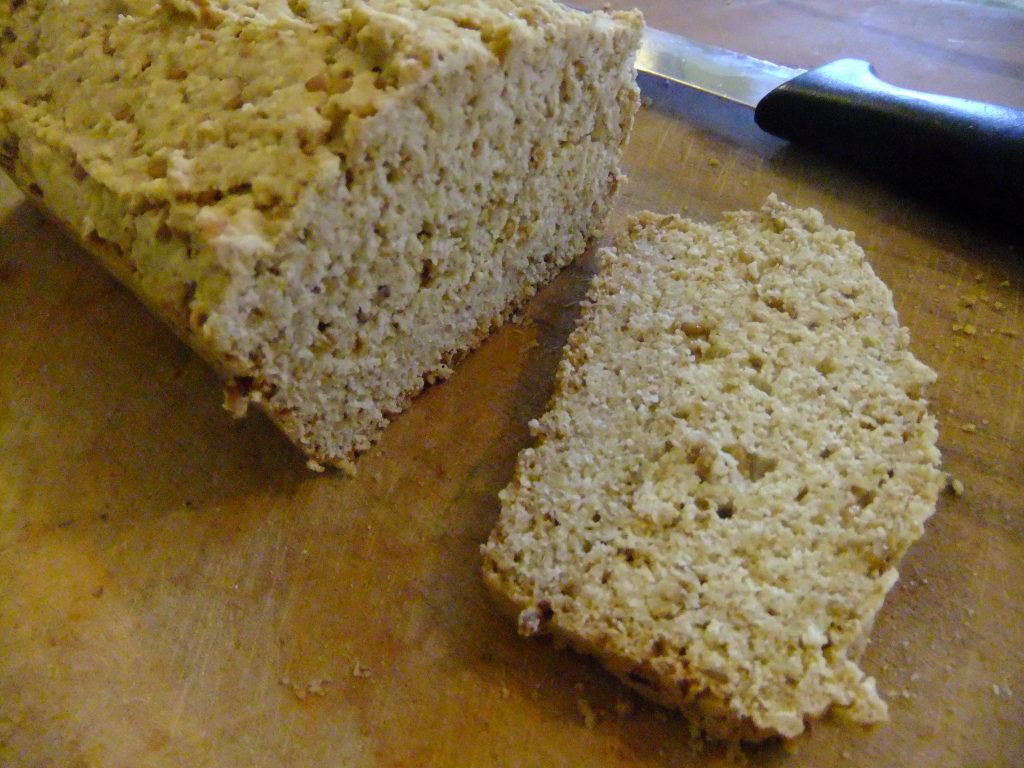
This is delicious and I think it tastes very like traditional brown soda bread and thankyou to the patient who gave me the recipe. Without something extra to bind it I do find it a little crumbly. If this is too annoying (I don’t mind this) you can add a large egg to the mixture to bind it, or alternatively a vegan “flax egg” (1 tbs ground flax seeds mixed with 3 tbs water). I also line the bottom of the loaf tin with silicon/baking paper (and grease this too) just in case it should stick.
1 large tub of organic natural yogurt (400 ml or 500g) or home made kefir (or dairy free versions: unsweetened soya or almond yoghurt)
2 tubs (about 800ml) gluten-free porridge oats (use the yogurt tub that you just emptied) or if you eat gluten, normal porridge oats
2 rounded tsp of baking soda
2 tbsp of extra virgin olive oil
To bind (optional) 1 large egg, beaten or 1 tablespoon ground flax see or chia seed mixed with 3 tbs water
A handful of porridge oats or poppy seeds for sprinkling on top
1. Preheat your oven to 180C (fan) or 195C (non-fan)
2. Get a big bowl and mix all of your ingredients gently but thoroughly
3. Grease a 2lb (900g) loaf tin with olive oil and line base with greaseproof/silicon paper if using
4. Pour your mix into the loaf tin and spread to flatten the top a bit
5. Put in the oven for 45 mins (at about 15mins, sprinkle some porridge oats or the seeds on top)
6. Take it out and carefully remove from loaf tin
If you really want crispy edges to the bread, put it back in the oven for 5 minutes.
Why this is better for you
Oats are packed with soluble fibre which feeds beneficial bacteria in your gut as well as helping you feel fuller for longer. Oats are naturally lower in sugars than wheat. Wheat (even wholemeal) contains amylopectin which can be fuel cravings and binges. Oats are also far easier to digest because they do not contain gliadin gluten or irritating wheat bran, which can make digestive issues flare up. Natural yoghurt is a much better binder for bread than the refined vegetable oils in a lot of shop bought breads. Refined oils interfere with energy production and cause inflammatory in your body – e.g. in your digestive system or your skin. Other grains such as millet and buckwheat are also healthy choices for making bread. Many people who are sensitive to dairy (milk products) can take kefir. This is because the kefir organisms hydrolyse (break down) casein, the problematic protein in milk. Kefir is also low in lactose because it is digested and turned into lactic acid (hence the tangy, yoghurty taste). Shop bought yoghurt is not usually totally lactose free as the fermentation is not allowed to be completed.
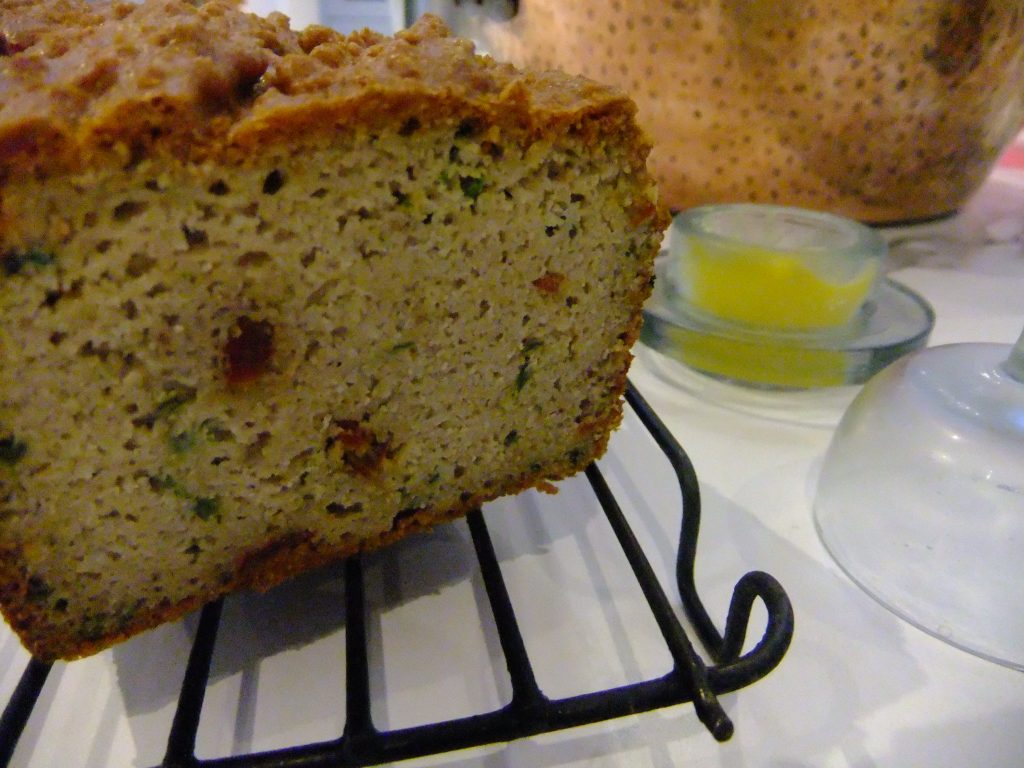
I am having a craze for recipes that fit in with the specific carbohydrate diet (SCD). The SCD is a lifesaver for so many people with Crohn’s and colitis that I had to start including some of the recipes here and eating them at home sometimes. This bread is really lovely and very easy to make. Just tried it at the weekend with home-made baked beans for breakfast and a piece of fruit to follow. Naturally I also smothered it in my home-made buttery spread for bread but you could use normal butter or ghee (clarified butter). Wish I could say the recipe is my own, but I found it in the wonderful SC diet cookbook. I did reduce the (I thought) excessive amount of salt from the original recipe and it still tasted great. This bread is suitable for a grain-free ketogenic diet as well – AND IS TOTALLY DELICIOUS AND SATISFYING.
900g (2lb) loaf tin
2 large eggs (if they are tiny, you could use 4)
230ml (1 cup) home made kefir or home-made natural yoghurt (see SC diet website)
28g clarified butter or ghee or (if you are not dairy sensitive) normal butter, melted
½ level teaspoon sea salt or Himalayan salt
1 rounded teaspoon baking soda (“bread soda” is another name for this)
½ teaspoon freshly ground black or white pepper
385g almond flour (ground almonds are fine. The finer ground the better – I whizzed mine in the food processor for a bit before adding the other ingredients)
12g (1/4 cup) chopped chives (do use these, they give a fab flavour – if you don’t have any you could use the green parts of spring onions chopped up finely)
14g finely chopped, dry, sun-dried tomatoes (with no additives if you are on SC diet)
1. Preheat oven to 170C (fan oven) or 195C otherwise. Grease and bottom line a 900g (2lb) loaf tin with baking parchment.
2. Blend together all ingredients in a food processor then pour into the tin.
3. Bake in the oven for 45-55 mins until a knife inserted into the centre comes out clean.
4. The bread, once cool, should keep well in a self seal bag or airtight container in the fridge for at least 5 days.
Why this is better for you: Some people need to follow a grain-free diet in order to stay well. This recipe is just the thing to satisfy the longing for bread. This bread would be brilliant for anybody needing a low carbohydrate diet (e.g. people with diabetes, or people following a ketogenic diet to manage cancer). Being baked, its naturally not quite as healthy as eating the nuts (almonds) raw. But what the hey, sometimes you just want bread. Because the bread is very low in carbohydrates (sugars) its a great substitute for the wheaten bread that can cause such huge dips in energy after lunch. And of course its low GI and studies show low GI eating helps skin and hair health too. You might wonder why I mention “dairy-free” when the recipe contains ghee/clarified butter – this is because when you clarify butter you remove the lactose (milk sugar) and casein (problematic milk protein) and so it becomes hypoallergenic. Great news for anyone who is dairy sensitive. If you have a true dairy allergy (throat swelling, anaphylactic shock) you will of course still want to steer clear of any contact with dairy products whatsoever, even during food preparation for others.
This is gorgeous, creamy and dead simple to make. You won’t miss the cream in this dairy free recipe. I adapted the recipe from the minimalist baker blog as I thought the original had an overpowering amount of macha (which is also very costly!).
Makes 800ml (serves 8)
1 tin full fat coconut milk (400ml), ideally chilled, industrial additive free if possible*
230ml unsweetened almond milk fortified with calcium, ideally chilled
50g Medjool dates (if you don’t have these, then you can soak normal pitted dates overnight in filtered water – soaking means you don’t get ice cream with “bits”)
2 rounded teaspoon macha tea (green tea powder from health stores)
3 rounded teaspoons raw honey
¼ teaspoon xanthan gum
1. Blitz the first 6 ingredients (i.e. everything except the xanthan gum) until smooth. Taste and adjust the amount of macha, honey or dates as needed.
2. Add the xanthan gum and blitz again to mix.
3. Chill for an hour or so in the fridge (if you have already chilled everything before starting then around half an hour will do).
4. If using the ice cream maker, churn according to manufacturer’s instructions. This takes around half an hour. If you don’t have an ice cream maker, pour the mix into a freezer-safe container, cover, freeze and whisk every hour or so to aerate.
The ice cream keeps its’ flavour for a week or so in the freezer.
To serve:
Take it out of the freezer for 20-30 mins to soften. Keep your ice cream scoop in a jug of hot water to get perfect scoop shapes.
Try serving with a salad of pears, mangosteen or lychees and maybe some cocao nibs.
Why this is better for you: If you can, buy the tinned coconut milk that’s organic – it tends to be free of the industrial emulsifiers which damage your gut (e.g. polysorbate 80, carageenan, maltodextrin, carboxymethylcellulose). Organic brands tend to be packed in tinsnot lined with BPA, the hormone disrupting ingredient in many plastics that leeches into food. This ice cream is made without refined sugar so it’s a lot easier on your body than “normal” ice cream whose sugar depletes your body’s essential nutrients. That said, it’s not something to eat every day because it’s still got a lot of natural sugars in from the dates and honey. Macha (a type of ground up green tea powder) is a great source of catechins, the magical substances in green tea that help foster growth of beneficial bacteria in your gut, dampen down inflammation anywhere in your body, boost your ability to stay youthful and healthy and maintain cognitive function as you age. The ice cream happens to be dairy-free, which is great if your dairy sensitivity causes problems for your skin, breathing issues, sinuses or energy levels like it does for so many. Thick coconut milk is a rich source of energy-giving medium chain triglycerides. these are a special type of fat that is easy to digest and provides energy straight to your brain and muscles.
I got this lovely recipe from Linda McFarland. Everyone loves it and no-one notices it’s healthier than standard sugar-laden gluten-laden cheesecake.
Serves 8
For the base:
50g virgin coconut oil
170g Nairns gluten-free unsweetened oatcakes (you can use normall 100% oat rough oatcakes if you are not gluten-sensitive/coeliac)
35g xylitol or (even better) erythritol
1 rounded tsp ground ginger
¼ level tsp Himalayan/Atlantic sea salt
For the cheesecake topping
3 lemons, organic or washed well with hot soapy water and rinsed
250g tub ricotta cheese
200g Greek yoghurt (sheep/goat)
4 eggs, ideally organic
1 tbs cornflour
70g xylitol
1 punnet fresh blueberries
1 x 23cm/9in round springform cake tin
1. Preheat oven to 175C/160C fan.
2. Melt the oil or butter gently in a saucepan and while this is happening crush the oatcakes to small crumbs.
3. When butter/oil is melted, add crushed oatcakes, xylitol, the ginger and salt and mix well.
4. Press in to the bottom of the tin and chill in the fridge.
5. Next, zest and juice the 3 lemons into a large bowl, mix in the ricotta cheese, the yoghurt, eggs, cornflour and 70g xylitol and whisk well until smooth. The mixture will be quite thin.
6. Pour the mixture into the tin, sprinkle the blueberries over (they will float on the top) and bake for around 40 minutes until firm.
Cool and run a knife around the inside of the tin before releasing. Serve with a berries on the side.
Why this is better for you: This recipe uses xylitol or erythritol instead of sugar. Xylitol is a health shop sweetener that looks and tastes like white sugar but doesn’t rob your body of nutrients. It is safe for diabetics and doesn’t cause weight gain either. This is because it doesn’t affect your blood sugar levels. Because the base is made with oatcakes instead of the normal wheat biscuits it is much kinder to your digestive system (even if you are not sensitive to gluten). The insoluble fibre in wheat is an intestinal irritant. Virgin coconut oil is a good source of medium chain triglycerides which are helpful for boosting energy and are really easy to digest. Lots of people are sensitive to dairy (milk) products. This recipe uses goat/sheep yoghurt and ricotta so it is lower in milk allergens like casein, which cause problems for so many people. Lemon zest and juice helps detoxification – just the thing if you have had a rich meal and a few too many glasses of wine….
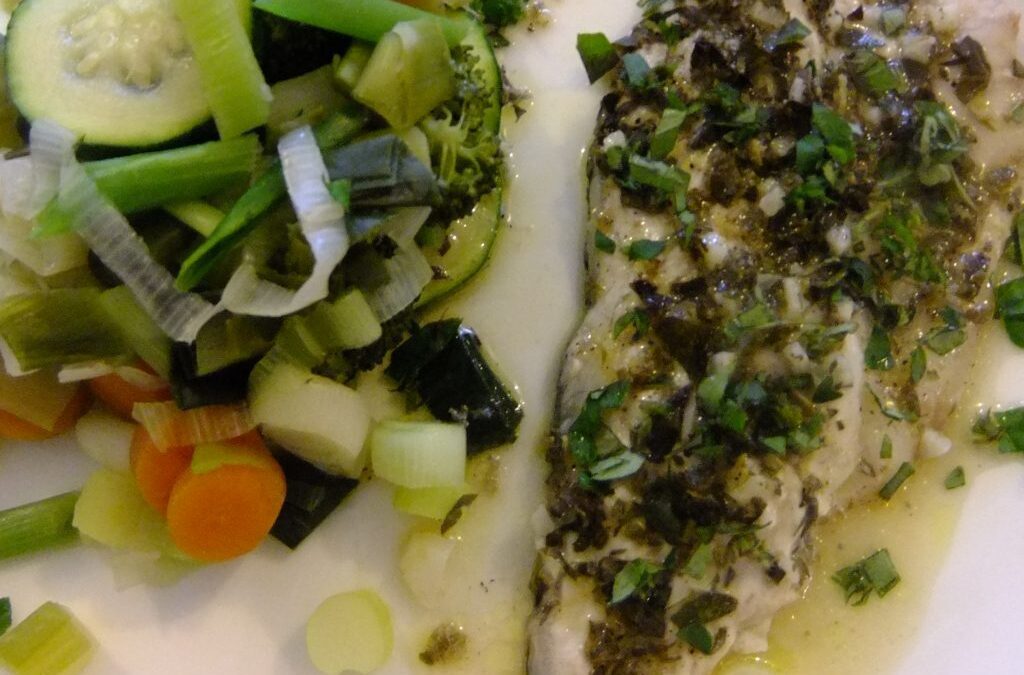
This dish is inspired by the flavours of Greece – fresh white fish, lemons, garlic and oregano. I saw a prepack product and thought “wouldn’t it be nice to make the fresh version”. It only takes a few minutes to get in the oven and is bursting with flavour and freshness. We enjoyed it with steamed leeks, courgettes and carrots sprinkled with some extra virgin olive oil.
For two:
Lemon, garlic, oregano for fish
2 x 160g sea bream or sea bass fillets
1/2 cup (about 100ml) white wine (or 4 tbs water and 1 dsp lemon juice)
1 tbs extra virgin olive oil or (if you want dairy) a knob of butter
Zest of 1 small lemon (organic or scrubbed with soapy water and rinsed)
1 clove garlic, crushed or finely sliced/chopped
Handful fresh oregano (about 5 x 12cm sprigs), stalks removed (if you don’t have fresh oregano you could use fresh tarragon or 1 tbs of chopped thyme leaves)
Freshly ground black pepper
1. Preheat the oven to 200C
2. Lay the 2 pieces of fish skin side down in a small roasting tin or ovenproof dish. 3. Pour over the wine (or water with lemon juice), the olive oil or butter and sprinkle on the lemon zest and garlic and a few good grinds of black pepper.
4. Chop the oregano. Reserve half for later and sprinkle half over the fish.
5. Cover the dish with tinfoil and seal the edges. Or use a close-fitting lid. The idea is that the fish steams in the liquid and stays succulent, rather than roasting and drying out. Bake for 8-10 minutes until the fish is cooked through.
6. Serve sprinkled with the remaining chopped oregano.
Serve with:
Any green vegetable. We like steamed leeks and broccoli. And optionally some carrots or carrot mash.
Why this is great for you: Oregano and garlic can help supercharge your health and vitality. They both act against overgrowths of disease-causing bacteria and yeasts in your gut. The bacteria that live in your gut outnumber the cells of your body 10 to one and they have a massive impact on mental and physical health. Not having enough good bacteria, or an overgrowth of bad is a major factor in skin conditions and digestive troubles. If you take antibiotics, eat food with glyphosate (herbicide) residues, or eat a high carbohydrate diet, your gut bacteria will not be all they should be. Garlic and oregano can help start to set things right. Garlic, oregano and lemons also contain anti-ageing, anti-inflammatory compounds that protect your brain and your joints and slow down the accumulation of wrinkles. Unprocessed white fish is a good source of high-quality protein. Protein is needed for helping us eliminate natural and man-made toxins. If you team the protein up with (more than half your plate) greens and multicoloured veg you have a winning formula for energy and vitality.
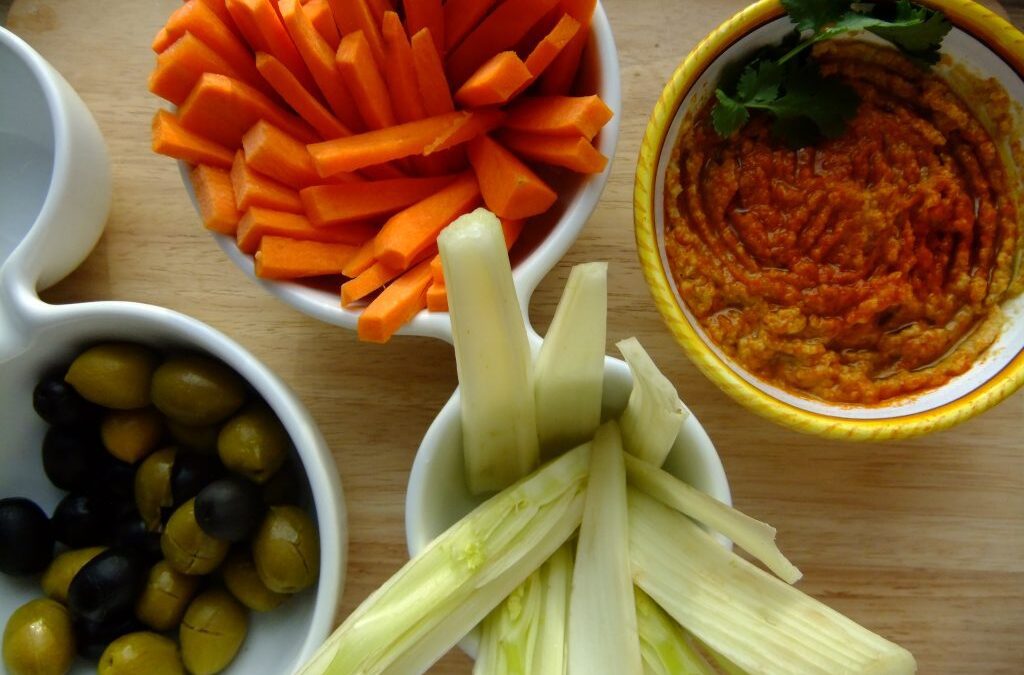
This is based on a Sophie Grigson recipe I loved, but lost. My husband says this version is the best of my attempts to recreate it. It’s dead simple. Enjoy with strips of red pepper, carrot, cucumber or celery and maybe a few olives. Dips with veg sticks before a main course are a great way of encouraging your kids to eat veggies too – take advantage of them being hungry!!
For a smoother dip use normal tahini made from roasted sesame seeds. For a coarser (and even more vitality boosting) dip use raw tahini (e.g. Carly’s) from health shops. Raw seeds retain their beneficial oils to do your body even more good. If you’re not going to use this dip within half an hour or so, store in a small screwtop glass jar or else a small glass/ceramic container with clingfilm over the top (but not in contact with the dip itself) to stop it drying out.
To make this dip into a sauce add a little more water to thin and drizzle over cooked white fish or felafels.
To serve 3-4 as a starter
2 cloves garlic
2 level tbs dark tahini
1 1/2 tbs lemon juice
1 dsp extra virgin olive oil
1 level tsp cumin
Pinch Himalayan or Atlantic sea salt
Pinch cayenne pepper
4 tbs water
Mini food processor method:
1. Crush the garlic and throw it and the rest of the ingredients into a mini food processor.
2. Blend for a couple of minutes, scraping down the sides of the processor a few times to get everything well mixed.
3. If you have time, allow to sit for half an hour for the flavours to amalgamate.
Traditional method:
1. Crush the garlic and place in a mixing bowl with everything except the water.
2. Mix well with a wooden spoon, then add half the water. The tahini will become quite stiff at this point, just keep mixing and it will start to relax and absorb the water.
3. Mix well, then add the rest of the water and work till smooth. This will be a more rustic mix than using the food processor. If you have time, allow to sit for half an hour for the flavours to amalgamate.
NB. If you are on a ketogenic eating plan, avoid eating more than 1/2 cup raw carrots in the day. Like all root veg, they are rich in sugar and too many will derail your programme.
Why this is good for you:
Garlic is a fantastic booster for your whole body. It kills yeast infections and overgrowths of pathogenic (“bad”) bacteria in your gut. This is good news if you want to sort out your digestion or achieve beautiful skin. Garlic’s sulphur compounds also support your liver to clear chemicals, used-up hormones and other toxins out of your body. Skin conditions are usually largely due to problems in the digestive system. Sort those out and you have dont more than 90% what you need to do. If you are not used to eating garlic, especially raw garlic, start with a little and gradually build up. Garlic is in my top 10 vitality boosting foods. Spices like cumin and cayenne pepper also have great benefits – anti inflammatory, anti-ageing and more. Have you had your spices today?